
In This Article
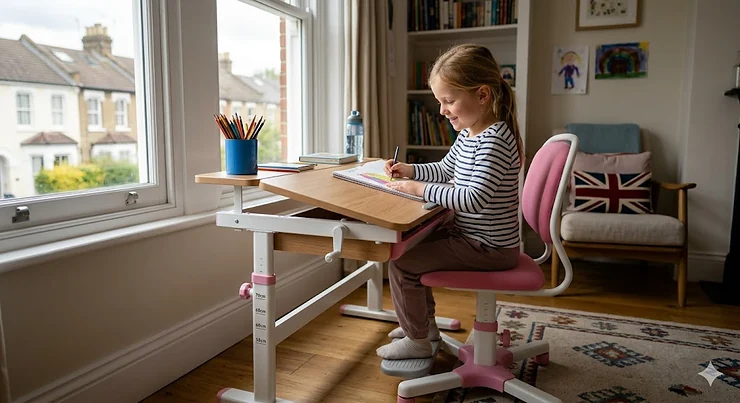
Picture this: your seven-year-old hunched over the kitchen table, shoulders rounded, neck craned forward, struggling through maths homework. Fast-forward three years, and they’re complaining about back pain. Sound familiar? You’re not alone, and here’s the thing—it’s entirely preventable.
A kids study desk height adjustable solution transforms how your child learns at home. Unlike fixed desks that become obsolete within months, these clever pieces grow alongside your little one from reception through to secondary school. Research from the Chartered Institute of Ergonomics & Human Factors emphasises that early ergonomic intervention during childhood is critical for preventing musculoskeletal disorders later in life.
But here’s what most parents don’t realise: the wrong desk setup doesn’t just cause discomfort—it affects concentration, academic performance, and long-term spinal health. According to Education Business UK research, back pain causes can start in childhood, and prevention needs to be focused on during these formative years. Children’s spines are still developing, and poor furniture choices during these critical periods can establish harmful postural habits that persist into adulthood.
This comprehensive guide cuts through the marketing fluff to reveal which height adjustable desks actually deliver on their promises. We’ve researched dozens of products available on Amazon.co.uk, analysed real UK customer feedback, and consulted ergonomic guidelines to bring you seven outstanding options across every budget—from under £50 to premium £150+ models.
Quick Comparison Table: Top Kids Study Desk Height Adjustable Options
| Product | Height Range | Tilt Angle | Key Feature | Age Range | Price (£) | Rating |
|---|---|---|---|---|---|---|
| VIVO Grey Height Adjustable Set | 53-76cm | 0-40° | Solid steel frame | 3-10 years | £75-£95 | 4.5/5 |
| HOMCOM Kids Desk with USB Lamp | 80-105cm | 0-45° | 3-colour temp lamp | 6-12 years | £85-£120 | 4.4/5 |
| COSTWAY Ergonomic Study Set | 52-78cm | 0-40° | Anti-pinch stopper | 5-16 years | £65-£90 | 4.3/5 |
| ZONEKIZ Height Adjustable Grey | 52-77cm | 0-45° | Drawer & bookshelf | 6-12 years | £70-£100 | 4.3/5 |
| Mount-It! Kids Adjustable Desk | 54-76cm | 0-40° | Large 79×66cm desktop | 3-10 years | £80-£110 | 4.5/5 |
| HOMCOM Student Writing Desk Blue | 52-77cm | 0-45° | Pen slots & hook | 6-12 years | £60-£85 | 4.4/5 |
| tekrabea Ergonomic Writing Desk | 50-72cm | 0-60° | Widened desktop | 3-12 years | £55-£80 | 4.2/5 |
💬 Just one click – help others make better buying decisions too!😊
Top 7 Kids Study Desk Height Adjustable: Expert Analysis
1. VIVO Grey Height Adjustable Childrens Desk and Chair Set
If you’re after bombproof construction that’ll survive even the most energetic youngsters, the VIVO deserves serious consideration. This American brand has built its reputation on commercial-grade furniture, and their kids’ range maintains those exacting standards.
Key Specifications:
- Height adjustment: 53-76cm desk, 32-40cm chair
- Desktop tilt: 0-40 degrees
- Work surface: 66×47cm
The standout feature? That solid steel frame. Whilst many competitors use thin-gauge metal that flexes under pressure, VIVO employs heavier-duty tubing that genuinely feels like it’ll outlast your child’s school career. The 25mm anti-pinch stopper beneath the desktop prevents trapped fingers—a thoughtful touch that anxious parents will appreciate.
UK buyers consistently praise the straightforward assembly process, typically completed in under 30 minutes. One Midlands reviewer noted: “My daughter’s used this daily for two years and it still feels brand new.” The grey colour scheme suits both boys’ and girls’ bedrooms without looking dated.
✅ Pros:
Commercial-grade steel construction
Large pull-out storage drawer
Ergonomic chair with vented backrest
❌ Cons:
No built-in lamp
Limited colour options
Price: £75-£95 | Available: Amazon.co.uk
2. HOMCOM Kids Desk and Chair Set with USB Lamp
HOMCOM dominates the UK children’s furniture market for good reason—they’ve mastered the sweet spot between affordability and features. This model arrives with a USB-powered LED lamp offering three colour temperatures, making it ideal for homework sessions that stretch into evening.
Key Specifications:
- Adjustable height: 80-105cm desk, 63-76cm chair
- Desktop angle: 0-45 degrees
- Dimensions: 70×50cm work surface
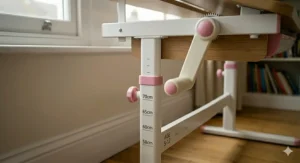
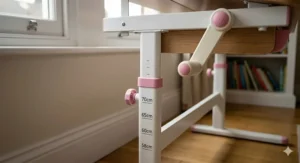
The inclusion of height reference charts printed directly onto the legs proves surprisingly useful. Rather than guessing appropriate settings, you can match your child’s height to recommended desk positions—brilliant for ensuring proper ergonomic setup. The tabletop adjusts smoothly thanks to pneumatic support rods rather than friction-only mechanisms.
Storage solutions abound: embedded pen box, full-width drawer (54×35.5cm), cup holder, and reading board. Several London-based parents mentioned their children staying more organised since everything has a designated spot.
✅ Pros:
Three-colour temperature USB lamp included
Height charts eliminate guesswork
Comprehensive storage options
❌ Cons:
Lamp requires nearby power socket
Assembly takes 45-60 minutes
Price: £85-£120 | Available: Amazon.co.uk, Robert Dyas
3. COSTWAY Ergonomic Height Adjustable Children’s Study Desk
COSTWAY have engineered their desk with a specific focus on spinal health. The 71×38cm desktop provides ample workspace whilst the chair features Y-shaped lumbar support that actively encourages upright sitting posture—particularly valuable for children prone to slouching.
Key Specifications:
- Height range: 52-78cm desk, 31-44cm chair
- Tilt capability: 0-40 degrees
- Material: E1-grade MDF, steel frame
The dual anti-pinch stoppers deserve special mention. Many cheaper desks incorporate a single stopper, but COSTWAY’s twin-stopper design provides redundancy—even if your child accidentally dislodges one, the second prevents the desktop slamming down.
Customer reviews from Manchester and Birmingham highlight the desk’s stability. Unlike some rivals that wobble during vigorous writing or drawing, this model stays planted thanks to adjustable anti-slip feet that compensate for uneven flooring.
✅ Pros:
Dual anti-pinch safety stoppers
Y-shaped lumbar support chair
Adjustable feet for stability
❌ Cons:
Drawer slides could be smoother
Limited to grey colour only
Price: £65-£90 | Available: Costway.co.uk
4. ZONEKIZ Grey Height Adjustable Kids Desk with Drawer
ZONEKIZ positions itself as the practical parent’s choice—no gimmicks, just solid functionality executed well. The integrated bookshelf alongside the drawer creates a proper study station rather than just a writing surface.
Key Specifications:
- Adjustable height: 52-77cm desk, 64-77cm chair
- Desktop tilt: 0-45 degrees
- Construction: Solid MDF, steel
What sets ZONEKIZ apart is the thoughtful cable management. A discreet channel beneath the desktop routes tablet or laptop charging cables, preventing the tangled mess that plagues most children’s desks. The bookshelf holds A4 textbooks upright—especially useful for older primary and early secondary students juggling multiple subjects.
Scottish customers particularly appreciate the sturdy construction, noting it handles the weight of heavy textbooks and art projects without sagging. The rounded edges throughout prevent those inevitable bumps and scrapes.
✅ Pros:
Built-in cable management system
Bookshelf holds A4 textbooks
Rounded safety edges
❌ Cons:
Chair padding thinner than competitors
Assembly instructions could be clearer
Price: £70-£100 | Available: Amazon.co.uk, TJ Hughes
5. Mount-It! Kids Adjustable Desk with Tilting Desktop
For families needing maximum workspace, Mount-It! delivers with their generous 79×66cm desktop—substantially larger than standard 70×50cm surfaces. This extra real estate proves invaluable for children working on art projects, science experiments, or those who simply spread their materials everywhere.
Key Specifications:
- Height adjustment: 54-76cm
- Tilt range: 0-40 degrees
- Desktop size: 79×66cm (31.5×26 inches)
The pneumatic tilting system operates effortlessly—even younger children can adjust the angle independently. Rotary knobs secure height adjustments, though you’ll want to check these periodically as enthusiastic kids sometimes loosen them accidentally.
Welsh customers highlight the smooth powder-coated finish that wipes clean easily. Whether it’s felt-tip pen, glue, or snack crumbs (let’s be honest), everything shifts with a damp cloth. The carbon steel frame supports up to 88kg, meaning it’ll handle teenagers leaning on it without complaint.
✅ Pros:
Exceptionally large 79×66cm workspace
Smooth pneumatic tilt mechanism
Supports up to 88kg weight
❌ Cons:
Takes up more floor space
No chair included (desk only)
Price: £80-£110 | Available: Amazon.co.uk
6. HOMCOM Kids Desk and Chair Set Student Writing Desk Blue
HOMCOM’s blue variant targets the budget-conscious without sacrificing essential features. At the lower end of the price spectrum, it delivers impressive value for families furnishing multiple children’s rooms or testing whether their child will actually use a dedicated study space.
Key Specifications:
- Height range: 52-77cm desk, 64-77cm chair
- Tilt adjustment: 0-45 degrees
- Colour: Blue (also available in grey, pink)
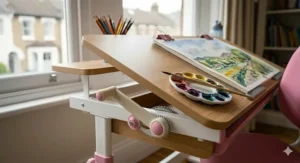
The inclusion of dual pen slots and a side hook adds convenience without complexity. Primary school children particularly benefit from designated spots for frequently-used items—it subtly encourages organisational habits. The drawer, whilst smaller than premium models, still swallows pencil cases, notebooks, and art supplies.
Northern Irish buyers appreciate that this desk arrives with everything needed—no surprise tool requirements or missing components. The instruction manual uses clear diagrams rather than lengthy text, making assembly genuinely straightforward even for the DIY-averse.
✅ Pros:
Budget-friendly pricing
Simple, effective storage
Clear assembly instructions
❌ Cons:
Basic cushioning on chair
Drawer capacity smaller than premium models
Price: £60-£85 | Available: Amazon.co.uk, The Range
7. tekrabea Kids Desk and Chair Set Ergonomic Writing Desk
tekrabea enters the market with an aggressive 0-60 degree tilt range—the widest in our roundup. This extreme angle benefits budding artists who prefer drafting-table positions for sketching and drawing.
Key Specifications:
- Height adjustment: 50-72cm
- Tilt range: 0-60 degrees
- Desktop: Widened design with golden distance bookstand
The “golden distance” bookstand concept positions reading materials at an optimal 35cm from eyes, following research into myopia prevention. Whether this genuinely protects eyesight remains debatable, but it certainly encourages better reading posture than hunching over flat books.
Yorkshire-based parents mention their children finding the wider desktop (details not fully specified, but notably broader than standard) particularly comfortable. The extra width prevents elbows hanging off edges during writing—a common complaint with narrower desks.
✅ Pros:
Widest tilt range (0-60°)
Golden distance bookstand feature
Broader than standard desktop
❌ Cons:
Brand less established in UK
Customer service response times variable
Price: £55-£80 | Available: Amazon.co.uk
✨ Don’t Miss These Exclusive Deals!
🔍 Take your child’s study setup to the next level with these carefully selected products. Click on any highlighted item to check current pricing and availability on Amazon.co.uk. These desks will help create an ergonomic environment your child will actually want to use!
What Is a Kids Study Desk Height Adjustable?
A kids study desk height adjustable is a specially designed workstation that allows vertical adjustment of both the desktop and chair to accommodate children’s changing heights as they grow. Unlike conventional fixed desks, these adaptive furniture pieces typically feature pneumatic lifts, rotary knob systems, or hand-crank mechanisms that enable modification of working height from approximately 50cm to 105cm—suitable for children aged 3 through 15 years.
The adjustable angle desktop, commonly tilting between 0 and 60 degrees, promotes ergonomically correct postures for different activities: flat for computer work, slight incline for writing, moderate tilt for reading, and steeper angles for drawing or art projects.
Understanding Ergonomic Design for Growing Children
Children aren’t simply miniature adults, and their furniture shouldn’t treat them as such. Between ages 5 and 15, the average UK child grows approximately 60cm in height—that’s roughly 6cm per year. During these formative years, spines are still developing, and sitting habits established in childhood often persist into adulthood.
The Chartered Institute of Ergonomics & Human Factors points out a troubling gap in UK legislation: whilst workplace ergonomics are strictly regulated for adults, schoolchildren have no equivalent protection despite spending 6-7 hours daily seated at desks.
The 90-90-90 Rule
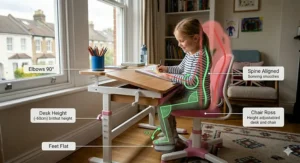
According to NHS Cambridgeshire Children’s Occupational Therapy guidance, optimal sitting posture requires hips, knees, and ankles all bent at 90-degree angles. This position distributes body weight evenly, reduces strain on developing spines, and enables proper circulation to legs and feet.
Fixed-height desks inevitably fail this test. A desk perfect for a 120cm tall seven-year-old forces a 150cm twelve-year-old to hunch uncomfortably or perch awkwardly on their chair’s edge. Height adjustable solutions eliminate this compromise.
Impact on Learning and Concentration
Beyond physical health, proper ergonomics directly influences academic performance. Research published in the journal Ergonomics found children showed modest but significant improvement in on-task behaviour following introduction of properly designed furniture. When bodies feel comfortable, minds can focus on learning rather than discomfort.
Essential Features to Prioritise
Height Adjustment Range
Look for desks offering at least 50-75cm range. This accommodates children from approximately age 4 through 12. Teenagers benefit from extended ranges reaching 105cm. Pneumatic mechanisms adjust smoothly with light pressure, whilst rotary knobs provide secure locking but require adult supervision for younger children.
Desktop Tilt Capability
A 0-45 degree range suits most needs:
- 0-15 degrees: Writing and computer work
- 15-30 degrees: Reading textbooks
- 30-45 degrees: Drawing and art projects
Steeper angles (up to 60 degrees) benefit serious young artists but aren’t essential for general homework.
Safety Features
Anti-pinch stoppers prevent trapped fingers when lowering angled desktops—absolutely non-negotiable for children under 8. Check for:
- Protective spacing beneath desktop
- Smooth mechanism without sudden drops
- Rounded edges throughout
- Stable anti-slip feet
Storage Solutions
Primary school children juggle numerous small items—pencils, rubbers, rulers, glue sticks. Built-in storage keeps essentials accessible:
- Pull-out drawers (minimum 50cm width)
- Pen slots or boxes
- Book stands or shelves
- Side hooks for bags
Build Quality and Materials
MDF desktops dominate the market—look for E1-grade or better, indicating low formaldehyde emissions.
Steel frames outlast plastic alternatives and support heavier loads. Premium models use powder-coated finishes that resist scratches and wipe clean easily.
Weight capacity matters more than you’d think. Teenagers leaning heavily whilst working, stacks of textbooks, or younger siblings climbing—a robust 80kg minimum rating provides peace of mind.
Comparing Benefits: Adjustable vs Traditional Fixed Desks
| Feature | Height Adjustable Desk | Traditional Fixed Desk |
|---|---|---|
| Lifespan | 8-12 years (grows with child) | 2-3 years before outgrown |
| Ergonomic Support | Customised to child’s height | One-size-fits-poorly |
| Posture Promotion | Maintains 90-90-90 position | Forces slouching or dangling feet |
| Cost Over Time | £60-£150 (one purchase) | £40-£80 every 2-3 years |
| Resale Value | Good (wide age range) | Limited (specific age only) |
Age-Appropriate Desk Selection Guide
Ages 3-6 (Reception to Year 1)
Height range needed: 50-60cm
Desktop size: 60×45cm minimum
Special considerations: Supervised tilt adjustment, extra stability, washable surfaces
Younger children benefit from desks that convert to play stations. Look for models doubling as art tables with easily-cleaned surfaces.
Ages 7-11 (Years 2-6)
Height range needed: 55-75cm
Desktop size: 70×50cm recommended
Special considerations: Independent height adjustment, ample storage, durable finish
Primary school children need space for multiple textbooks, writing equipment, and increasingly complex projects. This age group also benefits most from establishing good posture habits.
Ages 12-15+ (Secondary School)
Height range needed: 70-105cm
Desktop size: 80×60cm or larger
Special considerations: Laptop accommodation, cable management, extended weight capacity
Teenagers require workspace for computers, multiple textbooks, and revision materials. Desks should handle sustained daily use without wobbling or degrading.
Setup and Safety Guidelines
Proper Height Adjustment
- Seat your child comfortably with back against chair rest
- Adjust chair height until feet rest flat on floor
- Check knee angle – should be 90 degrees
- Set desktop height – elbows should form 90-100 degrees when arms rest on surface
- Verify eye level – screen or reading material at or slightly below eye level
Ongoing Maintenance Checks
Every 3-4 months:
- Reassess height settings as child grows
- Tighten any loosened adjustment knobs
- Inspect tilt mechanism for smooth operation
- Check drawer runners and replace if sticky
Annually:
- Deep clean all surfaces with appropriate cleaner
- Examine frame for any developing cracks or weak points
- Test weight-bearing capacity
- Consider whether desk still meets child’s needs
Budget Breakdown: Finding Your Price Point
Under £70 – Budget-Friendly Options
Expect basic adjustment mechanisms, simpler storage, and lighter-duty construction. Perfect for testing whether your child will actually use a dedicated desk or furnishing spare rooms for occasional homework.
Best for: Younger children (ages 3-8), families with space constraints
Typical features: Manual height adjustment, 0-40° tilt, drawer only
£70-£100 – Mid-Range Sweet Spot
This bracket delivers excellent value with durable construction, comprehensive storage, and reliable adjustment systems. Most families find their needs fully met here.
Best for: Primary school children (ages 6-12), daily homework use
Typical features: Smooth adjustment, 0-45° tilt, drawer plus extras like pen holders
£100-£150+ – Premium Investment
Top-tier models feature commercial-grade components, extended adjustment ranges, innovative features (built-in lamps, advanced cable management), and superior aesthetics.
Best for: Older children/teenagers, families prioritising longevity
Typical features: Pneumatic adjustments, 0-60° tilt, comprehensive storage suite
Common Mistakes Parents Make (And How to Avoid Them)
Buying Too Small Too Soon
Many parents underestimate how quickly children outgrow furniture. That adorable pint-sized desk suitable for a four-year-old becomes unusable within 18 months. Instead, choose models with adjustment ranges extending beyond your child’s current height.
Solution: Select desks rated for at least 4-year age spans
Ignoring Storage Needs
Desktop surface area means nothing if your child’s textbooks, stationery, and art supplies carpet the surrounding floor. Insufficient storage leads to clutter, lost items, and frustrated homework sessions.
Solution: Prioritise models with drawers (minimum 50cm width) and supplementary storage
Forgetting About Lighting
Even the most ergonomically perfect desk fails if lighting causes eye strain. Natural daylight fluctuates, and overhead ceiling lights create shadows across work surfaces.
Solution: Position desks near windows and supplement with desk lamps (3000-4000K colour temperature optimal)
Overlooking Chair Quality
Parents obsess over desk features whilst accepting whatever chair comes bundled. The chair matters equally—possibly more, given your child sits on it.
Solution: Verify chairs include lumbar support, breathable materials, and adequate padding
Space Planning and Room Integration
Minimum Space Requirements
A functional study area requires more than just the desk’s footprint. Account for:
- Desk clearance: Add 15cm on all sides for cleaning access
- Chair pullout space: Minimum 80cm behind desk
- Natural light access: Ideally within 1 metre of window
- Power socket proximity: Within 2 metres for lamp/laptop charging
Positioning for Success
Avoid:
- Facing walls (claustrophobic, uninspiring)
- High-traffic areas (constant distractions)
- Proximity to televisions or gaming consoles
- Direct window glare on screens
Prefer:
- Angled views of gardens or calming scenes
- Corner positioning (uses dead space efficiently)
- Near bookshelves for easy reference
- Sufficient distance from beds (maintains work/rest separation)
Maintenance and Care Tips
Daily Habits
- Wipe surfaces with microfibre cloth after each use
- Ensure drawer closes fully (prevents warping)
- Check desktop sits flat when not tilted
- Remove food or drink residue immediately
Weekly Tasks
- Vacuum beneath and around desk
- Tighten any adjustment mechanisms showing play
- Reorganise storage to prevent overstuffing
- Inspect chair wheels for debris
Deep Cleaning (Monthly)
- Disinfect all surfaces with appropriate cleaner (test inconspicuous area first)
- Lubricate adjustment mechanisms with silicone spray
- Check structural integrity of joints
- Rotate or flip cushions if removable
Environmental and Sustainability Considerations
Furniture manufacturing carries environmental costs—transportation, materials, packaging. Choosing desks that last 8-12 years dramatically reduces waste compared to replacing fixed desks every 2-3 years.
Look for:
- FSC-certified wood products
- Recyclable steel frames
- Low-VOC finishes (volatile organic compounds)
- Minimal plastic packaging
- Manufacturers with take-back schemes
Several UK brands now offer recycling programmes where they’ll collect old desks when you upgrade, ensuring proper material recovery rather than landfill disposal.
Addressing Special Needs and Accessibility
Standard adjustable desks suit most children, but some situations require modifications:
Visual Impairments
- Increase lighting to 750-1000 lux
- Position lamp to eliminate shadows
- Consider high-contrast work surfaces
- Integrate document holders at appropriate angles
Physical Disabilities
- Ensure adjustment mechanisms accessible without fine motor skills
- Verify wheelchair clearance (minimum 70cm height, 80cm width)
- Add armrests if child struggles with stability
- Consider pressure-relieving cushions
Sensory Processing Challenges
- Choose neutral colours avoiding overstimulation
- Minimise decorative elements
- Ensure stable construction (no wobbling)
- Position away from harsh lighting or noise sources
Alternatives and Complementary Solutions
Standing Desk Converters
For children spending excessive time seated, standing desk converters allow position changes without replacing entire furniture. These platforms sit atop existing desks, raising laptops and books to standing height.
Benefits: Encourages movement, reduces sedentary time
Drawbacks: Requires existing stable desk, limited age range
Kneeling Chairs
Controversial but worth considering for children struggling with conventional seating. Kneeling chairs shift weight forward, potentially improving posture for some children.
Benefits: Forces upright spine position
Drawbacks: Not suitable all day, adjustment period needed
Balance Ball Chairs
These incorporate inflatable exercise balls into chair frames. Proponents claim improved core strength and reduced fidgeting.
Benefits: Engages core muscles, movement outlet
Drawbacks: Can distract rather than focus some children
Real Parent Success Stories and Lessons Learned
Sarah from Bristol purchased a mid-range HOMCOM desk for her 7-year-old twin boys. “Initially I balked at spending £90 per desk, but three years later they’re both still using them daily. One twin had been complaining about back pain from our old fixed desk—that completely vanished within weeks of switching.”
James from Edinburgh went budget-friendly first: “Bought a £45 desk from eBay. Lasted six months before the tilt mechanism jammed and the drawer fell apart. Ended up spending £85 on a proper ZONEKIZ model that I should’ve bought initially. False economy.”
Priya from Cardiff highlights the concentration benefit: “My daughter’s teacher mentioned she struggled staying on-task. We’d always done homework at the dining table. Once we set up her VIVO desk in her room with proper lighting, her focus transformed. Sometimes the solution’s simpler than we think.”
Making the Final Decision: Your Personalised Checklist
Before purchasing, honestly answer:
Budget Reality Check:
- ☐ What’s my maximum budget (including chair)?
- ☐ Am I prepared to invest more for longevity?
- ☐ Would I prefer one premium desk or multiple budget options?
Child’s Needs Assessment:
- ☐ What’s my child’s current height and projected growth?
- ☐ What activities will they primarily use this desk for?
- ☐ Do they have any special requirements or preferences?
Practical Considerations:
- ☐ Where will this desk live? (measure the space)
- ☐ How much storage do they genuinely need?
- ☐ Who will assemble it? (check difficulty ratings)
Future-Proofing:
- ☐ Will this accommodate my child for 3+ years?
- ☐ Could younger siblings inherit it?
- ☐ Does it suit my home’s aesthetic long-term?
Frequently Asked Questions
❓ At what age should I buy my child a height adjustable study desk?
❓ How often should I adjust the desk height as my child grows?
❓ Are expensive height adjustable desks worth the extra cost?
❓ Can adults use kids height adjustable desks?
❓ What's the ideal desktop angle for different homework tasks?
Conclusion: Investing in Your Child’s Health and Success
Choosing a kids study desk height adjustable represents more than furniture shopping—it’s an investment in your child’s physical health, academic performance, and long-term wellbeing. The right desk supports proper posture during formative years, potentially preventing chronic back pain later in life whilst creating a dedicated space that signals “this is where learning happens”.
Throughout this guide, we’ve explored seven excellent options spanning every budget and requirement. The VIVO Grey Height Adjustable Set delivers commercial-grade durability for active families, whilst the HOMCOM Kids Desk with USB Lamp combines practical features at mid-range pricing. Budget-conscious parents find surprising value in the tekrabea Ergonomic Writing Desk, proving quality needn’t break the bank.
Remember: the perfect desk matches your child’s specific needs, your available space, and your realistic budget. Don’t chase every fancy feature if a simpler model accomplishes your goals. Equally, don’t sacrifice essential ergonomic features for minor cost savings that’ll require replacement within months.
Most importantly, involve your child in the decision. When children feel ownership over their study space, they’re more likely to actually use it. That £90 desk gathering dust helps nobody, but an £80 model your child loves using daily delivers immeasurable value.
As your child grows, periodically reassess whether their desk still serves their needs. What suited a seven-year-old might frustrate a twelve-year-old. Height adjustable desks extend this window dramatically, but eventually even these workhorses meet their limits. When that day comes, you’ll have years of good service and one significantly healthier, happier child to show for your investment.
Recommended for You
- 7 Best Craft Desk With Storage Cubes UK 2026
- 7 Best Wall Mounted Fold Down Desks UK 2026
- 7 Best Under Desk Treadmill UK Compact Models | 2026
Disclaimer: This article contains affiliate links. If you purchase products through these links, we may earn a small commission at no additional cost to you. Prices shown are approximate and may vary. All products were researched through Amazon.co.uk and verified UK retailers as of April 2026.
✨ Found this helpful? Share it with your mates! 💬🤗
