
In This Article
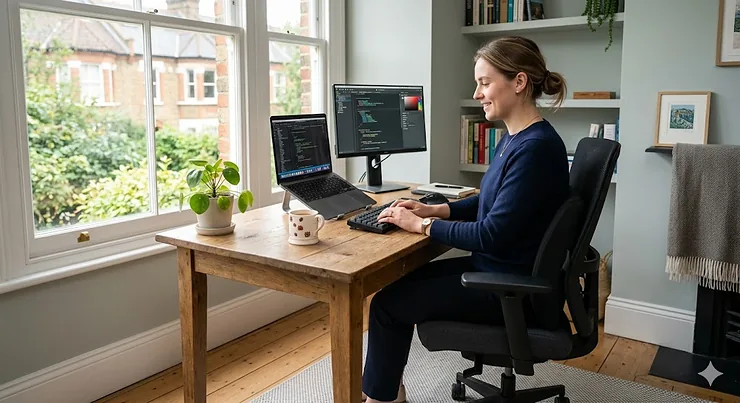
Somewhere around 3pm on a Tuesday, your lower back files a formal complaint. You shift. You sit up straighter for four minutes, then slump straight back into the same curve that started the whole mess. If that sounds familiar, you’re in excellent — if slightly uncomfortable — company: back problems affect roughly seven in ten of us at some point, according to the NHS, and most of it traces back to nothing more dramatic than too many hours in a chair that wasn’t built with your spine in mind.
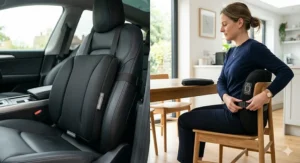
A lumbar support cushion for office chair use is the cheapest fix on the list, sitting somewhere between “do nothing” and “buy an £800 ergonomic chair and quietly resent the invoice.” It’s a slab of foam or fibre that slots into the curve of your lower back and does the job your chair’s backrest is, frankly, slacking on. The trick is that not all of them earn their keep — some go flat within a fortnight, some slide down your seat like a toddler escaping a high chair, and a few overheat so badly you’ll start sweating before lunch.
This guide rounds up seven genuinely available options on Amazon.co.uk, from budget British brands to a physiotherapist-designed premium pick, with honest commentary on who each one actually suits — British weather, British flats, and British scepticism about anything that sounds too good to be true, all included.
Quick Comparison Table
| Cushion | Price Range | Material | Best For |
|---|---|---|---|
| Everlasting Comfort Lumbar Pillow | £25–£35 range | Memory foam, mesh cover | All-round popularity |
| Comfortpad UK Cushion | Under £25 | Memory foam | Budget buyers |
| Denny International “Sit Right” | Under £20 | Foam, mesh lumbar grill | Tightest budget |
| Niceeday Lumbar Pillow | £20–£28 range | Memory foam, 3D mesh | Hot rooms, summer use |
| HOMESCAPES Back Cushion | £20–£30 range | Cotton/faux suede, fibre fill | Living-room aesthetics |
| Quarry NHS Back Support | £25–£35 range | Hollow fibre fill | Orthopaedic, breathable |
| Cushion Lab Extra Dense Pillow | £40–£55 range | HyperFoam, gel strap | Premium, firmest support |
A quick scan tells its own story: the spread under £35 is doing most of the heavy lifting in this category, and the £40-plus tier earns its premium through design pedigree rather than sheer size. If you’re choosing on price alone, the Denny International and Comfortpad UK options undercut everything else, but — and this is the bit spec sheets never mention — cheaper foam tends to soften faster under daily use, so “budget” and “long-term value” aren’t always the same thing. Worth bearing in mind before you commit.
💬 Just one click — help others make better buying decisions too! 😊
✨ Don’t Miss These Exclusive Deals!
Take your home office comfort up a notch — click through to check current pricing and availability on Amazon.co.uk for any of the picks below. Stock and prices shift fast, so it’s worth a look before you decide.
Top 7 Lumbar Support Cushions for Office Chairs: Expert Analysis
1. Everlasting Comfort Lumbar Support Pillow for Office Chair
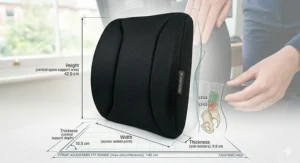
The Everlasting Comfort Lumbar Support Pillow is the cushion equivalent of the reliable mate who always shows up — unglamorous, slightly overexposed on social media, but consistently fine. It uses high-density memory foam shaped to sit against the small of your back, held in place with dual adjustable straps and a breathable mesh cover that’s removable for washing.
What the spec sheet won’t tell you is that the strap system is the actual selling point here — most rivals at this price use a single strap that lets the cushion creep downward by mid-afternoon, while the double-strap design keeps this one roughly where you put it, even through a fidgety conference call. UK buyers tend to praise the washable cover, which matters more here than in drier climates, since central heating plus a draughty flat equals a back that sweats more than you’d expect in October.
Pros: secure double-strap fit; washable mesh cover; widely stocked with fast Prime delivery.
Cons: memory foam runs warm in summer; firmness may feel intense for petite frames.
Price sits in the £25–£35 range — solid value for a first-time buyer who isn’t sure how much lumbar support they actually need.
2. Comfortpad UK Lumbar Support Cushion
As the name suggests, Comfortpad UK is a homegrown entrant rather than an imported product wearing a Union Jack sticker, and that shows in small but telling ways — UK-specific sizing notes and customer service that understands British chairs aren’t all built to American dimensions.
The cushion itself uses moulded memory foam with double adjustable straps, aimed squarely at standard desk and dining chairs rather than oversized gaming seats. What most buyers overlook is that this firmness level suits people who’ve never used a lumbar pillow before; it’s a gentler introduction than some of the denser premium options further down this list, so it won’t feel like being told off by your spine on day one.
Pros: UK-based brand; beginner-friendly firmness; competitive price point.
Cons: narrower fit range than bulkier rivals; foam thickness modest compared to premium picks.
Expect a price under £25, making this one of the more wallet-friendly entries with genuine UK retail backing.
3. Denny International Chair Back Support System “Sit Right”
Budget doesn’t have to mean flimsy, and the Denny International “Sit Right” proves it with an RRP under £20 and a design that leans on engineering rather than padding alone. Instead of dense memory foam, it uses a mesh lumbar grill paired with an elasticated positioning strap — think tension and airflow rather than sheer bulk.
In my experience, this is the pick for anyone whose chair already has reasonable back support and just needs a nudge in the right place, rather than a full structural overhaul. The mesh design means it won’t trap heat the way thicker foam cushions do, which is handy in a stuffy home office during one of Britain’s increasingly common summer heatwaves.
Pros: genuinely cheap; breathable mesh build; lightweight for travel between desk and sofa.
Cons: less cushioning for those with more pronounced back pain; strap system feels less substantial than premium rivals.
At under £20, it’s the cheapest entry on this list with a believable UK retail presence.
4. Niceeday Lumbar Support Pillow for Office Chair
The Niceeday Lumbar Support Pillow earns its spot through one specific feature: a 3D mesh back panel that genuinely outperforms flat mesh covers when it comes to airflow. Memory foam core, adjustable straps, the usual suspects — but the textured mesh is doing real work rather than just looking technical on the box.
This is the cushion I’d point a south-facing home office toward, the kind that turns into a greenhouse every July. UK summers are short but increasingly sharp, and a cushion that traps heat against your back for eight hours is a miserable experience no spec sheet captures until you’ve lived through it. Reviewers consistently flag it as cooler than competitors at a similar price.
Pros: noticeably better airflow than flat-mesh rivals; firm without feeling rigid; reasonable price.
Cons: straps can loosen over a long day; colour options limited mostly to black/grey.
Sits comfortably in the £20–£28 range, making it a smart mid-tier pick for warmer rooms.
5. HOMESCAPES Cream Back Support Cushion
If memory foam and mesh straps make your home office look like a physiotherapy clinic, the HOMESCAPES Cream Back Support Cushion takes a different approach entirely — 100% cotton or faux suede cover, generous fibre filling, and a 15cm-deep design that looks like a proper home furnishing rather than a medical accessory.
What most buyers overlook here is that it isn’t strap-mounted at all; it simply props against the base of your chair or armchair, which suits desk chairs without backrest gaps as well as it suits a reading chair in the lounge. It’s a softer kind of support than the firmer memory foam picks, better suited to someone managing mild discomfort than someone with a genuinely problematic back. A long-standing British homeware brand, it fits the bill for compact flats where every piece of furniture has to multitask.
Pros: genuinely attractive design; dual-purpose for desk chair and sofa; UK heritage brand.
Cons: no strap means it can shift on slippery upholstery; softer support won’t suit firmer-foam loyalists.
Price typically falls in the £20–£30 range depending on colour and fabric choice.
6. Quarry NHS Back Support Cushion
The Quarry NHS Back Support Cushion trades memory foam for hollow fibre fill, and that single material choice changes the entire experience. It’s orthopaedic in design — large, supportive, and built to relieve pressure across the spine rather than target one tight spot — finished in a no-nonsense royal blue that looks exactly as clinical as the name implies.
The advice based on real-world use: hollow fibre breathes considerably better than memory foam, so this is the pick for anyone who’s tried a foam lumbar cushion before and found themselves peeling off a sweaty back at the end of the day. It won’t contour to your spine quite as precisely as denser foam options, but for all-day breathability in a centrally heated British home, that’s often the right trade-off.
Pros: excellent breathability; large surface area for full-back support; NHS-style branding signals a no-frills, trusted design philosophy.
Cons: less precise lumbar contouring than foam rivals; bulkier shape may not suit narrow desk chairs.
Expect a price in the £25–£35 range for the size and fill quality on offer.
7. Cushion Lab Extra Dense Lumbar Pillow
At the top of the pile sits the Cushion Lab Extra Dense Lumbar Pillow, developed with input from ergonomic specialists and physical therapists rather than designed purely around what looks good in a product photo. Its patented multi-region shape and proprietary HyperFoam core target the lower, mid and upper back simultaneously, with a gel-lined strap that grips the chair rather than slipping.
What stands out in practice is the firmness — this isn’t a gentle introduction to lumbar support, it’s a genuinely dense pillow built for people who’ve already tried softer options and found them lacking. UK buyers managing chronic discomfort tend to rate it more highly than casual users, who occasionally find the density excessive for light, occasional use. It’s a long-term investment piece rather than an impulse buy.
Pros: clinically-informed design; firmest, most structured support on this list; durable build that resists flattening.
Cons: premium price; firmness may feel like overkill for occasional or mild discomfort.
Sitting in the £40–£55 range, it’s the priciest entry here, but the design pedigree justifies the gap for anyone serious about long-term back support.
Setting Up Your Lumbar Cushion for All-Day Comfort
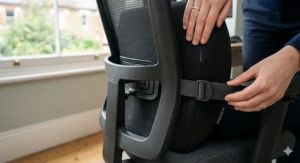
Getting the position right matters more than the cushion itself, oddly enough. Place it so the thickest part sits directly against the curve just above your hips, not halfway up your back — too high and you’ll just be adding a neck pillow by accident. Tighten straps enough that the cushion can’t slide but loose enough that you’re not strapped to your chair like cargo.
For damp British winters, give foam cushions a chance to fully air out after delivery; compressed memory foam can carry a faint chemical smell for the first day or two, which dissipates faster in a well-ventilated room than in a sealed, draught-proofed flat. If you’re working from a converted box room or a compact terraced house spare bedroom, hollow-fibre options like the Quarry NHS cushion store flatter when not in use — handy if your home office doubles as a guest room.
Real Desks, Real Backs: Three UK Scenarios
Picture a graphic designer working from a converted loft in Bristol, hunched over a tablet for ten hours a day — she’s better served by the firm, structured support of the Cushion Lab pillow, since light, occasional cushions simply can’t keep pace with that kind of desk time.
Compare that to a part-time bookkeeper in a Manchester semi, splitting her week between a desk chair and an armchair by the window — the dual-purpose HOMESCAPES cushion fits both setups without looking out of place in either room.
And then there’s a recent graduate in a shared London flat, working from a £40 desk chair that came with the tenancy and offers zero lower-back support — the budget-friendly Denny International or Comfortpad UK picks solve the immediate problem without blowing a graduate-scheme salary on day one.
How to Choose a Lumbar Support Cushion in the UK
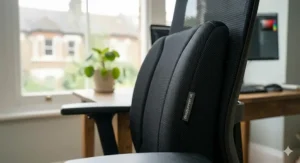
What is a lumbar support cushion for office chair use? It’s a contoured pad — typically memory foam or fibre-filled — designed to fill the gap between your lower back and your chair’s backrest, restoring the natural inward curve of the spine that most office chairs fail to support on their own.
- Match firmness to your current pain level. Mild discomfort suits softer fibre fill; chronic or recurring pain suits denser foam like the Cushion Lab option.
- Check your chair’s existing backrest gap. A deep gap needs a thicker cushion; a shallow one needs something slimmer to avoid pushing you too far forward.
- Prioritise breathability if your room runs warm. South-facing offices and poorly ventilated flats favour mesh or hollow-fibre builds over dense foam.
- Confirm strap compatibility with your chair width. Most straps fit standard desk chairs, but wider executive or gaming chairs may need an extension.
- Decide whether portability matters. If you move between desk, sofa, and car, a lighter, strap-free design like HOMESCAPES travels more easily than a bulky orthopaedic one.
Common Mistakes When Buying a Lumbar Support Cushion
The biggest mistake is buying on size alone — a larger cushion isn’t automatically better support, and an oversized pillow can push you forward into an awkward, hunched position rather than an upright one. A close second is ignoring your existing chair height: add a thick cushion to a low chair and your knees end up higher than your hips, undoing any posture benefit entirely.
People also tend to skip reading the strap mechanism details, then get frustrated when a single-strap design slides constantly during a long video call. And in classically British fashion, plenty of buyers underestimate how warm memory foam runs indoors once the central heating kicks in for the winter — a mistake that’s easily avoided by checking for mesh or hollow-fibre alternatives upfront.
Lumbar Cushion or Ergonomic Chair? Knowing When You Need Which
A lumbar pillow is a patch, not a cure, and it’s worth being honest about that distinction. If your chair has zero adjustability — fixed height, fixed backrest, no recline — a cushion can only do so much before the chair’s fundamental limitations win out. In that case, even a modest ergonomic chair upgrade tends to outperform any add-on cushion long-term.
Where a cushion genuinely shines is on a chair that’s otherwise decent but missing that one specific lower-back contour — common in budget desk chairs, dining chairs pressed into home-office duty, and rental furniture you can’t justify replacing. For most UK home workers dealing with a serviceable-but-imperfect chair, a £25–£40 cushion solves 80% of the problem for a fraction of the cost of a new chair.
What to Expect: Real-World Performance in British Conditions
Specs rarely mention how a product behaves in a typical British home — smaller rooms, less consistent heating, more humidity than continental Europe. Memory foam cushions, in particular, respond to temperature: they soften in a warm room and stiffen slightly in a cold one, which means a cushion that felt perfect in September might feel marginally firmer come a chilly January morning before the heating’s properly kicked in.
The HSE’s official guidance on display screen equipment specifically lists lower back support — cushion included — as one of the standard elements of a properly set-up workstation, which is a useful bit of validation if you’re trying to convince a employer to expense one. Worth keeping that link bookmarked if you’re filing a workstation assessment request at work.
Features That Actually Matter (And Those That Don’t)
Strap quality matters more than marketing copy suggests — a cushion that slides is a cushion you’ll stop using within a fortnight, regardless of how supportive the foam itself is. Breathable cover material matters too, particularly for anyone in a warmer room or prone to back sweat during long calls.
What matters considerably less: colour options, “ergonomic” branding slapped on a generic foam block, and oversized dimensions that promise “full back coverage” but often just mean more foam pressing into your mid-back rather than targeted lumbar support. A precisely shaped, modestly sized cushion typically outperforms a sprawling one that tries to do everything at once.
Long-Term Cost and Care in the UK
A decent lumbar cushion should last one to three years of daily use before the foam noticeably softens, which works out at roughly £10–£20 a year even for the premium Cushion Lab pick — considerably cheaper than a single physiotherapy session, for context. Removable, washable covers extend usable life by keeping sweat and skin oils from breaking down the foam prematurely, so it’s worth checking that detail before buying rather than after.
If a cushion arrives faulty or doesn’t match its description, UK shoppers have stronger protection than many realise: the Consumer Rights Act gives you a 30-day window to reject faulty goods outright, and online purchases come with an additional cooling-off period under the Consumer Contracts Regulations, letting you change your mind even if nothing’s actually wrong with the item. Worth knowing before you click “buy,” not after.
Frequently Asked Questions
❓ Do lumbar support cushions for office chairs actually work?
❓ What is the best lumbar support cushion for office chair use in the UK?
❓ How long does delivery take on Amazon.co.uk for lumbar cushions?
❓ Can a lumbar cushion fit any office chair?
❓ Are memory foam lumbar cushions too warm for UK summers?
Conclusion
There’s no single best lumbar support cushion for office chair use — only the one that matches your chair, your budget, and how warm your home office actually gets in July. Budget shoppers are well served by the Denny International or Comfortpad UK options; anyone managing genuine chronic discomfort should look toward the Cushion Lab pick despite the higher price; and everyone in between has five solid, sensibly priced choices that land comfortably under £35.
Whichever you choose, the real win is consistency — a cushion left unused in a drawer does nothing for your back. Set it up once, adjust the straps properly, and give it a fortnight before judging whether it’s the right fit.
Recommended for You
- 7 Best Office Chair Seat Cushions UK 2026 — Beat Back Pain Now
- Office Chair Gas Lift Replacement: 7 Best UK Picks (2026)
- Best Rollerblade Office Chair Wheels UK 2026: Top 7 Picks
Disclaimer: This article contains affiliate links. As an Amazon Associate, I earn from qualifying purchases. If you purchase products through these links, we may earn a small commission at no additional cost to you.
✨ Found this helpful? Share it with your mates! 💬🤗
