
In This Article
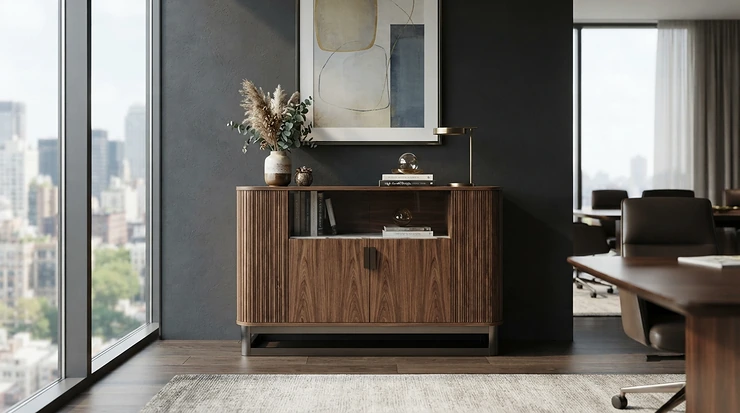
Every office has one: the cupboard everyone quietly resents. It’s overstuffed, it wobbles when the door opens, and it hides something vital behind a wall of dead toner. Picking the right office cupboard for storage ends that story, and it matters more now than the tidy-desk brigade would have you believe.

Paper hasn’t died. It has just gone into hiding. Contracts, payslips, client files, spare keys and expensive kit all need somewhere secure. The ICO’s records-management guidance lists keeping physical records in locked rooms, cabinets, cupboards or drawers as a control against unauthorised access. A decent office cupboard for storage is, in effect, a low-tech data-protection measure with a handle on it.
This guide skips the marketing waffle. It compares seven real, UK-available options, from a compact lockable unit to full-height steel, and explains what each spec means in daily use. It also tackles the general office cupboard question (steel, board or flat-pack?) and shows why an enclosed storage cupboard office setup beats open shelving for anything confidential. Along the way you’ll see how adjustable shelving and door hinge type shape everyday life, and how to map your office storage needs before spending a penny.
One note on method. Prices below are indicative bands based on comparable UK listings at the time of research, never exact figures, so check the current price before you buy. Specs come from manufacturer and retailer listings. Where I couldn’t verify independent reviews, I say so rather than guess.
Office Cupboard for Storage: Quick Comparison
Here’s the whole field at a glance, ordered from lightest-touch to most heavily equipped.
| Product | Size (H × W × D) | Doors & shelves | Indicative price | Best For |
|---|---|---|---|---|
| VASAGLE LSC089B01 | 80 × 70 × 30 cm | 1 sliding door, 1 adjustable shelf | £60–£100 | Tight spaces, light stationery |
| MMT Beech Storage Cabinet (75 cm) | 75 cm tall (check listing for width and depth) | 2 lockable doors, adjustable shelf | £70–£120 | Client-facing rooms |
| SONGMICS OMC012 | 99 × 60 × 40 cm | 2 doors, 2 adjustable shelves, lock | £90–£140 | Compact lockable steel |
| SONGMICS OMC015 | 180 × 80 × 40 cm | 2 doors, five tiers, lock | £130–£190 | Best all-rounder |
| MMT Steel Storage Cabinet (180 cm) | 180 × 60 × 40 cm | 2 doors, 4 adjustable shelves, lock | £110–£170 | Heavy stock and supplies |
| LAND·VOI 5-Tier Steel Cabinet | 181.5 × 80 × 40 cm | Double door, five tiers, lock | £120–£180 | Shoppers comparing full-height rivals |
| SONGMICS OMC016 | 180 × 80 × 40 cm | 4 doors, 5 shelves, 2 locks | £170–£250 | Narrow corridors, split access |
Looking at the table, the SONGMICS OMC015 sits in the sweet spot for most small businesses, with full height, a lock and a sensible footprint. If your shelves will carry genuinely heavy loads, the MMT Steel Storage Cabinet (180 cm) justifies its narrower frame with its 70 kg-per-shelf rating. Budget buyers should note that the VASAGLE LSC089B01 trades security for price and style, because the listings I found mention no lock.
💬 Just one click — help others make better buying decisions too!😊
Top 7 Office Cupboard for Storage Picks: Expert Analysis
Each pick below follows the same logic: what the spec means in practice, who it suits, and what the evidence does and doesn’t tell us.
1. SONGMICS OMC015 — the tall steel all-rounder
The SONGMICS OMC015 earns its place by doing the dull things properly: it’s 180 cm tall, it locks, and the box includes an anti-tip device. At 80 × 40 × 180 cm and roughly 40 kg empty, it’s heavy enough to feel planted but still manageable for two people. Each shelf is rated at about 25 kg, which works out at roughly ten reams of A4 per level. That’s fine for box files and stationery, but not for stacked archive boxes of old accounts. The 40 cm depth swallows A4 lever arch files with room to spare.
On paper, this is the sensible default for a general office cupboard in a small business, wide enough to be useful and slim enough for a hallway alcove. The anti-tip hardware matters as much as the lock, because a full-height cabinet that can topple is a liability. I couldn’t verify a meaningful pool of independent reviews for this exact model code. Lean on the listing’s own ratings and read the lower-star reviews for assembly complaints. The maker’s notes recommend a drill, which tells you assembly isn’t a five-minute job.
Pros:
- ✅ Full 180 cm height for serious capacity
- ✅ Anti-tip device included in the box
- ✅ Powder-coated steel wipes clean easily
Cons:
- ❌ 25 kg per shelf limits dense archives
- ❌ Assembly needs a drill and patience
Expect roughly £130–£190, which is good value if you want enclosed height without paying for 70 kg shelves.
2. MMT Steel Storage Cabinet (180 cm) — 70 kg per shelf
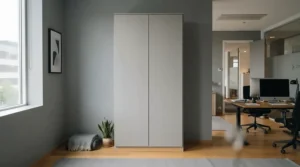
If other cabinets are sprinters, the MMT Steel Storage Cabinet (180 cm) is a weightlifter. The listing describes four adjustable metal shelves, each rated at up to 70 kg, inside a 180 × 60 × 40 cm grey steel body with two hinged, lockable doors and adjustable feet. That rating is nearly triple the 25 kg common in this price bracket, and it means a box of printer paper (around 12–13 kg per five-ream box) isn’t a worry. The adjustable feet are a quiet bonus, because older offices often have floors that are anything but level.
The trade-off is the 60 cm width. It slips into narrow gaps, but wide items won’t fit. Based on the spec comparison, this is the better choice for supplies, boxed stock and heavy binders, and less suited to bulky wide kit. The 70 kg figure is also a manufacturer claim. Check how the maker says the load should be spread, because shelf ratings usually assume even distribution. I found the retailer description but no verifiable pool of independent reviews, so I’m not going to invent sentiment.
Pros:
- ✅ 70 kg-rated shelves handle heavy stock
- ✅ Adjustable feet cope with uneven floors
- ✅ Slim 60 cm width fits narrow gaps
Cons:
- ❌ Narrow width limits wide items
- ❌ Load rating is an unverified maker claim
Typically in the £110–£170 range, and strong value if weight capacity is your priority.
3. SONGMICS OMC016 — four doors, tiny swing arc
The SONGMICS OMC016 takes the same 80 × 40 × 180 cm frame as its two-door sibling and splits the front into four narrow doors, with five shelves and two locks. It weighs around 40.7 kg, carries a per-shelf rating of about 25 kg and includes an anti-tip device. The clever bit is geometry. Each door is roughly 20 cm wide, so it needs only a sliver of clearance to open, which suits corridors and cramped back rooms.
Two locks also open up access control. Imagine finance files behind one pair of doors and general stationery behind the other, with different key-holders. Retailer data from one European shop ranked it 15th of more than 8,000 office cupboards at the time of research. That signals demand, not quality, so treat it as a nudge rather than proof. More doors also mean more hinges to align, and misaligned doors are the classic complaint with any multi-door steel cabinet.
Pros:
- ✅ Four narrow doors need little swing room
- ✅ Two locks allow split access levels
- ✅ Anti-tip device included
Cons:
- ❌ More hinges to align and maintain
- ❌ Pricier than the two-door version
Around £170–£250. Worth it when space or split access drives the decision, otherwise the SONGMICS OMC015 is cheaper.
4. LAND·VOI 5-Tier Steel Cabinet — closest full-height rival
The LAND·VOI 5-Tier Steel Cabinet is the one to put next to the SONGMICS OMC015 for a head-to-head. It measures 40 × 80 × 181.5 cm in black, with a lockable double-door front and adjustable shelves across five tiers. That extra 1.5 cm of height changes nothing in practice, so the real differences come down to shelf ratings, lock quality and the anti-tip kit, none of which I could confirm from the listings I found.
It appeared in the top slot of a UK comparison roundup, but that’s an affiliate ranking rather than customer evidence, so I’m not treating it as validation. What the spec sheet won’t tell you, and what buyers should check before ordering, is whether a per-shelf load figure is published. If it isn’t, assume the common 25 kg class and plan around that. For a modern office where a black finish suits the décor, it’s a credible alternative, particularly if it undercuts the SONGMICS pair.
Pros:
- ✅ Full-height five-tier layout
- ✅ Lockable double doors
- ✅ Sleek black finish suits modern offices
Cons:
- ❌ Shelf load rating not stated in listings found
- ❌ Lesser-known brand with fewer reference reviews
Roughly £120–£180. Good value if the missing specs check out, and a coin-flip against the SONGMICS OMC015 otherwise.
5. SONGMICS OMC012 — compact lockable steel
For small spaces, the SONGMICS OMC012 (60.1 × 40.2 × 99 cm, 17.6 kg) is the grown-up option. It’s powder-coated steel with a lock and two keys, and the listing describes the finish as water-repellent and rust-proof. Two adjustable shelves create three compartments, and here’s the catch. An upright A4 lever arch file needs roughly 320 mm of height and 285 mm of depth, so with all three compartments in use you’ll be tight. Drop to a single shelf for tall files, or use box files lying flat.
At under 18 kg, one person can move it, which is a real plus in a rented room. It’s a smart choice for a home office or a corner beside a desk, where a lockable place for the cash box, invoices and spare keys matters more than capacity. I couldn’t verify independent reviews for this exact model, so the evidence here is spec-based. The listing’s use of a steel lock is a plus over cheap plastic barrels.
Pros:
- ✅ Compact footprint suits small rooms
- ✅ Steel lock with two keys included
- ✅ Light enough for one person to move
Cons:
- ❌ Limited height for upright lever arch files
- ❌ Capacity too small for busy teams
Typically £90–£140. Good value as a lockable secondary unit.
6. MMT Beech Storage Cabinet (75 cm) — warm, wood-effect finish
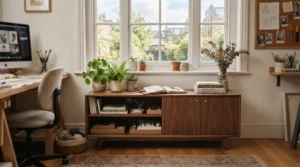
The MMT Beech Storage Cabinet (75 cm) is a different animal, a two-door, lockable, wood-effect cupboard with an adjustable shelf, pitched at home and office use. At 75 cm tall it behaves like a sideboard, so it suits reception areas or client-facing rooms where grey steel would feel clinical. The surface can host a plant or a lamp, though I couldn’t confirm a top-load limit, so check the listing before putting a printer on it.
Board shelves are quieter and warmer than steel, but they can bow under sustained weight, so keep heavy ream boxes at the bottom and lighter items above. Forced-entry resistance is also lower than steel’s, so this is a tidy-and-private choice rather than a high-security one. I couldn’t verify independent reviews for this model. The product title and description are the only evidence I have, and I’d rather say so than dress it up. Confirm the width and depth on the listing before you measure your space.
Pros:
- ✅ Warm beech look suits client-facing rooms
- ✅ Lockable doors with adjustable shelf
- ✅ Sideboard height doubles as a display surface
Cons:
- ❌ Board shelves can bow under heavy loads
- ❌ Lower forced-entry resistance than steel
Roughly £70–£120. A good-value pick where looks matter as much as capacity.
7. VASAGLE LSC089B01 — sliding door, zero swing
The VASAGLE LSC089B01 is the odd one out, and deliberately so. It’s 80 cm tall, 70 cm wide and 30 cm deep, weighs 17.5 kg and is rated for up to 30 kg in total. Instead of hinged doors it has a sliding barn-style door over a steel-framed body with an adjustable shelf and an open compartment. A sliding door needs no swing clearance at all, which makes it ideal for a corridor-side spot where hinged doors would clip passers-by.
The compromises are real. A buyer Q&A on a mirrored listing put the shelf compartments at roughly 27 cm deep, too shallow for upright A4 lever arch files, and none of the listings I found mention a lock. So this is for stationery, printer consumables and display, not confidential papers. On the listing data I saw, ratings sat in the high-4s from roughly 2,000 reviewers. One buyer warned that the middle panel looks symmetrical but isn’t, so check the orientation before tightening anything.
Pros:
- ✅ Sliding door needs zero swing clearance
- ✅ Strong buyer ratings on the listing
- ✅ Industrial styling suits creative studios
Cons:
- ❌ No lock mentioned in the listings found
- ❌ Shallow compartments suit lighter stationery
Around £60–£100. Great value for non-confidential storage.
How the Seven Compare on Security and Load
| Product | Lock | Shelf load (per listing) | Door style | Best For |
|---|---|---|---|---|
| VASAGLE LSC089B01 | None found | 30 kg max overall | Sliding | Tight spaces, stationery |
| MMT Beech Storage Cabinet (75 cm) | Lockable | Not stated | Hinged | Client-facing rooms |
| SONGMICS OMC012 | Steel lock, 2 keys | Not stated | Swing | Compact secure storage |
| SONGMICS OMC015 | Lock | About 25 kg | Double swing | General small-office use |
| MMT Steel Storage Cabinet (180 cm) | Lockable | Up to 70 kg | Two hinged | Heavy supplies |
| LAND·VOI 5-Tier Steel Cabinet | Lockable | Not stated | Double | Alternative to the SONGMICS OMC015 |
| SONGMICS OMC016 | Two locks | About 25 kg | Four narrow doors | Split access, narrow corridors |
Reading across the rows, only the MMT Steel Storage Cabinet (180 cm) publishes a heavy-duty shelf rating, and that’s what separates it from the rest. Where the table says “not stated”, assume modest ratings until the maker proves otherwise. Security-conscious buyers should favour the SONGMICS OMC016 for its two locks, while the VASAGLE LSC089B01 is the only option here that’s firmly in “tidy, not secure” territory.
What Is an Office Cupboard for Storage?
An office cupboard for storage is a lockable, enclosed cabinet, usually steel or laminated board, fitted with hinged or sliding doors and typically adjustable shelving. It keeps files, stationery, equipment and confidential papers out of sight and out of reach, protecting them from dust, prying eyes and everyday clutter.
Think of the general office cupboard as the workhorse between a filing cabinet and a full storeroom. A filing cabinet is built for hanging folders, with drawers that pull out. A cupboard is built for everything else: box files, stationery stock, spare chargers, first-aid kits, even a kettle’s worth of mugs. Most come in three flavours. Steel units are tough and secure. Board units look warmer but flex under load. Flat-pack folding steel designs ship cheaply and assemble quickly.
Typical sizes cluster around 180 cm tall, 80 cm wide and 40 cm deep for full-height units, with smaller 75–100 cm options for beside-the-desk use. If you remember one thing, make it this: the general office cupboard is chosen by what it holds, so decide your contents first and the size follows.
How to Choose an Office Cupboard for Storage
Choosing well takes seven checks, and each one has a reason behind it.
- Measure the swing as well as the footprint. An 80 cm two-door cabinet needs roughly 40 cm of clear arc per door. Sliding doors need none.
- Decide how secret “secret” is. A cam lock deters casual snooping, but it won’t beat a determined thief. Pair it with a key-control routine if personal data is involved.
- Read the load per shelf, not the total. A “280 kg cabinet” is only 70 kg per board, and the single shelf is what sags.
- Check internal depth against your files. An upright A4 lever arch file needs roughly 285 mm of depth and 320 mm of height.
- Match the door style to the room. Hinged doors suit open floor space, and sliding or narrow doors suit corridors.
- Insist on stability hardware. Anti-tip kits and adjustable feet matter more on a tall cabinet than any colour choice.
- Count the cost per year. A cupboard that survives a decade usually beats a cheaper one replaced twice.
Work through those in order and the shortlist shrinks quickly. Most buyers who choose an office cupboard for storage on price alone end up repeating step one, with a tape measure, after the delivery.
Enclosed Storage Cupboard Office: Why Closed Doors Beat Open Shelves
An enclosed storage cupboard office layout does three jobs that open shelving simply can’t. It controls access, it hides visual clutter and it keeps dust off whatever you’ve stored. In a client-facing room the last two alone justify it, because nothing undermines a polished office like a shelf of mismatched folders and charger cables.
Closed doors also help with ordinary day-to-day tidiness. When an enclosed storage cupboard office unit hides stock behind a door, people stop treating the front of a shelf as a dumping ground. Locking it adds a layer of accountability, since someone holds the key.
A few honest caveats apply. Ordinary steel cupboards are not fire-rated, so if you need genuine fire protection for irreplaceable documents, look for units tested and certified for it rather than assuming steel will cope. Enclosed units can also trap heat, so don’t shut chargers or routers inside without ventilation. And if you’re debating a single wide door or a pair, remember that doubling the doors halves the swing arc. Weighed against open shelving, an enclosed storage cupboard office setup wins on security and tidiness, and loses only on speed of access and on how easily you can see what’s inside.
Adjustable Shelving: Features That Actually Matter (And Those That Don’t)
Adjustable shelving is the feature every listing shouts about, yet few explain it. Here’s what to weigh.
What matters:
- Load per shelf. The rating on one board is what counts. A figure of around 25 kg suits stationery and files, and 70 kg suits heavy stock.
- Adjustment pitch. Some office ranges position shelves at 32 mm intervals, which lets you tune compartment heights precisely, while others offer only three or four slots.
- Shelf support method. Sturdy clips or pins and a lip on the shelf edge keep boards from slipping. Flimsy supports are the first thing to fail under load.
What doesn’t:
- Number of tiers. “5-Tier” is a marketing label. What you want is the right compartment heights, not the highest count.
- Vague claims like “heavy-duty”. If there’s no number attached, it’s decoration.
- Colour names. “Ink black” and “matte grey” are the same powder-coated steel.
Think of adjustable shelving as a shelf-height puzzle: files want about 33 cm, reams want 6 cm per ream, and kit wants whatever it wants. A cabinet with flexible shelf positions can be rebuilt as your office storage needs change, which is exactly what makes it a smarter buy than fixed shelves.
Door Hinge Type: What Actually Happens Behind the Door
Door hinge type decides whether a cupboard keeps working for years or quietly sags into uselessness. Most steel office cupboards use one of three types.
Butt hinges are two plates joined by a pin and are the classic door hinge. They’re strong and simple, but exposed.
Concealed hinges, also called cup or Euro hinges, hide inside the door when it’s closed. According to Wikipedia’s hinge overview, most concealed designs can be adjusted in position, pitch and roll with two screws per hinge. That’s a real maintenance advantage: when a door drops, you realign it in minutes. Some heavy-duty UK office cupboards use semi-concealed hinges welded to the door and riveted to the frame, which are tough but not adjustable.
Piano or continuous hinges run the full height of the door and spread the load evenly, which suits tall, heavy doors.
The listings for most of the cabinets above don’t spell out their hinge construction, so check the product photos before ordering. As a rule of thumb, adjustable hinges suit offices where doors get daily use, and welded hinges suit rough environments. Door hinge type also affects security. A badly aligned door leaves a gap at the lock, so a hinge that can’t be adjusted eventually weakens the lock it’s meant to support. Sliding doors, like the one on the VASAGLE LSC089B01, sidestep hinges completely but add track maintenance.
Mapping Your Office Storage Needs: A Decision Framework
Before comparing models, spend ten minutes on your actual office storage needs. It’s the cheapest bit of research you’ll do.
Step 1: Audit what you hold. List the categories: confidential paper, general paper, stationery, equipment, personal items. Estimate the weight of each in kilograms.
Step 2: Sort by sensitivity. Anything with personal data goes behind a lock. Everything else can sit in open or sliding-door storage.
Step 3: Map the space. Measure width, depth, ceiling clearance and the door-swing arc.
Step 4: Apply the rules.
- If you store heavy supplies, choose a 70 kg-class shelf such as the MMT Steel Storage Cabinet (180 cm), because the shelves won’t bow under load.
- If you handle client files in a standard small office, choose the SONGMICS OMC015 or the LAND·VOI 5-Tier Steel Cabinet, because both offer full height with a lock.
- If the corridor is narrow, choose the SONGMICS OMC016, because four small doors need minimal swing.
- If looks and light loads dominate, choose the MMT Beech Storage Cabinet (75 cm) or the VASAGLE LSC089B01, because both prioritise appearance and compactness.
Get the audit right and the product choice is almost automatic. Skip it, and even the best cupboard will feel wrong within a month.
Setting Up Your Cupboard: A Practical First-30-Days Guide
Most cupboard grief starts in week one, so get the setup right.
Day 1: Position and level. Put the cabinet where it will live, because moving a loaded one is miserable. Use adjustable feet to level it so the doors hang true.
Day 1: Anchor it. Fix tall units to the wall with the supplied anti-tip kit, into proper fixings rather than plasterboard alone. A 40 kg cabinet loaded with paper is a serious hazard if it tips.
Day 2: Load smartly. Heaviest items go on the bottom, lightest on top, and nothing you reach for daily goes above head height.
Day 3: Label and log. Label each shelf, then write down who holds which key. Keep a spare in a separate, secure place.
Week 2: Check the doors. Watch for sag or rubbing. If your hinges are adjustable, nudge the screws now, before the problem sets.
Week 4: Re-sort. After a month you’ll know what you actually reach for. Rebuild the adjustable shelving to match.
Ongoing: Quarterly check. A drop of light oil on hinges, a wipe-down, a quick look for dents or loose shelf supports, and a glance at the key log.
Common first-month mistakes include overloading one shelf, forgetting the anti-tip fixing, and letting a single key wander off with a departing employee. Avoid those three and the cupboard will quietly outlast the lease.
Real-World Scenarios: Matching Cupboards to Offices
Here are three imagined profiles that show how the reasoning plays out.
Scenario 1: A two-person accountancy. A converted back bedroom, daily use, client files in A4 lever arch binders and a modest budget in the £130–£190 range. Confidential papers demand a lock and an organised shelf system. The SONGMICS OMC015 fits: 40 cm depth for the binders, a lock, and the anti-tip device for safety. If they also archive heavy boxed records, the MMT Steel Storage Cabinet (180 cm) would carry more per shelf.
Scenario 2: A freelance designer in a spare room. Light stationery, printer paper and sample books, used a few times a week, on a budget under £100. Nothing here is confidential, and the cupboard sits visibly in a living space. The VASAGLE LSC089B01 gives a sliding door and an industrial look at a gentle price, with no swing clearance needed.
Scenario 3: A small clinic reception. A corridor only 90 cm wide, constant daily access, and consumables plus staff paperwork needing a lock. Hinged double doors would clip passing staff. The SONGMICS OMC016 solves it with four narrow doors and two locks, so reception can hold one key and the manager the other.
The pattern is simple: let the heaviest constraint (weight, security or space) choose the product, and let budget pick between near-equals.
Office Cupboard for Storage vs Filing Cabinet vs Open Shelving
Which format should you buy at all? The answer depends on what you store and how often you reach for it.
| Option | Security | Flexibility | Space efficiency | Best For |
|---|---|---|---|---|
| Office cupboard (e.g. SONGMICS OMC015) | High with a lock | High with adjustable shelves | Good vertical use | Mixed stationery, files and kit |
| Filing cabinet (drawers) | High with a lock | Low, folders only | Needs pull-out clearance | Hanging-folder records |
| Open shelving (e.g. a bookcase) | None | High | Excellent | Display and non-sensitive items |
| Low sideboard (e.g. MMT Beech Storage Cabinet (75 cm)) | Moderate | Moderate | Compact | Client-facing rooms |
The table shows why the cupboard keeps winning for generalist offices. It balances security and flexibility in a way neither a filing cabinet nor open shelves can manage. A drawer-based filing cabinet is brilliant for hanging folders but poor for bulky items, and it needs clearance for the drawer to open. Open shelving is the most space-efficient option but offers no access control, so keep it for things you’re happy to leave visible. Wherever confidentiality, variety and tidiness all matter, an office cupboard for storage is the most sensible compromise.
Safety, GDPR and Compliance Guide
Safety and compliance sound dull until something goes wrong, so here’s the practical version. This isn’t legal advice, but it reflects published guidance.
Data protection. The ICO’s records-management toolkit says physical records should be kept in locked rooms, cabinets, cupboards or drawers, and notes that unsecured storage may breach UK GDPR articles 5(1)(f) and 32. It also recommends an access log. For a sense of the stakes, the ICO reportedly fined a London pharmacy £275,000 after patient records were found in unlocked crates. A locked cupboard plus a simple key log is a sensible, low-cost response.
Shelf and cupboard safety. The Northern Ireland business advice service explains safe use of shelves, racks and pallets. Its advice includes following manufacturers’ installation instructions, keeping floors sound and level, stacking the heaviest items at the bottom and keeping frequently needed materials below head height. It also says to check units regularly for damage. Everything there applies to a modest office cupboard.
Practical rules of thumb:
- Never exceed the per-shelf load rating
- Always fit the anti-tip kit on tall units
- Treat a cam lock as a deterrent, not a vault
- Don’t assume steel means fire-proof
Get those four right and you’ve covered most of the realistic risks.
Long-Term Cost and Maintenance
The sticker price is the smallest part of owning a cupboard. A steel cabinet in the mid-£100s that lasts ten years costs roughly £15 a year. A cheaper board unit that sags and needs replacing every three or four years can easily cost more over the same decade.
Beyond the purchase price, budget for the following:
- Delivery. Bulky flat-pack boxes can attract carriage costs, so check before you order.
- Assembly time. A drill-assembled 40 kg cabinet takes real time, so factor in labour if you’re paying someone.
- Fixings. Wall anchors for the anti-tip kit are cheap, but they’re part of the true cost.
- Replacement keys and locks. Cheap cam locks sometimes share key patterns, so changing the lock barrel can be worthwhile.
Maintenance itself is minimal: an occasional hinge check, a wipe-down and a glance at shelf supports. The expensive failure is the one that happens when a door sags and the lock no longer lines up. Spending a little more on adjustable hinges and sturdy shelf supports usually pays back, and the SONGMICS OMC015 and MMT Steel Storage Cabinet (180 cm) are the two I’d weigh first for long-run value.
FAQ
❓ How tall should an office cupboard for storage be?
❓ Is a cam lock secure enough for confidential files?
❓ Can A4 lever arch files fit a 40 cm deep cupboard?
❓ Do I need to fix a tall cupboard to the wall?
❓ Steel or board: which lasts longer in a busy office?
Conclusion
The best office cupboard for storage isn’t the biggest or the cheapest. It’s the one that matches your weights, your space and your level of sensitivity. For most small offices, the SONGMICS OMC015 is the sensible default: full height, lockable, with an anti-tip kit included. When shelves must carry serious weight, the MMT Steel Storage Cabinet (180 cm) is the better bet with its 70 kg rating. Tight corridors point to the SONGMICS OMC016, and compact lockable needs to the SONGMICS OMC012. If appearance leads, the MMT Beech Storage Cabinet (75 cm) and the VASAGLE LSC089B01 deliver, as long as you accept a lighter security story. The LAND·VOI 5-Tier Steel Cabinet is worth a look as the full-height alternative, provided its missing specs check out.
Remember the bigger picture too: a general office cupboard works best when you’ve audited your office storage needs first, picked adjustable shelving that suits your files, and checked door hinge type for long-term reliability. Do that, and the cupboard everyone resents becomes the one nobody thinks about, which is the highest compliment storage can earn.
✨ Ready to tidy up for good?
🛒 Click any highlighted product name above to check current pricing and availability on amazon.co.uk, and give your office the secure, organised storage it deserves!
Recommended for You
- Office Cupboards Under £150: 7 Best Buys That Won’t Wobble (2026)
- Best Office Cupboard: 7 Proven Picks For UK Offices (2026)
- Glass Door Cabinet vs Sliding Door Cabinet: 7 Best Picks (2026)
Disclaimer: This article contains affiliate links. As an Amazon Associate, I earn from qualifying purchases. If you purchase products through these links, we may earn a small commission at no additional cost to you.
✨ Found this helpful? Share it with your friends! 💬🤗
