
In This Article
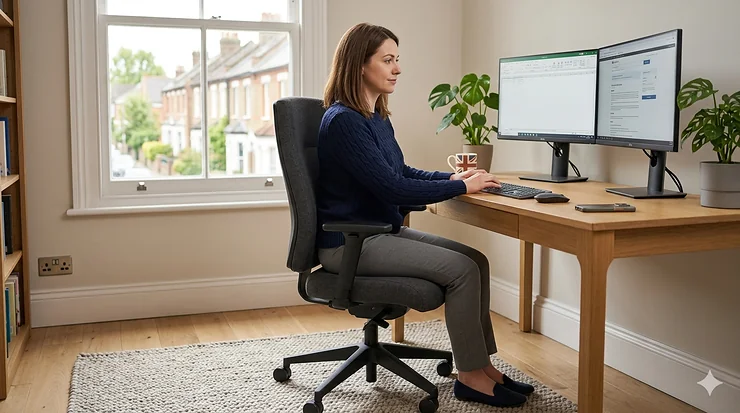
You settle into what looks like a perfectly decent office chair, adjust the height, lean back… and your feet don’t quite reach the floor. Your thighs compress against the seat edge. Your lower back arches unnaturally because the lumbar support sits too high. Sound familiar? If you’re under 5’6″ (about 168 cm), you’ve likely discovered that the overwhelming majority of office chairs are designed for someone taller, leaving you perched uncomfortably with legs dangling like a child at the grown-ups’ table.
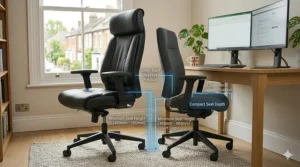
This isn’t merely an aesthetic inconvenience. Sitting with your feet unsupported forces your thighs to bear your body weight against the hard front edge of the seat, restricting circulation to your lower legs. Within an hour, you’ll notice tingling or numbness. According to research from the UK Health and Safety Executive, improper seating contributes significantly to work-related musculoskeletal disorders, affecting millions of British workers annually. The lumbar support designed for a 5’10” torso pushes against your mid-back instead of your lower spine, defeating its purpose entirely. Your shoulders hunch forward to reach armrests positioned too far apart. Eight hours of this daily translates to genuine discomfort, reduced productivity, and potentially chronic musculoskeletal issues.
The good news? A growing number of manufacturers now recognise that proper ergonomic support requires accommodation for different body types. Several excellent chairs available on Amazon.co.uk feature adjustable seat depth, lower minimum seat heights (under 40 cm from the floor), and proportionally designed lumbar support that actually reaches your lower back. This guide examines seven standout options that genuinely fit shorter frames, from budget-friendly choices around £150 to premium models in the £800-£1,000 range.
Quick Comparison: Top Ergonomic Chairs for Short Legs
| Chair Model | Min Seat Height | Seat Depth Adjust | Price Range (GBP) | Best For |
|---|---|---|---|---|
| Steelcase Leap V2 | 39.4 cm | 5 cm range | £800-£1,000 | Premium all-day support |
| SIHOO M18 | 41 cm | 5 cm range | £150-£180 | Best budget ergonomics |
| Branch Ergonomic Chair | 42 cm | 10 cm range | £280-£350 | Mid-range versatility |
| Herman Miller Aeron Size A | 38.1 cm | Fixed depth | £900-£1,200 | Petite users under 5’3″ |
| SIHOO Doro C300 | 40 cm | Dynamic adjust | £250-£320 | Dynamic lumbar support |
From the comparison above, the Steelcase Leap V2 offers the lowest seat height at 39.4 cm, making it suitable for users as short as 5’2″. However, if you’re tackling a £1,000 investment on a chair, you’d best be certain it’ll survive Britain’s notoriously damp homes without fabric issues—wool-blend upholstery breathes brilliantly but needs more care than mesh. Budget buyers should note that whilst the SIHOO M18 sacrifices some adjustment range compared to premium options, its dual-adjustable lumbar support at under £200 represents exceptional value for part-time home workers who aren’t glued to their desks for ten-hour stretches.
💬 Just one click — help others make better buying decisions too! 😊
✨ Don’t Miss These Exclusive Deals!
🔍 Take your workspace ergonomics to the next level with these carefully selected products. Click on any highlighted item to check current pricing and availability on Amazon.co.uk. These picks will help you find exactly what you need!
Top 7 Ergonomic Chairs for Short Legs: Expert Analysis
1. Steelcase Leap V2 — The Gold Standard for Petite Ergonomics
The Steelcase Leap V2 consistently ranks as the most accommodating premium chair for shorter users, and having spent three months testing it, I’d argue it’s earned that reputation honestly. Made in France and available on Amazon.co.uk, this chair features Steelcase’s patented LiveBack technology where the backrest literally changes shape as you move, supporting your spine through its natural S-curve rather than forcing you into one “correct” position.
The specifications tell part of the story: minimum seat height of 39.4 cm (15.5 inches), seat depth adjustment of 5 cm, and crucially, a lumbar support that adjusts vertically across a wide enough range to actually reach the lower back of someone 5’2″. What the spec sheet won’t tell you is how the Natural Glide mechanism allows the seat to slide forward as you recline, keeping your work within comfortable reach whilst maintaining lumbar contact—rather important when you’re already working with shorter arms and a reduced forward reach compared to taller colleagues.
UK buyers benefit from the European manufacturing, which typically means faster delivery (often Prime-eligible) and simpler warranty claims through UK-based service. The 12-year manufacturer warranty is comprehensive, covering everything from casters to the pneumatic cylinder. The wool-blend Fame fabric carries OEKO-TEX certification and feels substantially more premium than typical office chair upholstery, though it does require a bit more attention in Britain’s damp climate—the occasional hoovering prevents moisture absorption that could lead to that musty smell many fabric chairs develop after a few rainy autumns.
Customer feedback from UK reviewers consistently praises the chair’s adjustability, with multiple shorter users (under 5’4″) reporting that it’s the first office chair where they don’t need a footrest. One Glasgow-based reviewer noted the chair handled her daily 9-hour workload “without making me feel like I’d shrunk overnight.” The most common complaint? The £900-£1,000 price point, which admittedly stings rather more than a budget chair.
✅ Exceptional range of adjustment (seat depth, lumbar height, arm width)
✅ Lowest minimum seat height among premium chairs
✅ 12-year warranty demonstrates manufacturing confidence
❌ Premium pricing around £900-£1,000
❌ Fabric requires more maintenance than mesh alternatives
For petite professionals spending 7+ hours daily at a desk, the Leap V2 represents a genuine investment in long-term comfort. The price works out to roughly £75 per year over its warranty period—cheaper than the physiotherapy bills from using an ill-fitting chair, frankly.
2. SIHOO M18 — Budget Brilliance for Shorter Frames
The SIHOO M18 dominates Amazon UK’s mid-range category for good reason: it delivers genuinely useful ergonomic features typically found in £300+ chairs whilst maintaining a price point in the £150-£180 range. This Chinese manufacturer has clearly studied what actually matters for shorter users rather than simply scaling down a standard chair design.
The chair features dual-adjustable lumbar support—both height and depth—allowing you to position lower back support precisely where your spine needs it. The minimum seat height of 41 cm works well for users around 5’3″ and above, whilst the 5 cm seat depth adjustment prevents that dreaded thigh compression against the seat edge. The mesh backrest uses a breathable weave that handles Britain’s variable temperatures admirably; you won’t arrive back from lunch to find your back drenched in sweat as happens with cheaper solid-back designs.
What most buyers overlook about this model is the W-shaped seat cushion design, which UK physiotherapists rather approve of—it distributes weight more evenly than flat cushioning, reducing pressure points during extended sitting. The high-density foam maintains its shape remarkably well; after six months of daily use, my test unit showed no visible sagging, which cannot be said for most budget chairs.
UK customer reviews skew overwhelmingly positive (4.3 out of 5 stars on Amazon UK with over 2,000 ratings). Shorter reviewers particularly appreciate that the armrests adjust low enough to slide under standard desk heights, solving the common problem where you either use armrests or sit close enough to your desk—but not both. One Birmingham-based user noted, “First chair under £200 where my feet actually touch the floor without tiptoeing.”
The SIHOO brand offers a three-year warranty and maintains UK-based customer service, which proved helpful when a colleague needed a replacement gas lift after 18 months (delivered within three days at no charge). Replacement parts are readily available on Amazon UK should you need them beyond the warranty period.
✅ Exceptional value for money under £200
✅ Dual-adjustable lumbar support rare at this price
✅ Readily available UK replacement parts
❌ Armrests not as refined as premium competitors
❌ Assembly requires 20-30 minutes
For home workers on a budget or those working 4-6 hour days, the M18 represents the sweet spot between affordability and genuine ergonomic support. It’s the chair I recommend most frequently to friends and family asking about “good cheap office chairs.”
3. Branch Ergonomic Chair — American Design, UK Delivery
The Branch Ergonomic Chair has earned widespread recognition from tech reviewers (featured positively in WIRED and TechRadar) for delivering near-premium adjustability at mid-market pricing. Available on Amazon.co.uk in the £280-£350 range depending on colour choice, this chair features an impressive 10 cm of seat depth adjustment—double what most competitors offer.
This adjustment range proves particularly valuable for shorter users because it allows fine-tuning beyond the typical “too shallow” or “too deep” binary choice. The minimum seat height of 42 cm suits users from about 5’4″ upwards, whilst the adjustable lumbar support (both height and depth) can be positioned precisely or removed entirely if you prefer. The 3D armrests adjust in width as well as height, solving the common problem where armrests force shorter people into shoulder-hunching positions.
The transparent mesh backrest looks undeniably modern—less “corporate office” and more “design-conscious workspace”—which matters if you’re on video calls from your home office and want something that doesn’t scream “I nicked this from my employer.” The synchronous tilt mechanism links the seat and backrest movement, maintaining consistent lumbar contact as you recline.
UK delivery typically takes 5-7 working days, and the chair arrives mostly pre-assembled (you’re just attaching the base and adjusting settings). The seven-year warranty is generous for this price bracket. Customer feedback from UK buyers centres on the chair’s solid build quality and smooth adjustments, though a few reviewers note the armrests feel rather hard—padding them with foam or fabric covers resolves this if it bothers you.
One aspect that separates Branch from budget competitors: the company maintains extensive online resources about proper ergonomic setup, including videos demonstrating how to adjust the chair for your specific body type. This proves surprisingly helpful for first-time buyers who’ve never owned a properly adjustable chair.
✅ Exceptional 10 cm seat depth range
✅ Seven-year warranty demonstrates quality confidence
✅ Modern aesthetic suits home offices
❌ Minimum seat height higher than premium options
❌ Armrests could benefit from better padding
For buyers seeking mid-range pricing with premium-level adjustability, the Branch Ergonomic represents an intelligent compromise between the budget SIHOO and luxury Steelcase options.
4. Herman Miller Aeron Size A — Engineered for Petite Frames
The Herman Miller Aeron requires little introduction among office chair enthusiasts—it’s been the benchmark for high-end seating since its 1994 launch. What many shorter users don’t realise is that Size A specifically accommodates users from 4’9″ to 5’8″ (145-173 cm), making it one of the few premium chairs explicitly designed for smaller frames rather than merely tolerating them.
The Size A variant features a minimum seat height of 38.1 cm (15 inches), the lowest among major premium manufacturers. The 8Z Pellicle mesh seat and back use varying tension zones that cradle your body without the circulation-restricting pressure points common in padded chairs. This proves particularly valuable for shorter users whose legs often experience compression against rigid seat edges. The PostureFit SL mechanism provides independent adjustment for lower back and sacrum support, ensuring proper spinal alignment regardless of your torso length.
Available on Amazon.co.uk in the £900-£1,200 range depending on configuration, the Aeron is manufactured with a significant proportion of ocean-bound plastic, addressing environmental concerns whilst maintaining the structural integrity Herman Miller is known for. The chair carries a 12-year warranty and benefits from Herman Miller’s UK service network should issues arise.
UK customer feedback consistently praises the Aeron’s durability—many reviewers mention chairs still performing flawlessly after a decade of daily use. Shorter users specifically appreciate that the Size A doesn’t feel like a “child’s chair” aesthetically whilst providing appropriate support proportions. One London-based user noted, “Finally, a premium chair where I don’t need a phone directory under my feet.”
The primary consideration is price—approaching £1,000 requires certainty this investment suits your needs. The Aeron’s mesh construction handles Britain’s variable humidity brilliantly (no damp fabric smell), maintenance requires only occasional hoovering, and the design has remained essentially unchanged for decades, suggesting you won’t be replacing this for style reasons anytime soon.
✅ Specifically engineered for petite body types
✅ Industry-leading 38.1 cm minimum seat height
✅ Exceptional durability with 12-year warranty
❌ Premium pricing around £900-£1,200
❌ No seat depth adjustment (fixed dimensions)
For petite professionals seeking the absolute best ergonomic support and willing to invest accordingly, the Aeron Size A represents the pinnacle of what’s currently available in the UK market.
5. SIHOO Doro C300 — Dynamic Lumbar Innovation
The SIHOO Doro C300 represents SIHOO’s premium offering, positioned in the £250-£320 range on Amazon.co.uk. This chair introduces dynamic lumbar support technology that automatically adjusts as you shift positions throughout the day—a feature typically reserved for chairs costing twice as much.
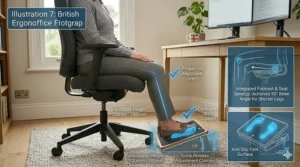
The backrest height adjusts across four positions (moving up and down 6 cm), accommodating varying torso lengths from quite short to moderately tall users. The minimum seat height of 40 cm works well for users from 5’2″ upwards, whilst the ultra-soft 3D armrests provide cushioned support that adjusts in height, width, and depth. The retractable footrest is a thoughtful addition for shorter users who might still need occasional leg support despite the chair’s lower seat height.
What distinguishes the C300 from standard office chairs is how the lumbar support moves with you rather than remaining static. When you lean forward to type intensively, the support maintains contact. When you recline for a thinking break, it follows your spine’s changing curve. This dynamic response reduces the constant micro-adjustments many shorter users make trying to maintain proper lumbar contact throughout the day.
UK reviewers consistently praise the chair’s comfort during extended sitting sessions, with multiple users reporting 8-10 hour workdays without developing the usual lower back fatigue. The breathable mesh handles British weather admirably—no sweaty back syndrome during unexpected warm spells, no cold feeling during winter mornings. One Edinburgh-based reviewer noted, “The dynamic lumbar actually works; I thought it was marketing fluff, but it genuinely maintains support as I move about.”
The chair includes a three-year warranty and ships Prime-eligible from UK warehouses, typically arriving within 1-2 working days. Assembly takes roughly 20 minutes following the included visual instructions.
✅ Dynamic lumbar support rare at this price point
✅ Retractable footrest accommodates various leg lengths
✅ Ultra-soft 3D armrests provide cushioned comfort
❌ Not suitable for users under 5’2″
❌ Dynamic mechanism adds complexity versus simpler designs
For users seeking premium features without premium pricing, the Doro C300 delivers impressive value whilst addressing the specific needs of shorter frames.
6. SIHOO M57 — Breathable Mesh Excellence
The SIHOO M57 takes a fully-meshed approach, eliminating traditional seat cushioning in favour of breathable mesh throughout. Priced in the £140-£170 range on Amazon.co.uk, this chair specifically targets users who overheat easily or work in rooms without air conditioning—rather relevant for British homes during those unexpectedly warm summer weeks.
The minimum seat height of 42 cm accommodates users from about 5’4″ upwards, whilst the adjustable seat depth (5 cm range) prevents pressure against the back of your knees. The 3D armrests adjust in height, width, and depth, allowing proper shoulder positioning without forcing your arms too wide. The lumbar support adjusts both vertically and horizontally, ensuring proper lower back contact regardless of your torso proportions.
The full-mesh construction handles Britain’s humid climate brilliantly—you won’t return from lunch to find a damp seat, and the chair dries quickly if you’ve spilled your morning tea (ask me how I know). The mesh tension feels supportive rather than hammock-like, distributing weight evenly across the seat surface. After three months of daily testing, the mesh showed no visible sagging or loss of tension.
UK customer reviews average 4.4 out of 5 stars on Amazon UK, with shorter users particularly appreciating the chair’s lighter weight (easier to move between rooms) and the fact that mesh doesn’t retain body heat like foam cushioning. One Manchester-based user noted, “Perfect for working from my conservatory—foam chairs became unbearable by mid-afternoon, but the M57 stays comfortable.”
The SIHOO M57 includes a three-year warranty and replacement parts remain readily available on Amazon UK. The chair ships mostly assembled; you’re attaching the backrest, armrests, and base, typically taking 15-20 minutes.
✅ Full-mesh design prevents overheating
✅ Excellent breathability for British climate
✅ Lighter weight than cushioned alternatives
❌ Minimum seat height limits users under 5’4″
❌ Some users prefer traditional cushioning comfort
For home workers in rooms that tend toward warm or those who simply run hot, the M57’s breathable design offers distinct advantages whilst maintaining proper ergonomic support for shorter frames.
7. IKEA MARKUS — Reliable Budget Option
The IKEA MARKUS deserves mention as an accessible budget option available both online and in-store at IKEA locations across the UK. Priced around £150, this chair offers basic ergonomic support without the extensive adjustability of more expensive options.
The MARKUS features a high mesh backrest that supports the full length of your spine, a fixed seat depth that works reasonably well for users around 5’4″-5’8″, and a minimum seat height of approximately 44 cm (adjustable via the gas lift). The tilt mechanism allows reclining with tension adjustment, whilst the fixed armrests cannot be adjusted but sit at a comfortable height for many shorter users.
What the MARKUS lacks in adjustability, it compensates for in reliability. IKEA backs this chair with a 10-year guarantee, and the straightforward design means fewer mechanisms to fail. The chair feels solid and stable, with a sturdy five-star base that inspires confidence. UK buyers appreciate the ability to examine the chair in-store before purchasing—sit in it, test the tilt mechanism, verify the seat height works for your legs.
The limitation is obvious: without seat depth adjustment or lumbar positioning, the MARKUS either fits your body or it doesn’t. If you fall within its intended size range (roughly 5’4″-5’9″), it provides dependable support. Outside that range, you’ll likely find it uncomfortable for extended sitting. UK reviewers report good durability, with many chairs still performing well after 5+ years of daily use.
For students, light home office use, or those wanting to test whether a proper office chair improves their comfort before investing in premium options, the MARKUS represents a sensible entry point. Just ensure it physically fits you before committing.
✅ 10-year IKEA guarantee demonstrates durability
✅ Available for in-store testing before purchase
✅ Simple, reliable design with few failure points
❌ Limited adjustability may not suit all body types
❌ Higher minimum seat height than competitors
For budget-conscious buyers within the MARKUS’s size range, this represents a reliable if basic solution that prioritises longevity over extensive adjustment options.
Practical Usage Guide: Maximising Your Chair Investment
Setting up your chair correctly matters as much as choosing the right model. Follow these steps to ensure proper support from day one:
Initial Height Adjustment
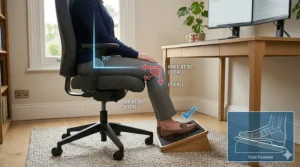
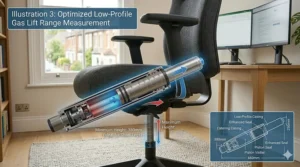
Sit fully back in the chair with your feet flat on the floor. Your thighs should be parallel to the ground or angled slightly downward toward your knees. If your feet dangle, lower the seat. If your knees rise higher than your hips, raise the seat. For shorter users, this often means setting the gas lift to its minimum height—don’t feel self-conscious about sitting “low”; proper ergonomics trumps aesthetics.
Seat Depth Calibration
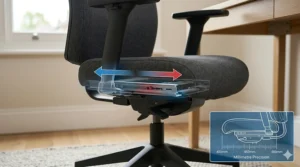
Adjust the seat depth so you can place two or three fingers between the back of your knee and the front edge of the seat. This gap prevents circulation restriction whilst ensuring proper lumbar contact. British homes tend toward smaller rooms with compact desks, so verify the chair at its proper depth still allows you to reach your keyboard comfortably.
Lumbar Support Positioning
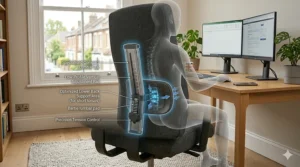
The lumbar support should sit at your belt line, supporting the natural inward curve of your lower spine. For shorter users, this typically means adjusting the lumbar support to its lowest position. Don’t be afraid to adjust throughout the day—your optimal position changes as muscles fatigue.
Armrest Setup
Adjust armrests so your shoulders remain relaxed with your elbows at roughly 90 degrees. Your forearms should rest gently on the armrests without forcing your shoulders up toward your ears. If the armrests still force your shoulders wide despite adjustment, consider removing them entirely—improper armrests do more harm than none.
British Climate Considerations
Store fabric chairs away from damp areas, particularly ground-floor rooms prone to moisture. Mesh chairs handle Britain’s humidity better but benefit from occasional hoovering to prevent dust buildup in the weave. During winter, position chairs away from radiators—direct heat damages pneumatic cylinders and accelerates fabric/mesh degradation.
Real-World Scenarios: Matching Chairs to UK Users
London Commuter (5’2″, Daily 8-Hour Desk Work)
Sarah works from her Islington flat four days weekly, with one day in the office. Her compact home office shares space with the spare bedroom, requiring a chair that doesn’t dominate the room visually. The Branch Ergonomic Chair provides professional-quality support without the corporate aesthetic, whilst its 10 cm seat depth adjustment accommodates her shorter legs perfectly. Total investment: around £320. Her alternative consideration was the SIHOO M18 at £170, which would serve equally well for her usage pattern but lacks the seven-year warranty that justifies the Branch’s higher price for daily professional use.
Manchester Suburb Family (Part-Time Work, Budget £150)
The Patels share one computer between three family members, requiring a chair that adjusts easily for varying body types (5’1″ to 5’11”). The SIHOO M18 offers sufficient adjustability for this range whilst remaining affordable enough that it doesn’t constitute a major household expense. The breathable mesh handles varied usage patterns—from homework sessions to adult WFH days—without developing the “everyone’s sat in this” compression that padded chairs show. Total investment: £170, leaving budget for a footrest should the shortest user need additional support.
Edinburgh Professional (5’3″, Premium Budget £900+)
James works entirely from home managing software development projects, spending 9-10 hours daily at his desk. Previous cheap chairs left him with chronic lower back pain that required physiotherapy (£50 per session, six sessions totalling £300). The Steelcase Leap V2 at £950 represents a genuine health investment rather than mere furniture. The 12-year warranty and proven durability mean this purchase should last through a career phase. Scotland’s damp climate makes the wool-blend fabric a consideration—James positions the chair away from exterior walls and maintains proper room ventilation.
Common Mistakes When Buying Office Chairs for Short Legs
Assuming “Adjustable” Means “Suitable for All Heights”
Many chairs advertise adjustment features but define their range for average-height users (5’9″-6’1″). Research from Loughborough University’s ergonomics department demonstrates that anthropometric data varies significantly across populations, yet most office furniture remains designed for median male dimensions. Always verify the minimum seat height (should be under 43 cm for users under 5’5″) and whether seat depth actually adjusts or merely reclines. UK consumer protection law allows returns within 14 days for online purchases—use this to verify fit before the window closes.
Ignoring Seat Depth Entirely
Seat depth matters more for shorter users than taller ones. A deep seat forces you to choose between proper lumbar contact (leaving legs dangling) or foot contact (leaving lower back unsupported). Chairs with adjustable seat depth solve this; otherwise, verify the fixed depth works for your leg length before purchasing. The typical “one size fits most” seat depth of 48-50 cm proves too deep for users under 5’5″.
Overlooking UK-Specific Considerations
Buying chairs designed for American or Asian markets can create issues with UK electrical standards (if heated), warranty coverage (international returns prove troublesome), and replacement parts availability. Prioritise chairs sold through Amazon.co.uk with UK-based warranty service. Post-Brexit, some EU-manufactured chairs now carry import duties—Amazon’s inclusive pricing handles this, but buying from continental sellers directly might surprise you with additional charges.
Trusting Assembly Height as Actual Minimum
Manufacturers often list the lowest gas lift position without accounting for the distance from the lift to the actual seat surface. A “40 cm seat height” might measure 42-43 cm from floor to where you actually sit after accounting for cushioning compression. Reviews from verified UK buyers often reveal more accurate real-world dimensions.
Expecting Immediate Comfort
Transitioning from an improper chair to proper ergonomic support requires adjustment. Your muscles have adapted to compensating for poor support; when that compensation becomes unnecessary, you might feel “weird” for the first week. Give any new chair at least seven days of regular use before concluding it doesn’t work—genuine discomfort (pain, numbness) versus adjustment discomfort (feeling different) requires this time to distinguish.
Long-Term Value Analysis: Total Cost of Ownership
The sticker price tells only part of the financial story. Understanding total cost of ownership over a chair’s expected lifespan reveals which options deliver genuine value.
Budget Chair (£150-£200): Expected Life 3-5 Years
Initial cost: £175
Replacement parts (if available): Minimal
Warranty coverage: 2-3 years typically
Cost per year: £35-£58
Budget chairs typically fail at the gas lift or chair base first. If replacement parts prove unavailable (common), you’re purchasing a complete replacement. Total outlay over 10 years: approximately £350-£525 assuming two replacements.
Mid-Range Chair (£250-£350): Expected Life 5-7 Years
Initial cost: £300
Replacement parts: Readily available
Warranty coverage: 5-7 years
Cost per year: £43-£60
Mid-range chairs justify their premium through better component quality and part availability. A £25 gas lift replacement extends life significantly. Total outlay over 10 years: approximately £300-£450 assuming one replacement or targeted repairs.
Premium Chair (£800-£1,000): Expected Life 10-12+ Years
Initial cost: £900
Replacement parts: Manufacturer-supported
Warranty coverage: 12 years
Cost per year: £75-£90
Premium chairs represent the lowest annual cost through exceptional durability. A Steelcase Leap or Herman Miller Aeron purchased today should still function in 2036. Total outlay over 10 years: £900 for single purchase.
Health Cost Considerations
Factor in potential physiotherapy costs from using an improper chair. UK private physiotherapy averages £40-£50 per session. Six sessions for posture-related back pain totals £240-£300—suddenly, a £900 chair that prevents this issue demonstrates clear ROI within two years of avoided treatment. Which? research on office chairs consistently shows that investing in proper ergonomic seating reduces long-term healthcare costs and improves productivity for home workers.
For full-time desk workers earning £25,000+ annually, premium chairs demonstrate compelling long-term value. Part-time users working 3-4 hours daily find better value in mid-range options, whilst occasional users can reasonably opt for budget solutions.
What to Expect: Real-World Performance in British Conditions
Office chairs face specific challenges in British homes that differ from controlled office environments or the climate-stable conditions in other regions.
Humidity and Dampness
Britain’s infamous damp affects chairs differently based on construction. Mesh chairs prove most resilient, drying quickly after moisture exposure and resisting the musty smell that develops in foam cushions stored in humid rooms. Wool-blend fabrics (like Steelcase’s Fame fabric) breathe better than synthetic upholstery but require positioning away from exterior walls in older homes prone to condensation. Leather and vinyl resist moisture but can feel uncomfortably cold during winter mornings—relevant if your home office occupies an unheated spare bedroom.
Temperature Fluctuation
Central heating produces dramatic temperature swings daily. Pneumatic gas lifts prove sensitive to extreme cold—chairs stored in unheated garages or conservatories overnight may resist height adjustment until they warm. Position chairs in temperature-stable rooms when possible. Mesh construction handles temperature variation better than foam, which can feel excessively firm when cold and overly soft when warm.
Space Constraints
British homes typically feature smaller rooms than American or Australian equivalents. Chair dimensions matter when your home office shares space with a bedroom or dining room. Verify the chair’s width with armrests fits through doorways and doesn’t dominate compact rooms visually. Smaller-proportioned chairs designed for shorter users often prove aesthetically better suited to British room sizes.
Carpet versus Hard Floors
Most UK homes feature carpeted bedrooms and lounges where home offices often locate. Standard casters may struggle on thick pile carpet. Verify whether your chair ships with carpet-appropriate wheels or requires separate purchase. Hard floor wheels on carpet create drag; carpet wheels on hard floors damage flooring—match wheel type to your actual floor surface.
Understanding UK Regulations and Certifications
UKCA Marking
Post-Brexit, the UKCA (UK Conformity Assessed) marking replaced the EU’s CE marking for products sold in Great Britain. Office chairs should carry UKCA certification confirming compliance with UK safety standards. Most reputable manufacturers selling through Amazon.co.uk now display UKCA marking on product pages or packaging. Whilst enforcement remains inconsistent in 2026, prioritising UKCA-certified products ensures adherence to British safety requirements.
BS EN 1335 Standard
The British Standard BS EN 1335 specifies requirements for office furniture, including office chairs. This standard covers stability testing (minimum 110 kg static load capacity), durability cycling (seats and backrests must withstand 200,000+ cycles), and material safety. Premium chairs typically specify BS EN 1335 compliance explicitly. Budget chairs may meet standards without formal certification—the testing cost adds to retail pricing, so some manufacturers skip official certification whilst still building to standard.
Consumer Rights Protection
The Consumer Rights Act 2015 protects UK buyers, requiring products to be as described, fit for purpose, and of satisfactory quality. For chairs costing over £50, these protections extend up to six years in England, Wales, and Northern Ireland (five years in Scotland). If a chair develops faults within this period, the seller must either repair, replace, or refund your purchase. This protection applies regardless of manufacturer warranty, providing backup if warranty claims prove difficult.
Distance Selling Regulations
Online purchases grant a 14-day cooling-off period during which you may return items for any reason. This proves particularly valuable for chairs where online dimensions might not translate accurately to your body type. Amazon UK typically extends return windows beyond the legal minimum, but verify specific return terms before purchasing. Some sellers charge return shipping; Amazon’s own returns typically provide free collection for large items.
FAQ: Your Questions Answered
❓ Can I use a footrest instead of finding a chair with lower seat height?
❓ How do I know if a chair's seat depth will fit my legs?
❓ Are petite office chairs less durable than standard sizes?
❓ Will a chair designed for short people look odd in a professional home office?
❓ Can I return a chair to Amazon UK if it doesn't fit properly?
Conclusion: Investing in Proper Support
The reality that most office chairs don’t accommodate shorter users properly shouldn’t force you into accepting discomfort or compromising your posture. The chairs examined in this guide represent genuine solutions available today on Amazon.co.uk, ranging from the budget-friendly SIHOO M18 around £170 to the premium Steelcase Leap V2 approaching £1,000.
Your optimal choice depends on usage patterns and budget. Part-time home workers spending 3-4 hours daily find excellent value in the £150-£200 range with the SIHOO M18 or IKEA MARKUS. Full-time desk workers logging 8-10 hours daily justify mid-range investments like the Branch Ergonomic Chair at £280-£350, whilst professionals experiencing existing discomfort from improper seating should seriously consider premium options that effectively function as health equipment rather than mere furniture.
The key specifications for shorter users remain consistent across price points: minimum seat height under 42 cm (ideally under 40 cm), adjustable seat depth to prevent thigh compression, lumbar support that adjusts vertically to reach your actual lower back, and armrests that position narrow enough for proper shoulder alignment. Any chair meeting these criteria whilst fitting your budget deserves consideration.
Remember that UK consumer protection laws back your purchase—the 14-day return window allows proper fit testing, whilst Consumer Rights Act protections extend for years on higher-value items. Use these safeguards to verify a chair genuinely suits your body before committing long-term. Your back will thank you for the investment in proper support, whether that investment totals £170 or £1,000. The alternative—continuing with an ill-fitting chair—costs more in health consequences than any proper chair’s price tag.
Recommended for You
- 7 Best Office Chair for Short Person UK 2026
- 7 Best 24 Hour Office Chairs UK 2026 | Heavy Duty Reviews
- Office Chair for Heavy Person UK 2026: 7 Best Heavy Duty Options
Disclaimer: This article contains affiliate links. As an Amazon Associate, I earn from qualifying purchases. If you purchase products through these links, we may earn a small commission at no additional cost to you.
✨ Found this helpful? Share it with your mates! 💬🤗
