
In This Article
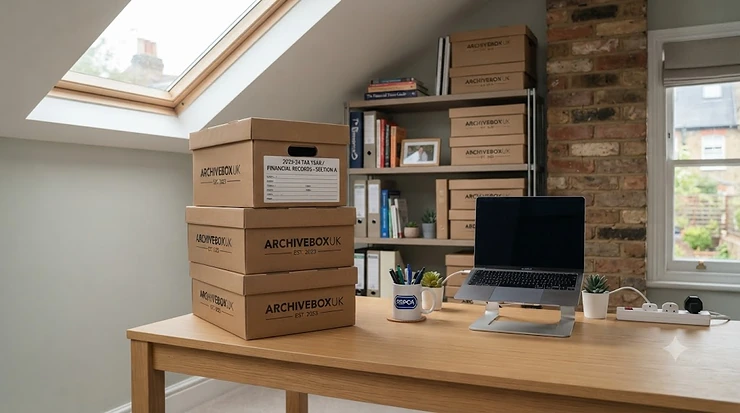
Somewhere in your office right now there’s a filing cabinet groaning under the weight of invoices nobody’s looked at since the last general election, and a cupboard where “the archive” is really just a euphemism for “the place we shove things and hope.” An archive storage box is the deceptively simple fix: a purpose-built cardboard or plastic container designed to hold documents, files and records securely for months or years at a time, protecting them from damp, dust, crushing and the general chaos of shared storage space. It sounds boring. It is, in the best possible way — boring is exactly what you want from something that has to survive five years in a warehouse without letting your VAT records turn to pulp.
What most people don’t realise until they’re knee-deep in a compliance audit is that the box itself is doing real work. A flimsy container flexes under stacking weight, lets moisture creep in through weak seams, and collapses the moment someone stands one on top of another in a busy stockroom. The right archive storage box, on the other hand, is engineered around exactly those failure points — reinforced corners, lockable lids, cut-out handles that don’t tear under load.
We’ve spent time researching the archive storage box market for UK buyers, pulling together seven genuinely different options — from bulk cardboard packs to reusable plastic filing boxes — and testing our judgement against real specifications, verified retailer listings, and the recurring themes in aggregated customer reviews. We’ll also walk through how records retention rules actually affect what you buy, when bulk buy office supplies pricing genuinely pays off, and what separates a box that lasts eighteen months from one that’s still doing its job in 2031. If you’re weighing up cardboard archive boxes against plastic, or trying to work out how many boxes your long-term document archiving project actually needs, you’re in the right place.
Quick Comparison Table
Before we get into the detail, here’s the fast version — useful if you’re comparing on your phone in a stationery cupboard and need an answer in the next ninety seconds.
| Product | Type | Capacity/Size | Best For |
|---|---|---|---|
| Bankers Box Large System Storage Box | Cardboard | W38 x H28.7 x D43cm | Best heavy-duty bulk pack |
| Bankers Box Multi-Use Storage Box | Cardboard | W32.5 x H28.5 x D39cm | Best all-round office box |
| W E Roberts A4 Archive Filing Boxes | Cardboard | 390 x 304 x 238mm | Best true A4 filing fit |
| Q-Connect Storage Box | Cardboard | 335 x 400 x 250mm | Best budget bulk-buy |
| StorePAK Office Archive Boxes | Cardboard | 34.2L (H28.2 x W31.7 x D38.3cm) | Best carry handles |
| Morgan’s Direct Large Archive Boxes | Cardboard | 387 x 327 x 275mm | Best extra-large capacity |
| Really Useful Box 19L Filing Box | Plastic | 395 x 255 x 290mm (ext.) | Best long-term reusable option |
Look closely and a pattern emerges: six of the seven are single-use-leaning cardboard, and one — the Really Useful Box 19L Filing Box — is the outlier built to be opened, closed and reopened for a decade. That’s not a flaw in the cardboard options; it’s a different job description. Cardboard wins on upfront cost and bulk-buy economics for records you’ll box once and rarely touch again, while the plastic option earns its higher price tag through repeated access and genuine climate resistance. Budget-conscious buyers stocking a whole records room should weight cardboard heavily; anyone archiving documents they’ll need to dip into every few months should budget for at least a few plastic boxes in the mix.
💬 Just one click — help others make better buying decisions too!😊
Top 7 Archive Storage Boxes: Expert Analysis
We’ve deliberately spread this list across budget, mid-range and premium options, plus a mix of single-wall cardboard packs and a durable plastic alternative — because “archive storage box” means something different to a sole trader with three years of receipts than it does to a legal practice with a records room to fill.
1. Bankers Box Large System Storage Box — best heavy-duty bulk pack for offices
If you’ve ever tried to lift a poorly designed storage box and had the bottom give way mid-carry, you’ll understand why the Bankers Box Large System Storage Box earns the top spot. Sold in packs of ten at a generous W38 x H28.7 x D43cm, these grey cardboard boxes come with fitted lids and cut handles, and the board itself carries Forest Stewardship Council certification — meaning the material is sourced from responsibly managed forestry rather than wherever was cheapest that week. In practice, that extra board weight is the difference between a box that holds its shape after six months under three others and one that starts to bow at the corners by March.
Based on the spec comparison against lighter single-wall boxes in this list, the reinforced construction here is aimed squarely at offices doing genuine bulk archiving — think whole filing cabinets being emptied at once, not the odd bundle of paperwork. Reviewers consistently note that the lids sit flush and don’t warp even when boxes are stacked five or six high, and that the handle cut-outs are wide enough to actually get four fingers through, which sounds trivial until you’ve used a box that isn’t.
Pros:
- ✅ FSC-certified board with genuinely sturdy construction
- ✅ Roomy capacity fits box files and lever arch folders easily
- ✅ Stacks reliably without corner collapse
Cons:
- ❌ Bulkier footprint needs more floor or shelf space
- ❌ Assembly takes a little longer than smaller boxes
Priced in the mid-range for a pack of ten — expect somewhere in the £35-£50 range at the time of research, though always check current pricing — this is strong value per box once you account for the reinforced board, making it a sound pick for anyone doing a proper bulk buy office supplies run.

2. Bankers Box Multi-Use Storage Box — best all-rounder for mixed office storage
The Bankers Box Multi-Use Storage Box is the box you buy when you’re not entirely sure what’s going in it yet — old accounts, spare stationery, that box of cables nobody wants to throw away. At W32.5 x H28.5 x D39cm and sold in packs of ten, it’s a notch smaller than its Large System sibling, which in practice makes it easier to carry one-handed and easier to slot onto standard shelving without wasted space. Like the Large System box, the board is FSC-sourced, so the sustainability story holds across the Bankers Box range.
What most buyers overlook about this size is that it hits a genuine sweet spot for weight distribution: full to the brim with paper, a box this size stays under the sort of weight where lifting starts to feel risky, whereas the larger box can get uncomfortably heavy if you’re not careful about how you pack it. Reviewers frequently mention the brown Kraft finish looking smart enough for client-facing storage rooms, not just back-office cupboards, and the handles holding firm even when the box is genuinely full rather than half-empty for the photo.
Pros:
- ✅ Manageable size and weight for one-person lifting
- ✅ Neutral Kraft brown finish suits visible storage areas
- ✅ FSC-certified board for a lower environmental footprint
Cons:
- ❌ Smaller capacity means more boxes for large archiving jobs
- ❌ Lid can lift slightly if severely overpacked
At around £30-£45 per pack of ten, it undercuts the Large System option while still delivering genuine durability, making it the box we’d point most small-to-medium offices toward as a default.
3. W E Roberts A4 Cardboard Archive Filing Storage Boxes — best true A4 filing fit
Not every archive box is actually sized for A4 paperwork, and it shows the moment you try to slot standard folders in and find two inches of dead space on every side. The W E Roberts A4 Cardboard Archive Filing Storage Boxes solve that specific irritation: at 390 x 304 x 238mm (15″ x 12″ x 9″), sold in packs of ten, the internal dimensions are built around A4 files and box files from the outset, rather than being a generic moving box repurposed for paperwork.
Here’s what the spec sheet won’t tell you outright, but the design logic makes obvious: a snug fit isn’t just about neatness, it stops files sliding around and creasing corners in transit, which matters enormously if these boxes are heading to an offsite storage unit or being moved between offices. Reviewers highlight the single-wall board as easy to fold flat for storage when empty — useful if you’re stockpiling spares — while noting, honestly, that this isn’t the box for genuinely heavy items; it’s built for paper, and it does that one job well.
Pros:
- ✅ Internal dimensions genuinely fit A4 files without gaps
- ✅ Flat-packs easily for compact spare storage
- ✅ Straightforward, no-nonsense construction at a fair price
Cons:
- ❌ Single-wall board is less suited to very heavy loads
- ❌ No reinforced base for extra-long stacking runs
Expect a pack of ten to sit in the £25-£40 range, which makes this one of the more cost-effective ways to buy cardboard archive boxes specifically matched to standard filing sizes rather than paying for capacity you won’t use.
4. Q-Connect Storage Box — best budget bulk-buy option
Every category needs a sensible budget pick, and in archive storage boxes that’s the Q-Connect Storage Box. At 335 x 400 x 250mm and sold in packs of ten, it’s a straightforward brown cardboard box with a separate lid — no frills, no branding flourishes, just a functional container at a price that makes stocking an entire records room feel less like a capital expense.
Based on the spec comparison with pricier alternatives on this list, the trade-off here is fairly transparent: the board is thinner than the FSC-certified Bankers Box range, so it’s better suited to lighter loads or shorter storage horizons rather than a decade-long stint in a damp outbuilding. On paper this means slightly less resilience under heavy stacking, but reviewers consistently note that for standard office use — a few dozen boxes stored indoors, moved occasionally — it holds up perfectly well and represents strong value for the price point.
Pros:
- ✅ Genuinely low cost per box for bulk office orders
- ✅ Straightforward assembly with no fiddly extra steps
- ✅ Q-Connect’s wider office supplies range makes reordering easy
Cons:
- ❌ Thinner board than premium reinforced alternatives
- ❌ Less ideal for damp or long-term outdoor storage
At roughly £20-£35 per pack of ten, this is often the first box we’d suggest for anyone specifically hunting bulk buy office supplies deals on a tight budget, provided the storage environment is reasonably controlled.
5. StorePAK Office Archive Boxes — best carry handles for frequent moving
Some archives sit untouched for years. Others get shuffled between departments, sent to offsite storage, or hauled up and down stairs on a regular basis — and for that second scenario, the StorePAK Office Archive Boxes are worth a specific look. At 34.2 litres (H28.2 x W31.7 x D38.3cm) and finished in white and grey, sold in packs of ten, the standout feature is genuinely functional die-cut handles positioned for comfortable two-handed carrying.
What most buyers overlook about handle design is how much it affects real-world usability over the box’s lifetime: badly placed or narrow handles tear within weeks of regular use, while well-positioned ones — like these — distribute weight more evenly and reduce the temptation to grip the box body itself, which is usually where damage starts. Reviewers frequently mention these boxes surviving repeated house or office moves without the handles giving way, and the lighter white-and-grey colourway making it easier to spot at a glance among a sea of brown boxes.
Pros:
- ✅ Reinforced handles built for repeated carrying and moving
- ✅ Distinct colourway makes boxes easy to identify quickly
- ✅ Solid 34.2-litre capacity for standard office archiving
Cons:
- ❌ Not the cheapest option in a pure bulk-buy comparison
- ❌ Lighter colour shows scuffs more visibly over time
Sitting in the £30-£45 range for a pack of ten, this is the pick we’d steer toward anyone whose archive isn’t static — offices mid-relocation, or businesses regularly rotating stock between a records room and an offsite unit.
6. Morgan’s Direct Large Archive Storage Boxes — best extra-large capacity
When the standard archive box just isn’t big enough — bulky lever arch files, oversized ledgers, or simply a lot of paperwork that needs consolidating into fewer containers — the Morgan’s Direct Large Archive Storage Boxes step in. At 387 x 327 x 275mm and sold in packs of ten with lids included, they offer a genuinely deeper internal cavity than several other cardboard options on this list, which translates directly into fewer boxes needed for the same volume of records.
Based on the spec comparison, that extra depth is a double-edged sword worth flagging honestly: more capacity per box means more weight per box once it’s full, so this isn’t necessarily the pick for anyone who’ll be lifting these solo on a regular basis. Reviewers note the boxes arrive well-packaged and assemble without fuss, and that the lids handle stacking reasonably well, though — as with most single-wall cardboard — long-term stacking under significant weight is where any box in this category starts to show its limits.
Pros:
- ✅ Extra-large capacity means fewer boxes for bulky records
- ✅ Included lids provide decent dust and light protection
- ✅ Competitive pricing for the size on offer
Cons:
- ❌ Full boxes are noticeably heavy to lift alone
- ❌ Depth can make it harder to retrieve items from the bottom
Expect a pack of ten in the £30-£45 range at the time of research — solid value if your priority is minimising the total number of boxes in a long-term document archiving project rather than ease of solo handling.
7. Really Useful Box 19 Litre Plastic Filing Box — best long-term reusable archiving
Every list like this needs one product that changes the conversation entirely, and the Really Useful Box 19 Litre Plastic Filing Box does exactly that. Built from polypropylene rather than cardboard, it comes complete with 10 suspension files, measures 395 x 255 x 290mm externally, and — unlike every other entry here — is designed to be opened, closed, stacked and reopened indefinitely rather than filled once and forgotten. The transparent construction means you can identify contents at a glance without lifting a single lid, which sounds minor until you’ve spent twenty minutes hunting through six identical brown boxes for one invoice.
Here’s what the spec sheet won’t tell you outright: the working temperature range of -15°C to +80°C, combined with a genuinely sealed, lockable lid mechanism, makes this the only box on this list realistically suited to an unheated garage, a cold storage unit, or anywhere humidity or temperature swings are a genuine concern for long-term document archiving. Reviewers consistently praise the stacking strength — these are rated to bear a person’s weight when stacked, according to the manufacturer’s own engineering claims — and the fact that, years later, the boxes are still in service rather than crushed flat in a skip.
Pros:
- ✅ Genuinely reusable and stackable for years, not months
- ✅ Transparent design means no guessing what’s inside
- ✅ Included suspension files add immediate filing structure
Cons:
- ❌ Noticeably pricier per box than any cardboard option here
- ❌ Bulkier to store flat when empty compared with cardboard
At roughly £25-£35 per unit, this isn’t the box to buy in bulk for one-off archiving — but for records you’ll return to repeatedly over several years, the total cost of ownership argument stacks up fast against replacing crushed cardboard boxes every eighteen months.
Setting Up Your Archive Storage System: A Practical Usage Guide
Buying the right archive storage box is only half the job — how you set the system up determines whether you can actually find anything in three years’ time. Start by labelling before you pack, not after: a simple system of year, department and content type on the outside of every box (in permanent marker, not a sticker that’ll peel off in a damp unit) saves hours of guesswork later. Pack heavier items — box files, lever arch folders — at the bottom, and never fill a box so full the lid has to be forced shut, since that’s exactly the stress point where cardboard corners start to split.
A maintenance schedule matters more than people expect. Set a recurring six-monthly check of any storage area, glancing for signs of damp, pest activity, or boxes that have started to bow under stacked weight — catching a failing box early means transferring contents to a fresh one, rather than discovering a collapsed stack and scattered paperwork. If boxes are stored somewhere with any humidity risk, raise the bottom row off the floor on a pallet or shelf; ground-level cardboard is the single most common cause of damp damage we see referenced in storage guidance.
The most common first-30-days mistake is over-consolidating: cramming multiple years or departments into one box “to save space” creates a false economy, because retrieving one file later means unpacking everything else to get to it. Keep boxes single-purpose — one year, one category — even if it means buying a few more boxes upfront. It’s a small extra cost against the alternative of an afternoon spent unpacking six boxes to find one contract.
Real-World Scenarios: Matching the Right Box to Your Situation
The sole trader clearing out five years of receipts. If you’re a self-employed tradesperson finally tackling a shoebox — or several shoeboxes — of HMRC paperwork, you don’t need premium plastic. A handful of Q-Connect Storage Box units or a single pack of W E Roberts A4 Archive Filing Storage Boxes will comfortably see you through the standard retention period, and the low cost per box means the whole project is unlikely to run past £40-£50 all in.
The growing SME consolidating three departments’ filing cabinets. This is bulk-buy territory, and it’s where the Bankers Box Large System Storage Box earns its keep — the reinforced board copes with the stacking a genuine office clear-out demands, and buying several packs of ten at once is where bulk buy office supplies pricing starts to noticeably beat picking up single boxes as needed.
The legal or medical practice archiving records they’ll need to access repeatedly. Here, the calculation flips. Retrieval frequency and long-term durability matter more than upfront cost, which is exactly the scenario the Really Useful Box 19 Litre Plastic Filing Box is built for — the transparent sides and suspension files mean staff can locate a specific file without opening five boxes first, a genuine time saving when it happens weekly rather than once a decade.
Common Storage Problems and How to Solve Them
Problem: boxes crushing under their own stacked weight. This is almost always a sign of single-wall cardboard stacked too high, or overpacked boxes putting uneven pressure on the ones below. Solution: cap stacks at four or five boxes for standard cardboard, and reserve the bottom rows for your sturdiest option — the Bankers Box Large System Storage Box copes noticeably better here than lighter alternatives.
Problem: damp or mould appearing on stored paperwork. Nearly always traced to ground-level storage or an unventilated space. Solution: raise boxes off the floor, and for genuinely at-risk environments, switch to the Really Useful Box 19 Litre Plastic Filing Box, whose sealed polypropylene construction simply doesn’t absorb moisture the way cardboard does.
Problem: nobody can find anything six months later. This is a labelling failure, not a box failure. Solution: adopt the six-monthly labelling habit outlined above, and consider colour-coding lids or using the StorePAK Office Archive Boxes‘ distinct white-and-grey finish to visually separate active archives from long-dormant ones.
Problem: handles tearing during a move. Cheaper single-wall boxes are the usual culprit. Solution: for anything being moved regularly, prioritise reinforced handle design — the StorePAK Office Archive Boxes were specifically built around this problem.
Problem: running out of boxes mid-project and paying premium prices for a top-up. Solution: slightly overestimate your bulk buy office supplies order at the outset; the marginal cost of a few spare boxes is nearly always lower than a rushed, small top-up order later.

How to Choose an Archive Storage Box
Choosing the right archive storage box comes down to matching material, size and durability to how long the records need to last and how often you’ll actually open the box again. Here’s a practical framework:
- Work out your retention timeline first. A box for records you’ll destroy in twelve months has very different requirements to one holding statutory records you’re keeping for a decade — this single decision should shape everything else.
- Match material to storage environment. Cardboard suits dry, indoor, climate-stable spaces; plastic earns its higher price in garages, outbuildings, or anywhere humidity or temperature swings are a genuine risk.
- Check the internal dimensions against what you’re storing. A4 filing needs A4-sized internals — don’t assume a “large” box is automatically the right fit for standard folders.
- Prioritise handle and lid design if the boxes will be moved. Static archive storage can tolerate weaker handles; anything relocating regularly cannot.
- Calculate cost per box across a full bulk order, not per single unit. Bulk buy office supplies pricing on packs of ten often shifts the value calculation significantly compared with buying individually.
- Factor in reusability for anything you’ll retrieve repeatedly. If a box is likely to be opened more than a handful of times over its life, the total cost of ownership case for plastic starts to look stronger.
- Don’t ignore stacking strength if space is tight. Reinforced or FSC-certified board options consistently outperform thinner budget boxes when stacked more than three or four high.
Cardboard Archive Boxes vs Plastic Archive Boxes
This is the debate that decides most archive storage box purchases, and honestly, it’s less “which is better” than “which matches your situation.” Cardboard archive boxes win decisively on upfront cost — buying in bulk packs of ten typically works out at a fraction of the per-unit cost of an equivalent plastic box, which matters enormously when you’re archiving several years of records in one go. They’re also lighter when empty, easier to flat-pack for storage, and, being made from FSC-certified, recyclable board in options like the Bankers Box Large System Storage Box, they carry a lighter environmental footprint at end of life.
Plastic, represented here by the Really Useful Box 19 Litre Plastic Filing Box, wins on almost every measure of durability and repeat use. It doesn’t absorb moisture, doesn’t lose structural integrity under repeated stacking, and doesn’t need replacing every time a box gets slightly crushed or damp-stained. On paper this means a higher unit cost translates into a lower cost over a five-to-ten-year horizon, provided the box is actually reused rather than filled once and left untouched — in which case the extra spend buys you very little you’d have missed from cardboard.
The honest verdict: for one-off bulk archiving of records you’ll rarely revisit, cardboard archive boxes are the financially sensible choice. For anything stored in a variable environment, or accessed regularly over several years, plastic’s higher upfront cost is recovered through durability alone.
Records Retention: How Long You’re Actually Required to Keep What’s in the Box
Before buying a single box, it’s worth being clear on what UK rules actually demand, because over-archiving wastes money on boxes and storage space you didn’t need to fill. For limited companies, standard accounting and tax records generally need to be kept for six years from the end of the relevant accounting period to satisfy HMRC’s own record-keeping requirements, while certain statutory documents — company registers and board minutes among them — carry longer retention expectations tied to the life of the company itself.
Beyond HMRC’s specific requirements, general contract and business documentation is commonly retained for at least six years as a practical response to the Limitation Act 1980’s time limits on legal claims, which effectively sets the outer boundary for how long a business might realistically need to produce a document to defend a dispute. Sector-specific rules can extend this considerably — health and safety records in some contexts run to decades rather than years — so it’s worth checking obligations specific to your industry rather than assuming a blanket six-year rule covers everything.
What this means practically for box buying: if your retention period is a firm six years, a cardboard archive box that’s realistically good for that span — like the Bankers Box Multi-Use Storage Box — is entirely sufficient, and paying for plastic’s decade-plus durability buys you nothing you’ll use. If you’re archiving records with no fixed destruction date, or statutory documents kept for the company’s lifetime, the reusability case for something like the Really Useful Box 19 Litre Plastic Filing Box becomes much harder to argue against.
Bulk Buy Office Supplies: Does Buying in Bulk Actually Save You Money?
The short answer is usually yes, but not unconditionally. Buying archive storage boxes in packs of ten — as every cardboard option on this list is sold — typically drops the per-box cost noticeably below what you’d pay picking up boxes individually or in smaller packs, largely because the packaging, shipping and handling overhead per box shrinks as order size grows. For a genuine bulk buy office supplies exercise, options like the Q-Connect Storage Box or Bankers Box Large System Storage Box make the strongest case, since the savings compound quickly across a records-room-sized order.
Where bulk buying stops paying off is when it leads to over-ordering. Boxes bought “just in case” and left flat-packed for years aren’t earning you anything, and if storage requirements shift — say, a move to digital record-keeping reduces future paper volume — you’re left with stock you didn’t need. A sensible middle ground is calculating your actual box requirement from your retention timeline and current paper volume, then rounding up modestly rather than buying a pack size purely because it looked like the better per-unit price.
It’s also worth factoring delivery costs into any bulk comparison — a single large order of, say, three packs of ten frequently beats three separate smaller orders once delivery charges are accounted for, even before the per-box discount is applied.

Long-Term Document Archiving: Getting It Right the First Time
Long-term document archiving fails for predictable reasons, and nearly all of them are preventable at the point of purchase rather than fixable later. The single biggest factor is environmental stability: the National Archives’ own guidance on caring for archives consistently emphasises controlling temperature and humidity swings as the primary defence against document degradation, which is exactly why the storage location matters as much as the box itself — a premium box in a damp, poorly ventilated space will still underperform a modest box in a stable one.
For genuinely long-horizon archiving — anything beyond five years, or records with no fixed destruction date — reusable, sealed containers earn their cost through the number of times a cardboard equivalent would need replacing over the same period. Crushed corners, water staining, and pest damage are the three most commonly cited failure points for long-term cardboard storage, and all three are essentially non-issues for a properly sealed plastic box like the Really Useful Box 19 Litre Plastic Filing Box.
The other overlooked factor is accessibility planning. Long-term doesn’t have to mean untouched — many archived documents get pulled for reference at least once during their retention period, and a system built around opaque, hard-to-reopen cardboard boxes makes that process needlessly slow. Building in occasional retrieval from the start, rather than treating the archive as a one-way process, changes which boxes make sense.
Common Mistakes When Buying Archive Storage Boxes
The most frequent mistake is buying purely on price without checking internal dimensions — a cheap box that doesn’t actually fit A4 files efficiently wastes space and money faster than a slightly pricier, correctly sized alternative like the W E Roberts A4 Cardboard Archive Filing Storage Boxes. Close behind is underestimating storage environment risk: buyers repeatedly choose standard cardboard for garages, sheds or unheated units, then find themselves replacing damp-damaged boxes within a year or two.
Another recurring error is over-packing boxes to reduce the total count, which — as reviewers across multiple products consistently note — is exactly what causes lid warping, handle tearing and corner splitting. A less obvious mistake is ignoring stacking plans entirely; buying boxes without checking how many can realistically be stacked in the intended storage space leads to either wasted floor area or dangerously tall, unstable stacks. Finally, many buyers treat archive storage boxes as a single, one-time purchase decision rather than matching different box types to different record categories — mixing a bulk cardboard buy for short-retention paperwork with a handful of reusable plastic boxes for frequently accessed files is usually the more cost-effective approach in practice.
Features That Actually Matter (And Those That Don’t)
Genuinely worth paying for: reinforced or double-wall board construction if you’re stacking more than three or four boxes high; proper cut-out handles rather than rope or string alternatives that dig into hands; a lid that sits flush rather than perching loosely on top; and, for plastic options, a locking mechanism rather than a simple friction-fit lid. FSC certification, as seen on the Bankers Box range, is worth caring about too — not because it changes how the box performs, but because it reflects a manufacturer paying attention to sourcing, which tends to correlate with attention to construction quality elsewhere.
Less important than the marketing suggests: colour and branding, beyond the practical value of visually distinguishing box categories at a glance; “designer” archive boxes at a significant premium over functionally identical standard options; and printed labelling templates on the box exterior, which are easily replicated with a marker pen and a consistent system of your own. Capacity claims in litres are worth a glance but shouldn’t be the deciding factor alone — internal dimensions matter far more for anyone storing standard-sized files, since a technically larger litre capacity can still be the wrong shape for A4 folders.
✨ Don’t Miss These Exclusive Deals!
🔍 Take your archive storage box shortlist to the next level with these carefully selected picks. Click through to check current pricing and availability, and get your records properly organised before the next filing deadline creeps up on you.
FAQ
❓ How many archive storage boxes do I need for a year's worth of paperwork?
❓ Can I stack archive storage boxes on top of each other safely?
❓ Are plastic archive boxes worth the extra cost over cardboard?
❓ What size box do I need for A4 documents?
❓ Where should I store archive boxes to avoid damage?
Conclusion
There’s no single “best” archive storage box, and honestly, anyone claiming otherwise probably hasn’t tried filling a records room themselves. What genuinely matters is matching the box to the job: bulk cardboard like the Bankers Box Large System Storage Box or Q-Connect Storage Box for large, one-off archiving projects on a budget; correctly sized options like the W E Roberts A4 Cardboard Archive Filing Storage Boxes when internal dimensions are the priority; reinforced-handle picks like the StorePAK Office Archive Boxes for anything on the move; and the Really Useful Box 19 Litre Plastic Filing Box for records you’ll be opening again and again over a genuinely long horizon.
Get the retention timeline right first — check what UK rules actually require for your specific records rather than defaulting to “keep everything forever” — and the rest of the decision gets noticeably simpler. A well-chosen archive storage box isn’t glamorous, but it’s the difference between finding a document in thirty seconds and losing an afternoon to a collapsed stack of soggy cardboard.
Recommended for You
- Stackable Letter Trays: 7 Smart UK Office Picks for 2026
- Filing Storage Box: 7 Best Picks for UK Homes in 2026
- Desk Document Tray: 7 Stackable Trays UK
Disclaimer: This article contains affiliate links. As an Amazon Associate, I earn from qualifying purchases. If you purchase products through these links, we may earn a small commission at no additional cost to you.
✨ Found this helpful? Share it with your friends! 💬🤗
