

In This Article
Stand in any co-working space or scroll any home-office inspiration feed and you’ll spot the same two silhouettes fighting for attention: the exposed steel, boltless racking that looks like it walked out of a warehouse, and the crisp, cube-based grid that looks like it was built to be photographed. The choice between industrial shelving vs modular shelving isn’t just aesthetic — it changes how much weight you can store, how easily you can rearrange a room, and how much you’ll spend doing either.

Industrial shelving vs modular shelving is really a question of two different design philosophies. Industrial shelving prioritises raw load capacity and a stripped-back, functional look borrowed from warehouses and workshops, while modular shelving prioritises flexible configuration and a considered, design-led appearance suited to homes and modern offices. Below, we’ve researched seven genuinely available UK products spanning both categories — budget through premium — so you can see exactly what each style actually delivers before you commit floor space and budget to one.
Everything here is drawn from real specifications, real aggregated review sentiment, and honest comparative analysis rather than a rewritten product listing. Along the way we’ll dig into the freestanding shelving comparison for office use specifically, how each option compares as a genuine office storage system, the warehouse vs modern office look debate, why reconfigurability matters more than most buyers expect, and how to actually weigh the budget vs style trade-off rather than guessing.
What Is Industrial Shelving vs Modular Shelving?
Industrial shelving is heavy-duty, boltless steel racking designed for high load capacity, typically found in garages, warehouses, and workshop-style interiors. Modular shelving is a system of interlocking cubes or panels — often plastic, wire, or engineered wood — designed to be reconfigured, restyled, or expanded without needing matching heavy-duty hardware.
Quick Comparison Table
| Product | Category | Load Capacity | Reconfigurable | Best For |
|---|---|---|---|---|
| VonHaus Garage Shelving | Industrial | 175kg/shelf | Low | Budget garage storage |
| SONGMICS 5-Tier Heavy-Duty | Industrial | 175kg/shelf | Low-medium | Best-selling budget racking |
| Rhino Racking 5-Tier | Industrial | 175kg/shelf | Low | Trade-grade durability |
| VASAGLE Ladder Shelf | Industrial-look | Light-duty | Medium | Warehouse look for offices |
| IKEA KALLAX | Modular | Light-duty | High | Iconic modern office look |
| SONGMICS 16-Cube Wire | Modular | Medium | High | Full reconfigurable grid |
| Amazon Basics 6-Cube | Modular | Light-duty | High | Cheapest reconfigurable start |
The pattern here is fairly stark: industrial options like VonHaus Garage Shelving and SONGMICS 5-Tier Heavy-Duty win comfortably on raw load capacity, each shelf rated to carry 175kg, but they’re genuinely awkward to reconfigure once bolted or clipped into place. Modular options like IKEA KALLAX and SONGMICS 16-Cube Wire trade that heavy load rating for the ability to be resized, restacked, or split across two rooms in an afternoon — a meaningfully different value proposition depending on whether you’re storing power tools or styling a home office.
💬 Just one click — help others make better buying decisions too!😊
Top 7 Industrial and Modular Shelving Picks: Expert Analysis
1. VonHaus Garage Shelving Units — best low-cost industrial starter
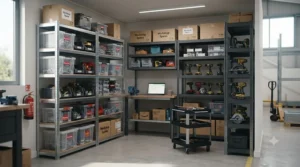
The standout here is pure, unglamorous load capacity: five tiers rated to 175kg each, adding up to 875kg total across the unit, at one of the lowest entry prices in the industrial category. That capacity is exactly why buyers reach for it first — nobody’s choosing boltless steel racking for how it looks in a mood board, they’re choosing it because it can hold a genuinely heavy load of boxes, tools, or stock without bowing in the middle.
Based on the spec comparison with modular alternatives, VonHaus makes sense for anyone whose priority is pure storage capacity in a garage, shed, or stockroom rather than a considered office aesthetic — the trade-off being that it’s virtually impossible to reconfigure once assembled beyond adjusting shelf height in fixed increments. Reviewers consistently report straightforward boltless assembly and solid stability once the anti-tip fixings are used as instructed, though a handful note the steel finish marks more easily than heavier-gauge industrial ranges.
Pros:
- ✅ 175kg per shelf, 875kg total load capacity
- ✅ Genuinely low entry price for the category
- ✅ Boltless assembly with no tools required
Cons:
- ❌ Shelf height only adjusts in fixed increments
- ❌ Not designed to be reconfigured once built
At around £20-£55 depending on whether you buy a single unit or a pack of two, this is the sensible pick if raw capacity matters more than looks.
2. SONGMICS 5-Tier Heavy-Duty Shelving Units — best-reviewed budget industrial racking
What jumps out about the SONGMICS 5-Tier Heavy-Duty range is the sheer weight of aggregated evidence behind it — tens of thousands of UK ratings sitting at a solid 4.1 out of 5, making it one of the most extensively reviewed pieces of shelving on this entire list. Each shelf carries up to 175kg, and the unit can be split into two separate lower shelves, giving a small amount of layout flexibility that pure fixed racking doesn’t offer.
What most buyers overlook about this range is the divisible-shelf feature: rather than one continuous 90cm-wide shelf, you can split each tier into two narrower sections and place them separately, which is a genuinely useful middle ground between rigid industrial racking and true modular reconfigurability. Reviewers frequently flag the anti-tip wall-fixing kit as an important step that shouldn’t be skipped, particularly with taller loaded units, and MDF shelf boards are commonly recommended for treatment with sealant if used somewhere humid.
Pros:
- ✅ Extremely large, well-established review base
- ✅ Each shelf splits into two for partial reconfiguration
- ✅ 175kg per shelf, 875kg total capacity
Cons:
- ❌ MDF shelf boards need sealing in damp environments
- ❌ Still far less flexible than true modular systems
Prices have ranged roughly £34-£49 over recent months, making it a genuinely competitive industrial pick once you factor in the review volume behind it.
3. Rhino Racking 5-Tier Heavy-Duty Industrial Storage Shelves — best for trade-grade durability
Rhino Racking leans into its name — this is racking built with a trade and small-business audience in mind as much as home users, and the 4.7 out of 5 rating across its review base reflects a slightly more demanding customer than a typical garage-shelf buyer. Available in several colourways and sizes, the core spec matches the category standard of 175kg per shelf.
Here’s what to weigh up: Rhino Racking doesn’t dramatically outperform VonHaus or SONGMICS on paper, but reviewers consistently single out build quality and finish as noticeably sturdier under repeated loading and unloading, which matters if the unit is going into a genuinely high-turnover storage environment like a workshop rather than an occasional-use garage. On the other hand, that slightly heavier-gauge construction pushes the price a little higher than the more consumer-focused competitors on this list.
Pros:
- ✅ Strong 4.7/5 rating from a demanding trade audience
- ✅ 175kg per shelf across multiple size options
- ✅ Noticeably sturdier finish under repeated use
Cons:
- ❌ Priced a little above comparable consumer racking
- ❌ Still fixed-format, not genuinely reconfigurable
Expect to pay around £40-£50 for a standard 180x90x40cm unit, making it a fair step up for anyone prioritising build quality within the industrial category.
4. VASAGLE Ladder Shelf, 4-Tier Industrial Style — best warehouse look for a home office
The defining feature of the VASAGLE Ladder Shelf is that it borrows industrial styling cues — visible metal frame, angled ladder silhouette, rustic wood-effect shelving — without the bulk or capacity of true warehouse racking. This is the bridge product on this list: it looks the part of the industrial aesthetic while behaving, structurally, much closer to light-duty furniture.
What most buyers overlook about this piece is that it’s genuinely popular precisely because it fits a warehouse vs modern office look debate on the “modern office” side, despite its industrial-style branding — it’s frequently bought for home offices and living rooms rather than garages. With well over 16,000 aggregated ratings sitting around 4.7-4.8 out of 5, this is one of the most reviewed products on this entire list, and reviewers consistently praise straightforward assembly and stable footing once fully built, alongside its ability to display books, files, and plants rather than purely functional storage boxes.
Pros:
- ✅ Exceptionally large, consistently high review base
- ✅ Industrial look suited to modern home offices
- ✅ Straightforward assembly reported by most buyers
Cons:
- ❌ Light-duty capacity, not comparable to true racking
- ❌ Some early units reported minor defective parts, offset by spares included
Pricing generally sits around £45-£65 depending on colourway, positioning it firmly as a style-led rather than capacity-led purchase.
5. IKEA KALLAX Shelving Unit, 77x147cm — best iconic modern office look
IKEA’s KALLAX range is arguably the most recognisable modular shelving system in the UK, and its enduring popularity comes down to a genuinely simple cube-grid design that can stand, lie flat, be paired with matching inserts, drawers, or doors, and be reconfigured around almost any room layout. The 77x147cm size gives eight cube compartments, each rated to carry a modest but perfectly office-appropriate load.
Based on the spec comparison with industrial racking, KALLAX trades away serious load capacity — each shelf is rated in the low double-digit kilograms rather than the 175kg of a VonHaus or SONGMICS unit — in exchange for a considered, minimalist look and genuine modularity through IKEA’s wider accessory ecosystem of inserts, baskets, and boxes. Aggregated review sentiment for the 77x147cm size sits around 4.6 out of 5 on Amazon UK, with buyers commonly citing the clean look and easy customisation as the main draw, alongside occasional notes about the particleboard construction being less forgiving of repeated disassembly than solid wood.
Pros:
- ✅ Iconic, genuinely modern-office-appropriate look
- ✅ Extensive matching insert and accessory ecosystem
- ✅ Can stand upright or lie flat for different layouts
Cons:
- ❌ Far lower load capacity than industrial racking
- ❌ Particleboard doesn’t handle repeated disassembly well
Prices have moved between roughly £45-£60 for this size depending on colourway and current promotions, making it a solidly mid-range modular pick.

6. SONGMICS 16-Cube Metal Wire Storage Organiser — best full reconfigurable grid
What stands out about the SONGMICS 16-Cube Wire system is scale combined with genuine reconfigurability: sixteen individual wire cube panels that clip together into virtually any grid shape you want, then unclip and reshape again later without needing new hardware. With 3,411-plus aggregated ratings sitting at 4.6 out of 5, it’s a well-evidenced choice within the modular category specifically.
Reviewers consistently note the wire-grid construction as easier to keep dust-free than closed cube panels, and the ability to reconfigure from a tall narrow tower into a wide low shelf — or vice versa — without buying additional pieces is repeatedly flagged as the main reason buyers chose it over a fixed-format alternative. On the other hand, wire construction means individually stored items need their own containers or boxes rather than sitting loose on an open shelf, which is a genuine limitation compared with a solid-panel system like KALLAX for anything smaller than a large box or file.
Pros:
- ✅ Genuinely reconfigurable into different grid shapes
- ✅ Large, well-evidenced review base at 4.6/5
- ✅ Wire construction resists dust build-up
Cons:
- ❌ Loose small items need extra containers to sit on wire shelves
- ❌ More visually utilitarian than solid-panel modular options
Priced around £70-£75, it sits at the premium end of the modular category, reflecting its larger component count and genuine reconfigurability.
7. Amazon Basics 6-Cube Wire Grid Stackable Storage Organizer — best cheapest reconfigurable start
Amazon Basics offers the most accessible entry point into modular shelving on this list, a straightforward 6-cube wire grid organiser that assembles without tools and can be stacked, split, or rearranged as storage needs change. With over 3,600 aggregated ratings at 4.5 out of 5, it’s a well-tested option despite sitting at the lower end of the price range.
What the spec sheet won’t tell you, but the consistent volume of positive feedback suggests, is that this product succeeds by doing one thing simply rather than trying to compete with larger, more feature-rich modular systems — it’s a genuinely good starting point for anyone testing whether modular shelving suits their space before committing to a larger system like the SONGMICS 16-Cube range. Aggregated sentiment does note that at just 6 cubes, most buyers outgrow a single unit fairly quickly and end up buying a second for genuine reconfigurability.
Pros:
- ✅ Lowest price point of any modular option here
- ✅ No-tool assembly, genuinely quick to set up
- ✅ Large, consistently positive review base
Cons:
- ❌ Six cubes is a small starting footprint for most rooms
- ❌ Many buyers need a second unit for real flexibility
At around £18-£25, this is the lowest-risk way to trial modular shelving before scaling up.
Full Spec & Value Comparison
| Product | Material | Assembly | Approx. Price Range | Best For |
|---|---|---|---|---|
| VonHaus Garage Shelving | Steel, boltless | No tools | £20-£55 | Pure storage capacity |
| SONGMICS 5-Tier Heavy-Duty | Steel + MDF | No tools | £34-£49 | Best-reviewed budget racking |
| Rhino Racking 5-Tier | Steel | No tools | £40-£50 | Trade-grade durability |
| VASAGLE Ladder Shelf | Steel + wood-effect | Light assembly | £45-£65 | Warehouse look, office use |
| IKEA KALLAX | Particleboard | Panel assembly | £45-£60 | Iconic modern office look |
| SONGMICS 16-Cube Wire | Steel wire | Clip-together | £70-£75 | Full reconfigurable grid |
| Amazon Basics 6-Cube | Steel wire | No tools | £18-£25 | Cheapest modular entry |
Reading across this table, the price gap between the cheapest industrial racking and the cheapest modular option is smaller than most buyers expect — VonHaus and Amazon Basics sit within roughly £5-£10 of each other, meaning the real decision usually isn’t about budget at the entry level, it’s about what you actually need the shelving to do. Where the categories genuinely diverge is at the top end: SONGMICS 16-Cube Wire’s premium reflects its component count and reconfigurability, while Rhino Racking’s premium reflects raw build quality under heavy load.
Practical Usage Guide: Assembly, Loading and Reconfiguring Your Shelving
Getting the most from either category starts with correct assembly. For industrial racking like the VonHaus Garage Shelving or SONGMICS 5-Tier Heavy-Duty range, always fit the included anti-tip wall kit before loading — this is the single most commonly skipped step in the first 30 days of ownership, and it’s what actually prevents a fully loaded unit from tipping forward when a heavy item is removed from a lower shelf. Load heaviest items on the bottom tiers, not the top, both for stability and to keep repetitive heavy lifting closer to waist height.
For modular systems like IKEA KALLAX or the SONGMICS 16-Cube Wire range, a common first-month mistake is over-committing to one configuration before living with the space for a few weeks. Because reconfigurability is the entire point of modular shelving, it’s worth assembling a simpler initial layout, using it for a fortnight, and only then deciding whether a taller, wider, or split configuration genuinely suits your workflow better — reassembling wire-cube systems takes minutes, so there’s little cost to iterating.
Maintenance differs meaningfully between categories too. Industrial steel racking benefits from an occasional check of boltless joints for movement, particularly after moving heavy stock on and off frequently, while modular wire or particleboard systems mainly need dust removal from open wire grids and periodic tightening of any cam-lock or screw-in modular joints that can loosen with repeated reconfiguration.

Real-World Scenarios: Freestanding Shelving Comparison for Office Use
The home office in a spare bedroom. For a genuine freestanding shelving comparison in an office context, the IKEA KALLAX or VASAGLE Ladder Shelf both suit this scenario far better than heavy-duty racking — neither dominates a room visually, both handle typical office loads like files, books, and printer paper comfortably, and both look intentional rather than utilitarian in a space people will actually see on video calls.
The small business storeroom. Where genuine stock weight is involved — packaging, tools, bulk supplies — the SONGMICS 5-Tier Heavy-Duty or Rhino Racking ranges are the sensible freestanding choice, since 175kg per shelf comfortably outpaces what any modular cube system is rated for, and the boltless steel construction tolerates a stockroom environment better than particleboard.
The hybrid worker who reconfigures often. Someone splitting their week between home and office, or regularly repurposing a room for different uses, benefits most from the SONGMICS 16-Cube Wire system specifically because of how easily it reshapes from a tall narrow unit into a wide low one without new hardware — a genuinely practical advantage when a room needs to become a spare bedroom or a workout space on short notice.
The budget-conscious first-time buyer. Someone unsure which category actually suits their space should start with the cheapest reasonable option in each — VonHaus for industrial, Amazon Basics for modular — live with it for a month, then upgrade with confidence once the genuine use case is clearer.
How to Choose Between Industrial and Modular Shelving
- Work out your actual load requirement first. If you’re storing anything approaching 50kg-plus per shelf, industrial racking like SONGMICS 5-Tier Heavy-Duty is the only realistic category — modular systems simply aren’t rated for it.
- Decide how often the layout will change. Frequent reconfiguration strongly favours modular systems like SONGMICS 16-Cube Wire; a fixed, permanent storage need favours industrial racking.
- Consider who will see the space. A client-facing office or shared living area generally benefits from modular or industrial-look options like IKEA KALLAX or the VASAGLE Ladder Shelf rather than raw warehouse racking.
- Check your flooring and wall-fixing options. Heavier industrial units need a wall anti-tip fixing; check your wall type can support this before committing to a taller unit.
- Factor in assembly effort versus longevity. Boltless industrial racking assembles quickly but is genuinely difficult to disassemble and move later, while modular systems trade a slightly longer initial build for much easier future changes.
- Set a realistic total budget across the full space. Because entry-level pricing is similar across categories, budget on the number of units you’ll actually need rather than the per-unit price alone.
- Match the finish to your existing furniture. Industrial-look pieces like the VASAGLE Ladder Shelf bridge both worlds if you want warehouse styling without committing to full trade racking.
Office Storage System Comparison: Industrial Racking vs Modular Cubes
| Factor | Industrial Racking | Modular Cubes |
|---|---|---|
| Load capacity | Very high (175kg/shelf typical) | Low-medium |
| Reconfigurability | Low | High |
| Assembly time | Fast, boltless | Moderate, more components |
| Visual fit for offices | Utilitarian, warehouse-style | Designed, considered |
| Best For | Storerooms and heavy stock | Client-facing office space |
As a genuine office storage system comparison, the deciding factor is almost always visibility and weight, not price. A backroom archive that nobody but staff will see is well served by SONGMICS 5-Tier Heavy-Duty racking purely on cost-per-kilo-of-capacity grounds. A reception area, meeting room, or open-plan office that clients or visitors will walk through is far better served by IKEA KALLAX or similar modular cubes, where the considered look does real work for how the business presents itself, even though the load capacity is a fraction of what racking offers.
Warehouse vs Modern Office Look: Which Style Fits Your Space
The warehouse vs modern office look debate has genuine design history behind it rather than being a passing trend. According to Wikipedia’s entry on industrial style, the aesthetic traces back to converted factory and warehouse spaces from the 20th century, where exposed structure and raw materials became a deliberate design choice rather than simply an unfinished space — which explains why boltless steel racking can look intentional in the right context rather than purely functional.
What most buyers overlook is that the warehouse look works best at genuine scale — high ceilings, open floor plans, minimal soft furnishings — while a smaller home office or meeting room usually reads as cluttered rather than stylish if filled with true trade racking. This is exactly where a bridge product like the VASAGLE Ladder Shelf earns its place: it borrows the visual vocabulary of industrial style (visible metal frame, dark finish) at a scale and weight genuinely suited to domestic and office rooms rather than a converted factory floor. If your space is large, bright, and already leans toward exposed brick or concrete, genuine industrial racking from VonHaus or Rhino Racking will sit comfortably; if it’s a standard-sized room, a modular or industrial-look piece will likely read as more considered.
Reconfigurability: Why It Matters More Than Ever
Reconfigurability has become a genuinely practical concern rather than a nice-to-have, largely because of how UK working patterns have shifted. Under current flexible working legislation on GOV.UK, all employees have the legal right to request a change to where, when, or how many hours they work from their very first day in a job — a shift that’s pushed many home offices and shared workspaces toward genuinely multi-purpose rooms rather than single-function spaces.
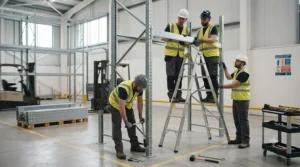
That’s precisely the gap modular shelving fills. A room that needs to function as an office three days a week and a guest bedroom the other four benefits enormously from a system like SONGMICS 16-Cube Wire or IKEA KALLAX, both of which can be resized or relocated in under an hour without specialist tools. Industrial racking, by contrast, genuinely excels at fixed, permanent storage but becomes a liability the moment a room’s purpose needs to change — moving a fully loaded, wall-fixed VonHaus unit is a multi-person job, while unclipping and reshaping a wire-cube grid is not.
Budget vs Style Trade-Off: Getting the Balance Right
The budget vs style trade-off in this category is smaller than most buyers assume at the entry level, then widens considerably as you move up the price range. At the cheap end, VonHaus Garage Shelving and Amazon Basics 6-Cube sit within a similar price bracket despite serving completely different purposes — meaning the honest first question isn’t “what can I afford,” it’s “what does this room actually need to hold.”
Where the trade-off becomes real is in the middle and premium tiers. Paying more for Rhino Racking buys genuinely better build quality under heavy load, not better looks. Paying more for SONGMICS 16-Cube Wire or IKEA KALLAX buys a more considered look and genuine reconfigurability, not more load capacity. Based on the spec comparison across all seven products, the sensible approach is to identify which of the two — capacity or style — actually matters for the specific room in question, then spend your budget within that category rather than trying to find a single product that maximises both.
Common Mistakes When Choosing Shelving
The most frequent error is buying industrial racking for a visible, client-facing space purely because it’s cheaper per kilo of capacity, then finding it reads as cluttered or unfinished rather than intentional. A close second is the opposite mistake — buying modular cube shelving for genuinely heavy storage needs, then discovering the load rating simply isn’t there and items sag or the unit becomes unstable.
Buyers also commonly underestimate how permanent a wall-fixed industrial unit becomes. Once anti-tip brackets are screwed into a stud or masonry wall and the unit is fully loaded, moving it is a genuine multi-person task — a poor fit for anyone renting or expecting to move within a year or two. Finally, skipping the anti-tip fixing entirely on taller industrial units is a mistake reviewers across this list repeatedly warn against, since a fully loaded unloaded-from-the-bottom shelf can become genuinely unstable without it.
Long-Term Cost & Maintenance
Thinking in cost-per-year rather than sticker price reshapes this comparison meaningfully. A £40-£50 Rhino Racking unit that holds up under years of genuine trade use works out cheaper long-term than repeatedly replacing a lighter-gauge budget rack that bows or rusts within a couple of years of heavy use. For modular systems, the maths runs differently — a SONGMICS 16-Cube Wire system’s higher upfront cost is offset by the fact you’re unlikely to need to buy an entirely new unit when your layout needs change, unlike a fixed industrial rack that may simply not fit a new space.
Maintenance costs are genuinely low across both categories. Industrial steel racking mainly needs an occasional check of boltless joints and a wipe-down to prevent surface rust in damp environments. Modular systems need dust removal from open wire grids and occasional tightening of clip or cam-lock joints that loosen with repeated reconfiguration — a minor task worth budgeting a few minutes for every few months rather than an afterthought.
Safety and Load Capacity Considerations
Load capacity claims matter more than most buyers realise, and it’s worth understanding where those figures come from. Commercial and industrial racking safety in the UK is guided by the HSE’s own warehousing and storage safety publication, HSG76, which sets out best practice for load ratings, inspection, and safe use of racking systems — principles that scale down sensibly to home and small-office use even though most domestic buyers won’t need a formal inspection regime. In practice, this means always respecting a shelf’s stated per-tier weight limit rather than the unit’s total capacity figure, since a single overloaded shelf can fail even when the overall unit is well within its combined rating.
Office ergonomics matters here too, particularly for shelving placed near a desk or workstation. The HSE’s guidance on working with display screen equipment reminds employers that a workstation setup — including nearby storage — should avoid creating trip hazards or requiring awkward reaching and lifting during a normal working day, a genuinely practical consideration when positioning any shelving unit close to a desk. Whichever category you choose, keep frequently used items at waist-to-shoulder height and reserve top and bottom shelves for lighter or less frequently accessed items to reduce unnecessary strain.

Frequently Asked Questions
❓ Is industrial shelving stronger than modular shelving?
❓ Can modular shelving be reconfigured as easily as advertised?
❓ Is industrial shelving suitable for a home office?
❓ Does modular shelving cost more than industrial shelving?
❓ Do I need to fix industrial shelving to the wall?
Conclusion
The industrial shelving vs modular shelving decision really comes down to matching the category to the room rather than picking a single winner. If you’re storing genuinely heavy stock in a garage, workshop, or stockroom, the load capacity of SONGMICS 5-Tier Heavy-Duty or Rhino Racking is hard to beat, and no modular system will match it. If you’re furnishing a home office, meeting room, or any space people will actually see, the considered look and genuine reconfigurability of IKEA KALLAX or SONGMICS 16-Cube Wire earns its place, even at a lower load rating.
For anyone caught genuinely in between, the VASAGLE Ladder Shelf offers a sensible middle ground — industrial styling cues at a scale and weight that suits a real office rather than a warehouse floor. Whichever direction you land on, check your actual load requirement, how often the space will change, and who will see it before spending — those three questions answer the industrial vs modular debate far more reliably than price alone.
Recommended for You
- Wall Mounted Shelves vs Floating Shelves: 7 Best Picks (2026)
- Modular Shelving System For Office: 7 Best Picks (2026)
- Industrial Shelving for Office: 7 Best UK Picks (2026)
Disclaimer: This article contains affiliate links. As an Amazon Associate, I earn from qualifying purchases. If you purchase products through these links, we may earn a small commission at no additional cost to you.
✨ Found this helpful? Share it with your friends! 💬🤗
