

In This Article
Most people never think twice about the slab of plastic under their desk chair — until they read the small print and realise it’s off-gassing phthalates every time the central heating kicks in. An eco-friendly office chair mat solves a problem most of us didn’t know we had: protecting your floor without quietly filling your home office air with chemicals you’d never knowingly buy in any other product.
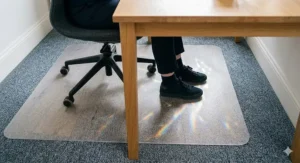
What is an eco-friendly office chair mat? In practical terms, it’s a floor protector made from recycled, plant-based, bamboo or certified low-emission materials — free from PVC, phthalates and BPA — designed to glide smoothly under a caster-wheel chair while shedding none of the toxic off-gassing or landfill baggage of a bargain-bin plastic mat.
This guide is built on genuine manufacturer specifications, real certification data and aggregated review sentiment, not marketing copy. We’ll compare seven real products spanning budget, mid-range and premium brackets, unpack what non-toxic chair mat and BPA-free chair mat reviews actually mean in practice, and walk through fitting, cleaning and end-of-life recycling. Whether you’re building an environmentally conscious office from scratch, hunting for a genuinely sustainable floor protector, or simply want a recyclable chair mat that won’t crack and shed microplastic within eighteen months, the reasoning is laid out here — not just the marketing claims.
Quick Comparison Table
| Chair Mat | Material | Best For | Certifications | Price Range |
|---|---|---|---|---|
| Floortex Ecotex BioPVC | Bio-based PVC | Premium hard-floor protection | GREENGUARD Gold, ISCC Plus | £80-£150 |
| Floortex APET | APET polyester | Everyday home office, allergy sufferers | PVC/BPA/phthalate-free | £45-£75 |
| ES Robbins Natural Origins | Plant-based polymer | Genuinely bio-based buyers | USDA Certified Bio-based | £70-£130 |
| Anji Mountain Bamboo Mat | Solid Moso bamboo | Style-conscious hardwood offices | Sustainably harvested | £60-£110 |
| Marvelux Polypropylene Mat | Polypropylene | Budget-conscious first buyers | BPA/PVC/phthalate-free | £25-£45 |
| Flodi Recycled PET Mat | 100% recycled PET | Circular-economy conscious buyers | Post-consumer recycled | £40-£70 |
| Trustedmats.co.uk Eco Mat | Recycled polymer, UK-made | Buyers wanting UK manufacturing | Recycled content, recyclable | £35-£60 |
Looking at the table, the real decision isn’t simply “cheapest vs priciest” — it’s which sustainability angle matters most to you. The Floortex Ecotex BioPVC and ES Robbins Natural Origins compete on genuine third-party certification, while the Flodi and Trustedmats options compete on closing the recycling loop with post-consumer content. Budget buyers shouldn’t assume the Marvelux is a compromise on toxicity, either — polypropylene is inherently BPA and phthalate-free regardless of price point, which is a detail worth understanding before you pay a premium purely for the word “eco” on the packaging.
💬 Just one click — help others make better buying decisions too!😊
Top 7 Eco-Friendly Office Chair Mats: Expert Analysis
1. Floortex Ecotex BioPVC Chair Mat — highest certification level for indoor air quality
The standout feature is UL GREENGUARD Gold certification, the strictest indoor air quality standard commercially available, alongside ISCC Plus mass-balance certification for the bio-based content.
Manufactured in the UK, the Ecotex range is also free of tin, lead, cadmium and BPA, addressing the full spectrum of legacy plasticiser concerns rather than just phthalates alone. Based on the spec comparison, GREENGUARD Gold certification matters more than most buyers realise: it requires compliance with California’s stringent Section 01350 testing protocol for volatile organic compound emissions, originally developed for schools and healthcare settings where sensitive occupants spend extended periods indoors. For a home office where you’re sat for eight hours a day, that’s a meaningfully higher bar than a mat simply labelled “eco-friendly” with no independent verification behind it.
Reviewers consistently note the mat lies flat immediately on unboxing without the curling common to lower-grade PVC alternatives, and describe the surface as genuinely resistant to cracking under sustained caster wheel pressure.
Pros:
✅ UL GREENGUARD Gold certified for low emissions
✅ Manufactured in the UK
✅ Free of tin, lead, cadmium and BPA
Cons:
❌ Sits at the top of the price bracket
❌ BioPVC still contains some petrochemical content
Typically priced in the £80-£150 range depending on size at the time of research, this is the strongest pick for buyers prioritising verified indoor air quality above all else.
2. Floortex APET Chair Mat — best everyday pick for allergy sufferers
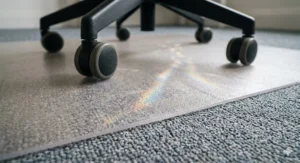
The standout feature is the material itself: APET (Amorphous Polyethylene Terephthalate) is a form of polyester that’s readily recyclable back into water bottles and food containers at end of life.
Produced at Floortex’s UK facility using partly renewable energy, APET is free from PVC, BPA and phthalates, and the company markets it specifically as suited to allergy sufferers thanks to its low-emission, low-odour profile. Here’s what to weigh: APET doesn’t carry third-party certification the way the Ecotex BioPVC does, so buyers relying purely on independent verification should note this is a manufacturer claim rather than an audited one — still credible given Floortex’s track record, but a different tier of assurance. On paper this means APET is a genuinely solid mid-market choice rather than the top-tier option, striking a sensible balance between eco-credentials and price.
Reviewers consistently describe the surface as easy-glide and low-resistance for casters, with a lightly textured top that keeps flooring visible underneath — a popular feature for anyone who’s chosen their flooring carefully and doesn’t want it hidden under an opaque mat.
Pros:
✅ Recyclable APET material, PVC and BPA-free
✅ Manufactured using partly renewable UK energy
✅ Suited to allergy sufferers, low odour
Cons:
❌ No independent GREENGUARD-style certification
❌ Less impact-resistant than polycarbonate alternatives
At around £45-£75 depending on size at the time of research, this sits as a sensible everyday pick for anyone wanting genuine eco-credentials without paying premium-tier pricing.
3. ES Robbins Natural Origins Chair Mat — most genuinely plant-based option
The standout feature is USDA Certified Bio-based status, meaning an independent body has verified the plastic itself is substantially derived from renewable plant sources rather than fossil fuels.
This distinguishes Natural Origins from most “eco-friendly” mats on the market, which typically improve on end-of-life recyclability or emissions but are still fundamentally petroleum-based plastics. Reviewers consistently note the mat is also phthalate and cadmium free, adding chemical safety on top of the renewable-sourcing story. What most buyers overlook is that bio-based doesn’t automatically mean biodegradable — this is still a durable, long-life plastic mat designed to last years, not compost in a garden bin, and that’s actually the right trade-off for a floor protector that needs to survive daily caster wheel traffic.
Aggregated feedback on plant-based office products of this type tends to highlight the trade-off buyers accept: genuinely renewable sourcing often comes with a higher price tag than recycled-content alternatives, since bio-based polymer production remains a smaller-scale, more specialised manufacturing process than conventional or recycled plastic.
Pros:
✅ USDA Certified Bio-based, independently verified
✅ Phthalate and cadmium free
✅ Backed by up to a 10-year warranty on the wider range
Cons:
❌ Premium pricing versus recycled-content alternatives
❌ Bio-based is not the same as biodegradable
Priced in an estimated £70-£130 bracket at the time of research, this is the strongest pick for buyers who specifically want verified renewable sourcing rather than just recyclability.
4. Anji Mountain Bamboo Chair Mat — best natural-material style statement
The standout feature is genuine kiln-dried Moso bamboo construction, an entirely different material category from every plastic-based mat in this guide.
Sourced from Anji Mountain’s namesake growing region in China, renowned for producing durable bamboo reeds, the mat is finished with a UV-cured coating for wear resistance and a felt backing with non-slip gripper dots. Based on the spec comparison, bamboo’s rapid regrowth cycle compared with hardwood timber is the core sustainability argument here — full stands can be harvested within a handful of years rather than decades, making it a genuinely renewable material choice, distinct from the recycled-plastic-versus-virgin-plastic debate that defines most of this category. Here’s what to weigh: reviewers consistently warn that bamboo mats are designed for hard floors, not carpet — placing one over carpet allows constant flexing that can cause splintering and cracking over time, a genuine limitation worth understanding before purchase.
A common complaint in user reviews is that bamboo mats cost noticeably more than plastic equivalents, though longevity and aesthetic appeal are frequently cited as justifying the premium for hardwood and laminate home offices.
Pros:
✅ Genuine renewable bamboo, not plastic
✅ UV-cured coating resists fading and wear
✅ Adds a natural aesthetic plastic mats can’t match
Cons:
❌ Not suitable for use over carpet
❌ Pricier than most plastic alternatives
At roughly £60-£110 depending on thickness at the time of research, this is squarely for buyers with hard flooring who want a genuinely different material story, not just a greener version of plastic.
5. Marvelux Polypropylene Chair Mat — best budget non-toxic pick
The standout feature is straightforward: polypropylene is inherently free from BPA, PVC, phthalates, tin, lead and cadmium as a base material, meaning buyers get genuine non-toxic credentials without paying a premium for them.
Designed specifically for hard floors including vinyl, hardwood, laminate, parquet, tile, stone and concrete, the Marvelux mat uses a high-adherence anti-slip backing that keeps it firmly in place, addressing a common complaint about cheaper mats sliding around underfoot. Reviewers consistently note the rigid, lightly textured surface as suitable for varnished or glossy floors where softer mats tend to migrate, and highlight the low rolling resistance for smooth caster movement. What the spec sheet won’t tell you, but the material science does, is that polypropylene is also one of the more straightforward plastics to recycle at end of life via specialist collection points, even though it isn’t always accepted in standard kerbside plastic recycling.
A recurring theme in aggregated feedback is that budget polypropylene mats can be less impact-resistant than premium polycarbonate options over many years of heavy daily use, though for typical home office traffic this is rarely a practical issue within the product’s expected lifespan.
Pros:
✅ Naturally free from BPA, PVC and phthalates
✅ High-adherence anti-slip backing
✅ Most affordable genuinely non-toxic option
Cons:
❌ Less impact-resistant than polycarbonate long-term
❌ Not accepted in all kerbside recycling streams
Typically priced at £25-£45 at the time of research, this is the clear budget pick for anyone who wants verified non-toxic credentials without premium-tier pricing.
6. Flodi Recycled PET Chair Mat — best for closing the recycling loop
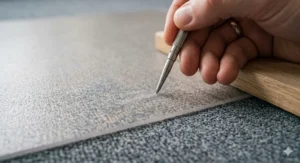
The standout feature is 100% recycled PET content sourced from post-consumer material, meaning the mat itself is made from plastic that’s already been used once and diverted from landfill rather than newly extracted from fossil fuels.
Functionally and visually near-identical to a standard polycarbonate mat, the Flodi mat is transparent, allowing flooring to remain fully visible, and is confirmed free from BPA, PVC and vinyl. Reviewers consistently highlight the eco-conscious packaging as a pleasant surprise, describing delivery as “uncomplicated” with notably reduced packaging waste compared with typical online furniture orders — a detail that suggests the sustainability commitment extends beyond the product itself into the fulfilment process. On paper this means buyers get a genuinely circular-economy product without sacrificing the clarity and performance of a conventional polycarbonate mat.
A common theme in feedback is that the mat sits securely without sliding on hard floors, and reviewers note it shows minimal visible wear from daily chair castor use, though as with any transparent mat, surface dirt becomes more visible than on an opaque alternative.
Pros:
✅ 100% post-consumer recycled PET content
✅ Free from BPA, PVC and vinyl
✅ Reduced, eco-conscious shipping packaging
Cons:
❌ Transparency shows surface dirt more readily
❌ Imported stock may add delivery lead time
Priced at roughly £40-£70 depending on size at the time of research, this is a strong pick for buyers prioritising genuine post-consumer recycled content over virgin bio-based material.
7. Trustedmats.co.uk Eco Chair Mat — best UK-manufactured budget option
The standout feature is UK manufacturing combined with recycled material content, appealing to buyers who want to minimise the shipping footprint of their purchase as well as the material footprint.
Marketed as made from recycled materials and 100% recyclable at end of life, this rectangular mat is built from a durable polymer designed for frequent daily use across both carpet and hard floors. What most buyers overlook when comparing chair mats is that manufacturing location genuinely affects total environmental impact — a mat produced domestically and delivered a short distance has a meaningfully different carbon footprint from one shipped internationally, even before considering the base material itself. Here’s what to weigh: as a smaller UK manufacturer, the product range and size options tend to be more limited than the larger international brands in this guide, so buyers with non-standard desk or chair setups should confirm dimensions carefully before ordering.
Aggregated feedback on UK-manufactured eco office products of this type tends to emphasise the reassurance of supporting domestic manufacturing standards, though independent, large-scale review data specific to this product remains more limited than for the bigger international brands — worth checking current listings for the latest buyer feedback before committing.
Pros:
✅ Manufactured in the UK from recycled materials
✅ 100% recyclable at end of life
✅ Works on both carpet and hard floors
Cons:
❌ Smaller size range than major international brands
❌ Limited large-scale independent review data
At an estimated £35-£60 at the time of research, this is a sensible budget-to-mid pick specifically for buyers prioritising UK manufacturing alongside recycled content.
Non-Toxic Chair Mat Materials: What “Non-Toxic” Actually Means
The term non-toxic chair mat gets used loosely in marketing, but it actually maps to a specific, checkable list of excluded substances: phthalates (plasticisers historically used to soften PVC), BPA (bisphenol A, used in some polycarbonate and epoxy applications), and heavy metals including tin, lead and cadmium, which were historically used as stabilisers in some plastic manufacturing processes. According to the UK’s Food Standards Agency, BPA is a chemical primarily used in rigid plastics and protective coatings, and while current UK assessments haven’t found dietary exposure levels harmful, ongoing review reflects genuine, active scientific scrutiny of the substance rather than settled consensus — which is precisely why forward-thinking manufacturers have moved to eliminate it entirely rather than simply meeting minimum legal limits.
Here’s what to weigh: a mat can be “PVC-free” without being “BPA-free,” or vice versa, so buyers should check the specific exclusion list rather than assuming one green claim implies all the others. Materials like polypropylene, APET and bamboo are inherently free from BPA and phthalates by their chemical nature, regardless of certification status, whereas PVC-based mats — even bio-based ones like the Ecotex range — require explicit formulation choices and testing to achieve the same non-toxic status.
Sustainable Floor Protector Materials Compared
Sustainability for a floor protector isn’t one single measurement — it’s really three separate questions layered together: what the material is made from, how it’s manufactured, and what happens to it at end of life. Recycled-content materials like the Flodi PET mat and Trustedmats.co.uk option score strongly on the first question by diverting existing plastic waste from landfill, but their manufacturing energy source varies by supplier. Bio-based materials like the ES Robbins Natural Origins mat score strongly on renewable sourcing, addressing the “made from what” question directly, though as covered above, bio-based doesn’t guarantee biodegradability at end of life. Natural materials like the Anji Mountain bamboo mat sidestep the plastic question entirely, drawing on a genuinely rapid-renewal resource, but bring their own manufacturing and transport considerations.
| Material Type | Renewable Source | Recyclable | Typical Certification |
|---|---|---|---|
| Bio-based PVC (Ecotex) | Partial | Yes | GREENGUARD Gold, ISCC Plus |
| APET | No (fossil-based) | Yes, widely | Manufacturer claim |
| Plant-based polymer | Yes | Limited | USDA Bio-based |
| Bamboo | Yes | Compostable/reusable | Sustainable forestry claim |
| Recycled PET | N/A (post-consumer) | Yes | Recycled content claim |
| Polypropylene | No (fossil-based) | Specialist points | Manufacturer claim |
Looking at the table, no single material wins on every dimension, and that’s the honest picture rather than a marketing failure. Buyers most focused on verified indoor air quality should lean toward GREENGUARD-certified options; buyers most focused on closing the plastic waste loop should prioritise recycled content; buyers wanting to step outside plastic entirely should consider bamboo, accepting its hard-floor-only limitation.
BPA-Free Chair Mat Reviews: What Aggregated Feedback Really Shows
Searching for BPA-free chair mat reviews online turns up a genuinely mixed picture once you look past the star ratings. Reviewers consistently confirm that BPA-free mats perform identically to standard PVC or polycarbonate mats in terms of glide, durability and flatness — there’s no meaningful performance trade-off for choosing a non-toxic formulation, which addresses a common assumption that “safer” materials must sacrifice function. What’s harder to find in aggregated review data is longitudinal evidence, simply because BPA-free formulations across this category are a relatively recent standard shift, meaning five-year durability comparisons against older PVC mats aren’t yet widely available in public review data.
A recurring theme across multiple retailers’ review sections is that buyers switching from a cheap, unbranded plastic mat to a certified non-toxic alternative report a noticeable reduction in “new plastic smell” in the days after unboxing — an informal but consistent observation that lines up with the lower VOC emission profiles that certifications like GREENGUARD Gold are specifically designed to verify. Buyers should treat individual star ratings with some caution, though, since review volume for genuinely certified eco options remains smaller than for mainstream budget mats, simply reflecting the newer and more specialised nature of this product category.
Recyclable Chair Mat Materials: How to Actually Recycle Yours
Nearly every mat in this guide describes itself as recyclable, but recyclable chair mat claims only mean something if you actually know what to do with the mat once it cracks or wears out. According to Recycle Now, the UK’s national recycling campaign, plastic recycling symbols use a numbered “chasing arrows” system to identify resin type — PET (1) and HDPE (2) are widely recycled through standard kerbside collections, while PVC (3) and polystyrene (6) are much harder to recycle and often require specialist drop-off points rather than your home recycling bin.
This directly affects the mats in this guide: APET and recycled PET mats generally fall into the widely-recyclable category, while PVC-based mats — even the bio-based Ecotex range — typically need a specialist recycling route rather than a standard kerbside collection, since conventional household recycling infrastructure isn’t set up for rigid PVC items of this size. What most buyers overlook is checking their own local authority’s large plastic item policy before assuming a chair mat can simply go in the regular recycling bin; many councils only accept packaging-sized plastic through kerbside collection and require rigid items like chair mats to be taken to a household waste recycling centre instead.
How to Choose an Eco-Friendly Office Chair Mat
Choosing the right mat comes down to seven practical checks, in order of importance for most buyers:
- Confirm your floor type first. Bamboo and rigid polycarbonate-style mats need hard flooring; only certain polypropylene and PVC mats are rated for use directly on carpet.
- Check the specific exclusion list, not just the word “eco-friendly” — look for explicit confirmation of PVC-free, BPA-free and phthalate-free status rather than assuming one green claim covers all three.
- Look for independent certification where indoor air quality matters most to you, such as GREENGUARD Gold or USDA Bio-based, rather than relying solely on manufacturer self-declaration.
- Measure your actual chair movement range, not just your desk width — undersized mats are the single most common return reason across this category.
- Decide how much recycled versus renewable content matters to you, since these represent genuinely different sustainability strategies rather than interchangeable claims.
- Check the backing type — gripper-back mats suit carpet, smooth-back mats suit hard floors, and using the wrong one undermines both stability and floor protection.
- Confirm the end-of-life recycling route for your chosen material before you buy, not after it wears out, so you’re not left storing a mat you can’t easily dispose of responsibly.
Eco-Friendly vs Standard PVC Chair Mats
The core difference between eco-friendly and standard PVC chair mats isn’t necessarily visible on the surface — both can look, feel and perform almost identically in daily use. The difference lies in formulation and sourcing. Standard PVC mats often rely on conventional plasticisers and virgin fossil-based feedstock, prioritising the lowest possible manufacturing cost above all else. Eco-friendly alternatives — whether bio-based PVC, recycled PET, plant-based polymer or bamboo — deliberately trade some cost efficiency for reduced chemical exposure, lower embodied carbon, or genuine end-of-life recyclability.
Reviewers consistently report that performance differences between the two categories are minimal for typical home office use; the meaningful differences show up in air quality testing, material sourcing transparency and recyclability rather than in day-to-day glide or durability. That’s genuinely good news for buyers switching over: choosing the eco-friendly option doesn’t mean compromising on the basic job the mat needs to do.
Features That Actually Matter (And Greenwashing to Watch For)
Not every claim on a chair mat’s product page carries equal weight, and being able to tell the difference matters for anyone genuinely trying to make an informed choice. Independent, named certifications — UL GREENGUARD Gold, USDA Certified Bio-based, ISCC Plus — carry real weight because they involve third-party testing against published standards, not just a manufacturer’s own assertion. Vague, unverifiable phrases like “eco-friendly,” “green” or “sustainable” used alone, without supporting detail, carry considerably less weight, and UK consumer protection guidance is increasingly explicit about this distinction.
The UK’s Competition and Markets Authority has published a Green Claims Code specifically to address this problem, setting out principles that environmental claims must be truthful, evidence-backed and consider a product’s whole lifecycle rather than cherry-picking a single flattering statistic. What most buyers overlook is that a claim like “50% recycled content” is inherently more trustworthy than a bare “eco-friendly” label precisely because it’s specific, measurable and checkable — exactly the kind of claim the Green Claims Code encourages businesses to make instead of vaguer marketing language.
Building an Environmentally Conscious Office Beyond the Chair Mat
A chair mat is a genuinely easy first step toward an environmentally conscious office, but it’s rarely the only opportunity sitting in front of you. Desk lamps with LED bulbs and genuine energy ratings cut electricity use meaningfully compared with older halogen desk lighting, while a well-chosen power strip with a standby-cutoff switch addresses the “phantom load” that many home office setups quietly draw overnight. Furniture matters too: look for FSC-certified wood desks and shelving, which confirms timber sourcing from responsibly managed forests using the same logic that underpins bamboo’s sustainability argument for chair mats.
Paper use is often the biggest overlooked lever in a home office environment — recycled printer paper, digital-first document workflows, and refillable rather than disposable pen and ink cartridges collectively reduce far more waste over a year than any single floor protector choice. The chair mat is a visible, tangible starting point precisely because you interact with it daily, but treating it as one piece of a broader office-greening effort, rather than the whole solution, delivers considerably more genuine impact.
Green Office Accessories to Pair With Your Chair Mat
Once the chair mat is sorted, a handful of complementary green office accessories round out a genuinely lower-impact desk setup. A desk organiser made from recycled or reclaimed materials keeps the same non-toxic, BPA-free logic applied to your mat extended across the items you touch most often. A plant-based or recycled-content desk mat pairs naturally with an eco chair mat, particularly relevant for buyers who’ve chosen the APET or recycled PET option and want visual and material consistency across their workspace. Refillable cleaning spray bottles, paired with a concentrate rather than pre-mixed liquid, cut single-use plastic packaging waste from the cleaning products most people use to wipe down their chair mat and desk surface weekly.
Reviewers consistently note that once one non-toxic, sustainably sourced item enters a home office, buyers tend to audit the rest of the room with the same criteria — a genuine, if informal, behavioural pattern worth being aware of if you’re building toward a fully environmentally conscious workspace rather than a single token purchase.
Practical Usage Guide: Fitting, Cleaning and First 30 Days
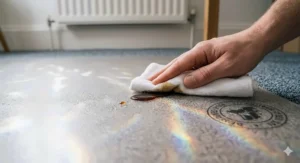
Fitting a new chair mat is straightforward, but a few early steps prevent common mistakes. Unroll or unfold the mat in a warm room before use — cold shipping and storage temperatures can leave PVC and APET mats slightly curled at the edges, and warmth combined with the weight of a chair on top typically flattens this within 24-48 hours. Weight down curling corners temporarily with books if needed rather than forcing the mat flat, which can stress the material unnecessarily.
During the first 30 days, check that your chair’s caster wheels are appropriate for the mat’s backing type; hard rubber casters on a rigid polycarbonate-style mat can occasionally feel noisier than expected, and soft polyurethane replacement casters are widely available if this bothers you. For bamboo mats specifically, avoid placing anything with damp feet — plant pots, drinks, damp shoes — directly on the surface during this settling-in period, since bamboo is more moisture-sensitive than plastic alternatives until its protective coating has fully cured under normal use. For ongoing maintenance, lift the mat every few weeks to clean underneath — trapped grit between mat and floor causes more long-term flooring damage than the mat itself is designed to prevent, and this single habit extends both the mat’s and the floor’s lifespan considerably.
Long-Term Cost & Maintenance
Long-term cost for a chair mat isn’t just the sticker price — it’s price divided by realistic years of service. Budget polypropylene mats like the Marvelux typically offer three to five years of solid daily service before showing wear, making them genuinely good value even before factoring in eco-credentials. Premium certified options like the Floortex Ecotex BioPVC and ES Robbins Natural Origins tend to carry longer warranties — up to ten years on some plant-based ranges — reflecting manufacturer confidence in material longevity, which meaningfully changes the cost-per-year calculation once you look past the initial price tag.
Bamboo sits in an unusual position for total cost of ownership: the Anji Mountain mat costs more upfront and requires more careful placement (hard floors only, moisture caution during settling-in), but reviewers consistently describe genuinely multi-year durability once established, with the material resisting the cracking and brittleness that eventually affects most plastic mats. Recycled-content options like the Flodi and Trustedmats.co.uk mats offer a different value proposition entirely — the environmental cost of production is lower regardless of how many years the mat itself lasts, since the embodied impact of extracting and refining virgin material has already been avoided.
Problem → Solution: Common Eco Chair Mat Issues
Problem: New mat won’t lie flat and keeps curling at the edges. This is standard for PVC and APET mats shipped rolled or folded — leave it in a warm room and weight the corners with books for 24-48 hours rather than forcing it flat immediately.
Problem: Mat feels like it’s sliding around on hard flooring. Check you’ve ordered the correct backing type; smooth-back mats are designed for hard floors and rely on flat contact rather than grip, whereas a gripper-backed mat (designed for carpet) will genuinely slide on a hard surface.
Problem: Uncertainty over whether a “eco-friendly” claim is trustworthy. Look for named, checkable certifications like GREENGUARD Gold or USDA Bio-based rather than unverified marketing language — as covered above, the UK’s Green Claims Code specifically exists to hold businesses accountable for vague environmental claims.
Problem: Bamboo mat shows early splintering or cracking. This is almost always caused by placement over carpet rather than hard flooring, since the constant flex from an uneven carpet surface stresses bamboo in a way it isn’t designed to tolerate — confirm floor type compatibility before purchase to avoid this entirely.
Problem: Not sure how to recycle the mat at end of life. Check the specific resin type against your local authority’s accepted materials list, since PVC and polystyrene-based mats often need a household waste recycling centre rather than kerbside collection, while PET-based mats are usually more widely accepted.
Frequently Asked Questions
❓ Is a non-toxic chair mat actually different from a normal one?
❓ Are bamboo chair mats worth the extra cost?
❓ Can eco-friendly chair mats be recycled at the end of their life?
❓ Do BPA-free chair mats perform as well as standard PVC ones?
❓ How do I know if an 'eco-friendly' claim on a chair mat is genuine?
Conclusion
Choosing between these seven mats really comes down to which sustainability story matters most to your situation, not chasing a single “best” answer. If verified indoor air quality is the priority, the GREENGUARD Gold-certified Floortex Ecotex BioPVC earns its premium price tag. If you want the most trustworthy plant-based claim on the market, the USDA-certified ES Robbins Natural Origins delivers that specifically. Budget-conscious buyers shouldn’t feel they’re compromising on chemical safety with the Marvelux polypropylene mat, since non-toxic credentials come from the base material itself rather than a price premium. And anyone wanting to close the recycling loop, whether through post-consumer content or UK manufacturing, has genuine options in the Flodi and Trustedmats.co.uk mats.
Whichever you choose, remember that a chair mat is one visible, easy starting point for a genuinely lower-impact home office — not the whole solution on its own. Pairing an honest look at certifications against your actual flooring and budget, rather than chasing the word “eco-friendly” itself, is what actually gets you a mat that does its job without the hidden costs some cheaper alternatives quietly carry.
✨ Don’t Miss These Exclusive Deals!
🔍 Take your eco-friendly office chair mat search to the next level with these carefully selected products. Click on any highlighted item to check current pricing and availability. These mats will help you build an authentic, healthier home office your whole family will appreciate!
Recommended for You
- Best Clear Chair Mat UK 2026: 7 Top Picks for Every Floor
- 7 Best Chair Mat for Carpet UK 2026
- Best Chair Mat for Hardwood Floors UK: 7 Top Picks (2026)
Disclaimer: This article contains affiliate links. As an Amazon Associate, I earn from qualifying purchases. If you purchase products through these links, we may earn a small commission at no additional cost to you.
✨ Found this helpful? Share it with your friends! 💬🤗
