
In This Article
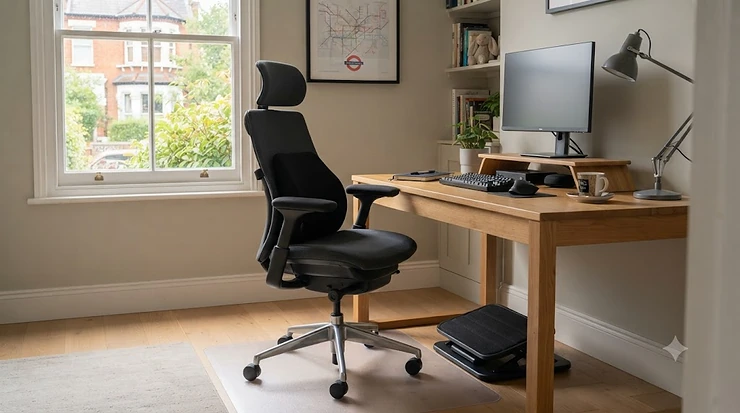
Your chair isn’t the problem. That’s the sentence nobody wants to hear when their lower back is on fire by 3pm, but it’s usually true. Most desk chairs sold in the UK are decent enough frames let down by thin padding, a lumbar curve that fits nobody in particular, and castors that were clearly never tested on real oak flooring. The fix, more often than not, isn’t a £600 replacement chair. It’s a handful of well-chosen essential office chair accessories that patch the exact gaps your existing seat leaves behind.
So what is an essential office chair accessory? It’s any add-on product — a cushion, a mat, a footrest, a set of wheels — that corrects a specific ergonomic shortfall in an office chair, improving posture, comfort, or floor protection without the cost of a full chair replacement.
This guide walks through seven genuinely useful, currently available products on amazon.co.uk, why each one earns its place, and how to match them to your own setup. We’ve leaned on real product specifications and aggregated customer-review sentiment throughout rather than guesswork, and where the evidence is mixed, we say so. If you spend more than an hour a day at a desk, the Health and Safety Executive’s guidance on home workstations is worth a skim too — it’s the same framework UK employers are legally expected to follow, and it underpins a fair chunk of the advice below. Whether you’re hunting for office chair upgrade accessories on a student budget or building out a proper ergonomic upgrade kit for a home office you’ll be in for the next five years, there’s a route through this list that fits.
Quick Comparison Table
| Product | Category | Price Range | Best For |
|---|---|---|---|
| Everlasting Comfort Lumbar Support Pillow | Lumbar cushion | Under £30 | Budget-friendly posture correction |
| FORTEM Coccyx Seat Cushion | Seat cushion | Under £25 | Tailbone and hip pressure relief |
| Cushion Lab Pressure Relief Seat Cushion | Seat cushion | £45-£60 range | Long sitting sessions, premium comfort |
| QUTOOL Full-Back Lumbar Pillow | Full-back cushion | £25-£35 range | Chairs with no lumbar shaping at all |
| Marvelux Polycarbonate Chair Mat | Floor mat | £70-£100 range | Hardwood or laminate floor protection |
| Lifelong Office Chair Wheels | Caster upgrade | Under £25 | Silent rolling on hard floors |
| HUANUO Adjustable Under-Desk Footrest | Footrest | £25-£35 range | Short users or dangling feet |
Look at the spread here and a pattern jumps out fast: the cheapest fixes (lumbar pillows, caster swaps) tackle acute discomfort, while the pricier picks like the Cushion Lab cushion and the Marvelux mat are investments in daily wear-and-tear reduction. If your budget only stretches to one purchase, prioritise whichever body part is actually complaining — don’t buy a footrest because it’s popular if your issue is lower back ache. We’ll unpack the reasoning behind every “Best For” column entry in the product breakdowns below.
💬 Just one click — help others make better buying decisions too!😊
Top 7 Office Chair Accessories: Expert Analysis
1. Everlasting Comfort Original Lumbar Support Pillow — best budget entry point for lower back pain
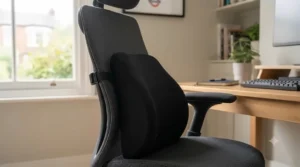
The standout here is simple: this is one of the cheapest genuine fixes for a chair with zero lumbar shaping, and it doesn’t feel like a cheap fix once it’s strapped in. The cushion uses body-heat-responsive memory foam that firms up around your lower spine rather than compressing flat within a fortnight, which is the usual failure point for budget lumbar pillows. Dual adjustable straps secure it to chairs up to roughly 32 inches wide, so it works equally well on a mesh task chair or a bulkier executive model, and a removable mesh cover stops the whole thing turning into a heat trap during a long afternoon of calls.
Based on the spec comparison with rival lumbar pillows in this price bracket, the breathable cover is the genuine differentiator — several cheaper alternatives use a single dense foam block with no airflow, and reviewers of those products regularly flag overheating as a dealbreaker. What most buyers overlook about this model is that positioning matters more than the product itself: sit too high on it and you’ll feel pushed forward rather than supported.
Reviewers consistently report noticeable relief for general slouching and mild lower back ache, and the cushion is popular enough to double up as a car seat support. A recurring theme in aggregated feedback, though, is that the foam filling on some units feels less dense than expected on arrival, so a short settling-in period is normal rather than a fault.
Pros:
- ✅ Affordable entry point into proper lumbar support
- ✅ Breathable mesh cover resists overheating during long sessions
- ✅ Straps fit a wide range of chair widths securely
Cons:
- ❌ Some units arrive with softer foam than expected
- ❌ Can push users too far forward if positioned too high
Priced comfortably under £30, this is the cushion to buy first if you’ve never used any lumbar support and want to test whether the concept even helps your particular ache before spending more.
2. FORTEM Coccyx Seat Cushion — best budget seat cushion for tailbone pressure
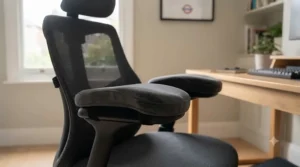
The FORTEM’s calling card is its U-shaped cut-out at the rear, a design lifted straight from clinical seating and aimed squarely at relieving pressure on the tailbone rather than the whole seat area evenly. That’s an important distinction: a flat memory foam pad spreads your weight, but it doesn’t specifically hollow out the one point that causes coccyx pain during long sitting stretches.
The cushion uses a moulded memory foam core with a non-slip base, and its ergonomic shaping is designed to nudge users into a more upright pelvic position rather than letting them sink backward. In practice, that means it does double duty as a mild posture cue alongside its cushioning job. It’s genuinely portable too — light enough to move between a desk chair, a dining chair, or a car seat without much thought, which matters if you split your working day between locations.
This is a hugely popular category on Amazon UK, with tens of thousands of combined reviews across similar coccyx cushions rating comfort and pressure relief strongly. Aggregated sentiment does flag one recurring caution: users heavier than average or with very tall builds sometimes find the cushion compresses fully and loses its cut-out benefit sooner than lighter users.
Pros:
- ✅ U-shaped design specifically targets tailbone pain
- ✅ Non-slip base keeps it anchored on smooth chair seats
- ✅ Lightweight enough to travel between chairs easily
Cons:
- ❌ Compresses faster under heavier body weights
- ❌ Adds noticeable seat height, which may affect desk clearance
Sitting in the under-£25 bracket, this is a sensible pairing with a lumbar pillow rather than a standalone fix — the two solve different problems and rarely fight each other for space.
3. Cushion Lab Patented Pressure Relief Seat Cushion — premium pick for genuine all-day sitting
Where the FORTEM plays in the budget lane, the Cushion Lab cushion is aimed at people who sit for genuinely long, unbroken stretches — six, eight, ten hours — and need a cushion engineered to still feel supportive at hour seven rather than hour one. Its patented design uses an extra-dense memory foam formulation rather than the softer, cheaper foam typical of budget cushions, which is the main reason it holds its shape over months of daily use instead of flattening into a pancake by month three.
Here’s what to weigh: the density that makes this cushion durable also makes it firmer underfoot (or rather, under-seat) than most first-time buyers expect. Reviewers who’ve used softer cushions before sometimes need a week or two to adjust, but those who stick with it tend to report meaningfully reduced hip and sciatic discomfort compared with the softer alternatives they’d tried previously. On paper this means you’re paying a premium for longevity and consistency of support, not for plushness.
Aggregated review sentiment across this cushion category is unusually consistent on one point: buyers who specifically struggled with sciatica or prolonged sitting discomfort report the firmer, denser structure outperforming softer competitors, even though it takes an adjustment period to appreciate.
Pros:
- ✅ Extra-dense foam resists flattening far longer than budget cushions
- ✅ Strong track record specifically for sciatica-related discomfort
- ✅ Washable cover suits daily use without odour build-up
Cons:
- ❌ Noticeably firmer than typical memory foam cushions
- ❌ Sits at the top of the price range for this category
Expect to pay somewhere in the £45-£60 range for this one — a genuine premium over the FORTEM, but the cost-per-use maths favours it if you’re sitting for most of a working week rather than occasional stretches.
4. QUTOOL Full-Back Lumbar Support Pillow — best full-back coverage for chairs with a flat backrest
The QUTOOL takes a different approach entirely: rather than targeting the lumbar curve alone, it’s shaped to cover most of the backrest, which suits chairs that offer essentially no built-in shaping anywhere along the spine — a common problem with basic mesh task chairs and older dining-style office chairs pressed into desk duty. Two upgraded adjustable straps hold it in place regardless of how often the chair reclines, addressing a common complaint with single-strap lumbar cushions that slide down mid-afternoon.
The breathable 3D mesh cover keeps air moving across a much larger surface area than a compact lumbar pillow, which matters given how much more of your back this cushion actually touches. Based on the spec comparison with smaller lumbar-only pillows, the trade-off is bulk: this product adds real thickness to a chair’s backrest, which can push you further forward at the desk than a slimmer pillow would.
Reviewers frequently note that the double-strap system solves the sliding problem that plagues single-strap alternatives, and the mesh cover receives consistent praise for staying cool through long sessions. A common complaint in user reviews, however, is that the extra thickness can feel like too much for users who don’t need full-back coverage and would be better served by a smaller lumbar-only cushion.
Pros:
- ✅ Covers the full backrest rather than just the lumbar curve
- ✅ Double-strap system stays in place through reclining
- ✅ Large mesh surface keeps the whole back cooler
Cons:
- ❌ Adds significant bulk to the seating position
- ❌ Overkill for chairs that already have partial lumbar shaping
At around £25-£35, this is the pick for anyone whose chair backrest is essentially a flat board — a category of chair that’s more common in home offices than people admit.
5. Marvelux Premium Polycarbonate Chair Mat — best floor protection for hardwood and laminate
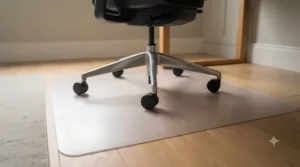
A chair mat rarely gets filed under “essential office chair accessories” until the day someone notices scuff marks scored into hardwood flooring, at which point it becomes essential very quickly. The Marvelux mat is made from polycarbonate rather than the thinner PVC used in most budget mats, which matters because polycarbonate resists the yellowing, cracking, and curling at the edges that cheap chair mats develop within a year or two of daily rolling.
Because it’s manufactured in the UK, it’s also worth noting for anyone specifically wanting to support domestic manufacturing rather than importing yet another plastic product — a small but real point of difference in this category. The mat sits flat without the curled edges that turn budget mats into a trip hazard, and its surface is designed to let castors glide rather than catch, which reduces the strain on chair wheel bearings over time as a side benefit.
Here’s what to weigh: polycarbonate mats cost noticeably more upfront than the £15-£20 clear PVC mats flooding Amazon listings, but they typically outlast three or four of those cheaper mats, so the long-run cost-per-year comparison favours the pricier option once you factor in replacement frequency. Reviewers of premium polycarbonate mats in this category consistently highlight the flat lay and durability as the reason they don’t regret paying more, while budget PVC mat reviews are dominated by complaints about curling and cracking after six to twelve months.
Pros:
- ✅ Polycarbonate resists cracking, yellowing, and curling long-term
- ✅ Manufactured in the UK
- ✅ Smooth glide reduces wear on chair castors over time
Cons:
- ❌ Costs considerably more than basic PVC chair mats
- ❌ Rigid material can be awkward to store if you move house often
Expect to pay in the £70-£100 range, positioning this firmly as a long-term investment rather than an impulse buy — but one that protects a floor that likely cost a great deal more than the mat itself.
6. Lifelong Office Chair Wheels — best caster upgrade for quiet, floor-safe rolling
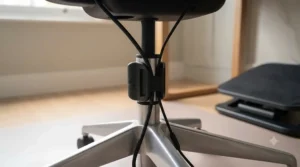
Stock castors on most office chairs are hard plastic, and hard plastic on hardwood or laminate is a slow-motion scratching machine that most people don’t notice until the damage is done. The Lifelong wheels swap those out for a soft polyurethane rollerblade-style caster, which is the same wheel logic used on actual rollerblades — soft enough to grip and cushion, hard enough to hold weight and roll smoothly.
The bearings are fully enclosed, which is a genuinely practical detail if you have pets or long hair in the house: exposed-bearing castors are notorious for getting tangled with both. Installation is a five-minute, no-tools job — pull the old caster, push the new one in, provided your chair uses the common 11mm stem size that fits the vast majority of chairs sold in the UK and doesn’t include most IKEA models.
Reviewers overwhelmingly frame this as a chair-mat alternative rather than a mat companion — several explicitly mention ditching their chair mat entirely after fitting quieter, floor-safe wheels. A common complaint in user reviews across this caster category is stem-size incompatibility with a small number of chair brands, which is why checking your existing caster’s stem diameter before ordering is worth the thirty seconds it takes.
Pros:
- ✅ Soft polyurethane protects hardwood and laminate floors
- ✅ Enclosed bearings resist hair and pet fur tangling
- ✅ Five-minute, tool-free installation
Cons:
- ❌ Not compatible with most IKEA chair stems
- ❌ Doesn’t suit very high-pile carpet as well as hard flooring
At under £25 for a set of five, this is arguably the single best value item on this entire list — it’s a one-off purchase that keeps paying back every single day you roll across a floor.
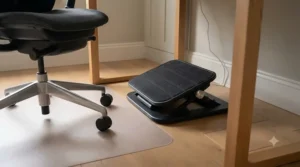
7. HUANUO Adjustable Under-Desk Footrest — best fix for feet that don’t reach the floor
Footrests get dismissed as a “nice to have,” but for anyone under around 5’6″ using a standard-height desk and chair combination, dangling feet are a genuine ergonomic problem, not a comfort preference. When feet don’t rest flat, the weight of the legs pulls on the underside of the thighs all day, which restricts circulation and contributes to the pins-and-needles feeling familiar to a lot of shorter desk workers by mid-afternoon.
The HUANUO footrest offers several height positions and a tilt adjustment, which lets users find the specific angle that keeps knees roughly level with hips — the position ergonomic guidance consistently points to as ideal. A textured or massage-roller surface variant is common in this product category and adds a genuinely pleasant fidget-friendly element during long calls, though it’s a bonus rather than the main event.
Reviewers consistently note that dialling in the right height takes a bit of trial and error in the first week, but that once set, the footrest becomes something people forget they’re using — which, for an ergonomic product, is usually the sign it’s working. A recurring theme in aggregated feedback is that footrests with a tilt-lock function are preferred over rocking-only designs by users who found the rocking motion distracting rather than soothing.
Pros:
- ✅ Multiple height and tilt settings suit different desk heights
- ✅ Genuinely reduces leg and lower back fatigue over a workday
- ✅ Compact enough to tuck away when not needed
Cons:
- ❌ Takes a short adjustment period to find the ideal setting
- ❌ Rocking motion isn’t to everyone’s taste
Priced in the £25-£35 range, this is a near-mandatory addition for shorter users and a genuinely useful optional extra for everyone else.
Practical Usage Guide: Setting Up Your Chair Accessories Properly
Buying the right office chair upgrade accessories is only half the job — badly positioned gear can undo most of the benefit. Start with the lumbar cushion or full-back pillow: it should sit at the natural inward curve of your lower spine, roughly belt-height, not higher up near your shoulder blades. Strap it snugly enough that it doesn’t slide during a recline, but not so tight that it bows away from your back at the edges.
Seat cushions need a settling-in period. New memory foam is often shipped compressed, so give it 24 to 48 hours to fully expand before judging the firmness — a cushion that feels rock-hard on day one frequently softens into its intended feel by day three. Position any cut-out or U-shape toward the rear of the seat, aligned with your tailbone, not centred under your thighs.
For chair mats and caster upgrades, the main mistake in the first month is skipping the measurement step. Measure your actual rolling radius — desk to furthest point you swivel to — before ordering a mat, since an undersized mat means constantly rolling off the edge and defeating its purpose. With replacement casters, check your existing stem diameter with a tape measure rather than guessing; the 11mm universal size fits most chairs, but IKEA and several gaming-chair brands use different specifications entirely.
Set a loose maintenance rhythm: wipe down mesh cushion covers monthly, vacuum chair mat surfaces weekly if you’re on carpet, and check caster wheels every couple of months for hair or debris wound around the axle, which is the most common cause of a caster that starts squeaking or catching.
Real-World Scenarios: Matching Accessories to How You Actually Work
The remote worker on a budget. Someone working from a hand-me-down dining chair at a kitchen table, six to eight hours a day, five days a week. Priority order here is the Everlasting Comfort lumbar pillow first, since it’s the cheapest fix for the single biggest problem — zero lumbar shaping — followed by the FORTEM coccyx cushion once budget allows. Total spend stays under £55 for a meaningfully more comfortable setup.
The hybrid worker with a proper ergonomic chair but a hardwood home office. This person’s chair is fine; their floor isn’t. The Marvelux chair mat and Lifelong caster wheels solve two sides of the same problem — protecting the floor and reducing wear on the chair itself — and together they’re a sensible pairing of workspace comfort accessories that also protects a valuable asset in the room, the floor.
The tall-or-short outlier whose desk setup was never sized for them. A petite user on a standard 73cm desk with feet dangling needs the HUANUO footrest before anything else; a taller user folded into a chair with insufficient lumbar depth needs the QUTOOL full-back pillow to add the missing structure. In both cases, the fix isn’t a new chair — it’s recognising which specific dimension the standard chair got wrong for their body.
Common Mistakes When Buying Office Chair Accessories
- Buying a seat cushion and a lumbar pillow that fight each other. A very thick seat cushion raises hip height relative to the backrest, which can push the lumbar curve out of alignment with a separately fitted lumbar pillow. Measure combined thickness before assuming more padding automatically means more comfort.
- Ignoring chair width when buying a lumbar cushion. Most straps are rated for chairs up to around 32 inches wide; wider executive or “big and tall” chairs need a specifically sized product, not a standard one stretched to its limit.
- Choosing a chair mat by price alone. The cheapest clear PVC mats are consistently the ones customers report replacing within a year due to cracking and curling — a false economy once you factor in replacement frequency.
- Skipping the caster stem measurement. Assuming “universal fit” casters will work on every chair is the single most common cause of returns in this category; a handful of common chair brands use non-standard stem sizes.
- Treating a footrest as optional when feet don’t reach the floor. This is one of the few items on this list that crosses from comfort accessory into a genuine ergonomic requirement for shorter users, not a luxury add-on.
Office Chair Accessories vs Buying a New Ergonomic Chair
It’s a fair question: why spend £100-£150 across several chair enhancement products when a genuinely ergonomic chair might cost £250-£400 and solve everything at once? The honest answer is that it depends on what’s actually wrong with your current setup. If the chair frame itself is unstable, the seat depth is fundamentally wrong for your leg length, or the mechanism won’t hold a recline angle, no accessory fixes that — a new chair is the right call.
But a large share of desk discomfort comes from just one or two specific gaps: no lumbar curve, a seat that’s too flat, a floor that’s getting scratched, feet that don’t reach the ground. In those cases, accessories solve the actual problem for a fraction of the cost and without the hassle of assembling, returning, or reselling a full chair. Which?’s own testing of office chairs notes that even well-built chairs need occasional supplementary care and adjustment to stay comfortable and safe over years of use, which reinforces the point that a good chair and the right accessories aren’t competing purchases — they’re complementary ones.
The practical rule of thumb: if you can name the specific ergonomic gap in one sentence, buy the accessory that closes it. If you’re struggling to identify anything specific beyond general discomfort, that’s usually a sign the chair itself needs replacing.
Long-Term Cost & Maintenance
Cost-per-use is the most useful lens for this category, because the sticker price alone is misleading. A £15 chair mat that curls and cracks within eight months costs more over three years than a £90 polycarbonate mat that lasts the full stretch — assuming two replacement cycles at the cheaper price point, the maths tips in favour of paying more upfront. The same logic applies to caster wheels: a £10 own-brand replacement set with exposed bearings that clog with hair within months is a worse long-term buy than a £22 sealed-bearing set that keeps rolling smoothly for years.
Cushions sit in a slightly different category, since foam does degrade with time regardless of quality — expect a genuine, well-made memory foam cushion to hold its supportive properties for one to two years of daily use before compression sets in meaningfully. Denser foams, like the one used in the Cushion Lab cushion, extend that window noticeably compared with softer budget alternatives, which is the core of the value argument for paying more upfront on that particular product.
Maintenance costs, happily, are close to zero across this entire category. Machine-washable covers, occasional vacuuming, and periodic caster cleaning are the extent of it — a sharp contrast to the maintenance a full ergonomic chair mechanism sometimes needs after a few years of heavy daily use.
Safety, Regulations, and Workstation Compliance
UK employers have a legal duty under the Health and Safety (Display Screen Equipment) Regulations 1992 to assess workstations for anyone using a screen continuously for an hour or more, and that assessment explicitly covers seating and posture, not just the monitor and keyboard. The HSE’s guidance on working with display screen equipment at home makes clear that this obligation extends to home workers too, and that where an assessment identifies a genuine need — a footrest, for instance, for a user whose feet don’t reach the floor — employers cannot pass that cost on to the employee.
For furniture-specific safety, upholstered seat cushions sold in the UK must comply with the Furniture and Furnishings (Fire) (Safety) Regulations 1988, which require filling materials to meet ignition-resistance standards and carry a permanent fire safety label. It’s worth a quick check on any seat or lumbar cushion before buying — a missing label is a red flag regardless of how good the reviews look.
On the health side, persistent back pain that doesn’t improve with better seating and posture adjustments within a few weeks is worth raising with a GP or physiotherapist rather than solving purely through accessories; ergonomic products help manage and prevent strain, but they aren’t a substitute for medical advice when pain is severe or persistent.
How to Choose Office Chair Accessories: A Step-by-Step Framework
What is the best way to choose ergonomic office chair accessories? Identify your specific discomfort first, match it to one targeted product rather than buying broadly, check compatibility (chair width, caster stem size, floor type), and prioritise durability data over price alone for anything you’ll use daily.
- Name the specific discomfort. Lower back ache points to a lumbar cushion; tailbone pain points to a coccyx-cut seat cushion; dangling feet point to a footrest. Vague “general discomfort” often means the chair itself is the issue.
- Check your chair’s dimensions before buying straps or clips. Width, backrest height, and existing lumbar shaping all affect which cushion actually fits.
- Match floor type to mat and caster choice. Hard flooring needs soft polyurethane casters or a rigid mat; carpet needs a different caster hardness and a studded-backing mat.
- Weigh cost-per-year, not sticker price, especially for mats and casters, where cheap materials fail fastest.
- Read aggregated review themes, not star ratings alone. A 4.3-star product with a recurring specific complaint (overheating, sliding, stem incompatibility) tells you more than the number itself.
- Buy one accessory at a time where possible. Layering multiple new products at once makes it hard to identify which one is actually helping — or causing a new problem.
- Reassess after two weeks of daily use, since foam settling and positioning adjustments both take time to reveal a product’s true comfort level.
Office Chair Accessories for Specific Users
Petite users under roughly 5’4″ benefit most from the footrest and a thinner seat cushion, since standard desk heights routinely leave short users with dangling feet and an already-adequate seat depth that a thick cushion would overcrowd. Taller users, by contrast, often need the opposite: a full-back lumbar pillow to add missing depth, and they can usually skip the footrest entirely.
Freelancers and hybrid workers who move between a home desk and co-working spaces or cafés get the most value from portable, strap-on products — the lumbar pillow and coccyx cushion both travel well, while the chair mat and caster upgrade are inherently fixed-location purchases suited to a permanent desk setup. Anyone managing a diagnosed back condition should treat this guide as a starting point for comfort, not treatment, and loop in a physiotherapist or GP for anything beyond general desk-related stiffness.
What to Expect: Real-World Performance vs the Spec Sheet
Spec sheets promise a lot; daily use tells a more textured story. A lumbar cushion rated for “all chair types” will genuinely feel different on a rigid wooden dining chair than on a cushioned mesh task chair, because the existing padding underneath changes how much the cushion needs to compensate. Expect the first week with any new cushion to include a period of “is this actually helping or am I just aware of something new pressing against my back” — that sensation typically settles once the foam has fully expanded and you’ve dialled in the exact height.
Chair mats and caster upgrades tend to deliver on their promises far more immediately and predictably than cushions do, simply because their job — smoother rolling, floor protection — is more mechanical and less dependent on individual body shape. Footrests sit in between: the ergonomic benefit is real and well-documented, but finding your personal ideal height and angle genuinely does take longer than the marketing copy suggests.
Frequently Asked Questions
❓ Do office chair accessories actually work, or is it just marketing?
❓ How long does a memory foam seat cushion last?
❓ Are cheap chair mats worth buying?
❓ Will new caster wheels fit any office chair?
❓ Do I need a footrest if my feet already touch the floor?
Conclusion
None of these seven products will turn a genuinely unsuitable chair into a great one, and it’s worth being honest about that upfront rather than overselling a cushion’s ability to fix a fundamentally broken frame. What they will do, reliably and for a fraction of the cost of a new chair, is close the specific gaps that make most desk chairs uncomfortable: missing lumbar shaping, unprotected pressure points, scratched floors, noisy castors, and dangling feet.
The smartest approach is targeted rather than exhaustive — identify your actual discomfort, match it to the single most relevant product on this list, give it a proper two-week trial, and only add a second accessory once you’re confident the first is earning its keep. Build out your own ergonomic upgrade kit gradually, and check the Which? guide to buying and maintaining office chairs if you eventually conclude the chair itself needs replacing rather than supplementing.
✨ Ready to fix your setup properly?
🔍Take another look at the comparison table above, pick the one accessory that matches your specific ache, and give your body the support your chair was never quite built to provide.
Recommended for You
- Eco-Friendly Office Chair Mat: 7 Best Non-Toxic Picks for 2026
- Best Office Chair Mat UK 2026: 7 Durable Floor Protectors Reviewed
- Best Clear Chair Mat UK 2026: 7 Top Picks for Every Floor
Disclaimer: This article contains affiliate links. As an Amazon Associate, I earn from qualifying purchases. If you purchase products through these links, we may earn a small commission at no additional cost to you.
✨ Found this helpful? Share it with your friends! 💬🤗
