
In This Article
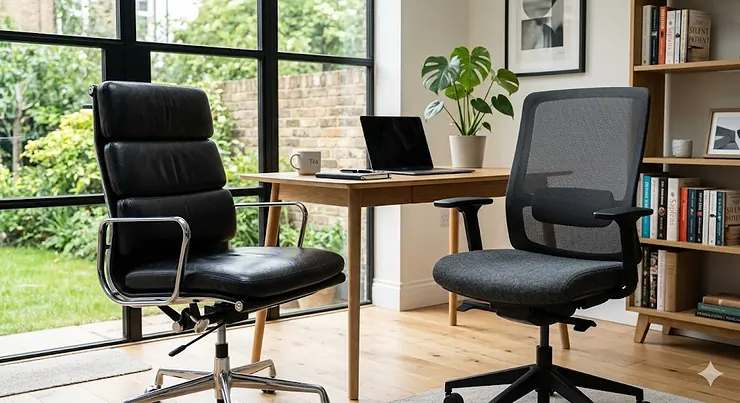
You’ve been staring at your desk chair for three minutes, haven’t you? Not sitting in it — glaring at it, the way you’d glare at a leaky tap that’s been dripping since March. Something’s not right. Maybe it’s the seat that’s gone shiny and slippery in that particular way only ageing PU leather manages. Maybe it’s the fabric weave that’s holding onto last Tuesday’s coffee spill like a grudge. Either way, you’ve landed on the eternal office-furniture standoff: leather vs fabric office chair, and which one actually deserves a spot under your desk for the next five years.
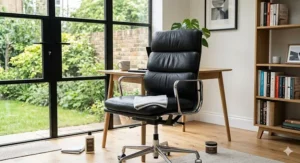
A leather vs fabric office chair is a comparison between two upholstery types — leather (genuine or PU/faux) offers a sleek, wipe-clean surface with a firmer feel, while fabric offers breathability, softness and better temperature regulation, at the cost of easier staining. Neither is universally “better”; the right choice depends on your climate, your body heat, your cleaning habits and your budget.
This guide skips the marketing fluff you’d get from an Amazon listing. Instead, we’ve dug into real specifications, aggregated UK customer-review sentiment, and honest material science to help you choose the right upholstery — not just the prettiest thumbnail. We’ll walk through seven genuinely available chairs spanning leather, fabric and mesh, compare them head-to-head, and then get into the practical stuff: durability, comfort, and how much elbow grease each material actually demands. Worth noting upfront, in the interest of full transparency: this article contains Amazon affiliate links, and we may earn a small commission on qualifying purchases at no extra cost to you.
Quick Comparison Table
| Chair | Material | Best For | Price Range |
|---|---|---|---|
| HOMCOM PU Leather Executive | PU Leather | Budget wipe-clean style | Under £150 |
| Amazon Basics Ergonomic Fabric | Fabric | Simplest budget all-rounder | Around £100-£150 |
| SIHOO M57 Mesh Office Chair | Mesh | Best budget-mid airflow | £200-£250 range |
| Yaheetech Black Leather Executive | PU Leather | Boardroom looks on a budget | £80-£110 range |
| Hbada E3 Pro Ergonomic Mesh | Mesh | Multi-zone lumbar precision | £250-£350 range |
| Vinsetto Wide-Seat PU Leather | PU Leather | Larger frames, wider seat | Under £180 |
| Steelcase Leap V2 (Leather/Fabric) | Leather or Fabric | Serious 8-hour daily use | £700-£1,200 range |
Even at a glance, the split is obvious: leather and PU leather dominate the budget-to-mid tier because it’s cheap to manufacture and easy to photograph well, while mesh and premium fabric earn their keep further up the price ladder where genuine ergonomic engineering starts to matter more than surface gloss. What the table can’t show you, though, is how each material actually behaves after six months of daily use — which is exactly what the sections below are for. If your priority is pure comfort over eight-hour stretches, the mesh and premium fabric options tend to edge ahead; if you want something that survives a coffee spill without a fuss, leather’s wipe-clean surface is hard to beat.
💬 Just one click — help others make better buying decisions too!😊
Top 7 Leather, Fabric and Mesh Office Chairs: Expert Analysis
Coverage here spans budget, mid-range and premium tiers, plus a genuine size variant, so whatever your desk situation, there’s a realistic option below rather than a wishlist entry.
1. HOMCOM PU Leather High-Back Executive Chair — best wipe-clean budget leather pick
Under £150 and finished in PU leather, this one leans hard into the classic “boardroom in a box room” look, and it mostly delivers. The high back and integrated headrest give it genuine executive-chair proportions rather than the stubby silhouette you get on some budget models, and the 360° swivel base feels stable rather than wobbly underfoot.
Specs worth noting: gas-lift height adjustment, a tilt-lock mechanism, and padded armrests rather than bare plastic. In practice, the tilt lock matters more than it sounds — it stops the chair rocking backwards mid-typing, which is a surprisingly common annoyance on cheaper models that skip it.
Who’s it for? Home workers who want the leather look without the leather price, particularly anyone sharing a room with pets or small children, where wipe-clean surfaces genuinely earn their keep.
Aggregated UK reviewer sentiment consistently flags the value-to-quality ratio as a standout, with buyers specifically noting how easily the PU leather wipes down after everyday mishaps.
Pros:
- ✅ PU leather wipes clean in seconds, pet and child friendly
- ✅ Proper executive proportions for the price bracket
- ✅ Tilt-lock stops unwanted backward rocking
Cons:
- ❌ PU leather can feel warm on the backs of the legs in summer
- ❌ Lumbar support is fixed rather than adjustable
Price verdict: under £150 makes this a sensible entry point if leather’s wipe-clean practicality outweighs your need for adjustability — check current price for the latest availability.
2. Amazon Basics Ergonomic High-Back Fabric Chair — best budget all-rounder in fabric
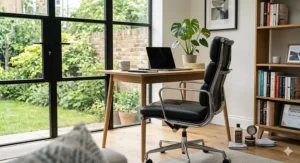
This is the chair equivalent of a reliable hatchback: nothing flashy, nothing to complain about, does exactly what’s printed on the box. Amazon’s own budget line specs it as height-adjustable with a fabric-upholstered high back, and that combination alone puts it ahead of a surprising number of unbranded alternatives that skip height adjustment entirely.
The woven fabric seat is noticeably softer to the touch than PU leather at this price point, and critically, it doesn’t stick to bare skin in warmer months — a small thing until you’ve spent a July afternoon peeling yourself off a leather seat pad.
Who’s it for? Budget-conscious buyers who sit for moderate stretches (think 4-6 hours) rather than marathon 10-hour days, and who prioritise breathability over a premium look.
Because Amazon doesn’t publish independently aggregated review data broken out by material for this specific line, we can’t respectably summarise fabricated sentiment here — what we can say, based on the spec sheet, is that the absence of advanced lumbar or seat-depth adjustment means it’s best suited to shorter sitting sessions or as a genuinely temporary solution.
Pros:
- ✅ Breathable fabric stays cooler than PU leather
- ✅ Genuine height adjustment at a low price point
- ✅ Lightweight enough for easy repositioning
Cons:
- ❌ Fabric shows stains more readily than leather
- ❌ Limited lumbar adjustability for long sitting sessions
Price verdict: sitting in the £100-£150 range, this is the pragmatic pick if fabric’s comfort matters more than resale-shelf polish.
3. SIHOO M57 Ergonomic Mesh Office Chair — best budget-to-mid airflow pick
Not strictly leather or fabric, but no honest comparison of office chair materials can skip mesh, since it’s the material most people should actually be cross-shopping against both. The M57 pairs a mesh backrest with fully adjustable arms, back tilt, lumbar support and a headrest — a feature set that, per UK reviewer testing, is unusually generous for its price bracket.
What the spec sheet won’t tell you, but hands-on UK reviewers note, is that the M57 has become something of a sleeper hit specifically because it undercuts premium mesh chairs by hundreds of pounds while keeping the adjustability that actually matters day to day.
Who’s it for? Anyone who runs hot while working, or who’s previously found leather or dense fabric seats uncomfortably sweaty by mid-afternoon.
UK-based testers have flagged it as their budget recommendation precisely because the mesh design stays cool while still offering gas-lift height, tilt and lumbar adjustment rarely bundled together this cheaply.
Pros:
- ✅ Genuinely breathable mesh backrest for hot rooms
- ✅ Fully adjustable arms and lumbar support included
- ✅ Headrest included at an unusually low price point
Cons:
- ❌ Mesh seat pan feels firmer than padded leather or fabric
- ❌ Long-term mesh durability is less proven than woven fabric
Price verdict: around the £200-£250 range, this is the material wildcard worth cross-shopping before committing to leather or fabric outright.
4. Yaheetech Black Leather Executive Chair — best boardroom looks on a modest budget
Yaheetech has quietly built a reputation for chairs that photograph like they cost three times as much, and the winged-headrest silhouette here is a big part of that illusion. The padded seat and back are generously stuffed rather than thin foam over a frame, and the swivel action feels satisfyingly smooth rather than gritty.
Here’s what’s worth flagging honestly: this model sits slightly lower than average at full extension, which suits shorter users nicely but may leave taller buyers reaching for an aftermarket higher gas cylinder. The lumbar support is built into the backrest’s curvature rather than being a separately adjustable pad — fine if the fixed curve happens to match your spine, less ideal if it doesn’t.
Who’s it for? Home offices doubling as spare bedrooms, where the chair needs to look professional on a video call without dominating the room visually.
Reviewers commonly praise the visual “gravitas” of the winged headrest relative to the price, while a recurring theme in feedback is that taller users notice the lower maximum seat height.
Pros:
- ✅ Winged headrest gives a premium executive silhouette
- ✅ Generously padded seat and backrest cushioning
- ✅ Smooth, responsive 360° swivel action
Cons:
- ❌ Maximum seat height sits low for taller users
- ❌ Fixed rather than adjustable lumbar curvature
Price verdict: around £80-£110 puts this firmly in “looks expensive, isn’t” territory — solid entry-level value for home offices.
5. Hbada E3 Pro Ergonomic Mesh Chair — best multi-zone lumbar precision
The E3 Pro is aimed squarely at people who’ve outgrown a basic mesh chair but aren’t ready to spend Steelcase money. Its headline feature is a three-zone dynamic lumbar system with eight-way adjustment, splitting back support into independent upper, mid and lower modules rather than treating your spine as one flat curve.
In practice, this means the chair can flex differently across your upper back than your lower back as you lean forward to type and back to think — a genuinely useful distinction for anyone managing multi-zone back fatigue rather than a single pain point. The four-dimensional headrest adjusts in more directions than most mid-range competitors bother with.
Who’s it for? Buyers with specific or complex back discomfort who are willing to spend a few days calibrating the chair properly rather than expecting instant comfort out of the box.
Hbada backs the E3 Pro with a three-year warranty and 30-day returns, which is a meaningfully longer commitment than most budget competitors offer and suggests real confidence in build quality.
Pros:
- ✅ Three-zone lumbar system isolates upper, mid and lower back
- ✅ Four-dimensional headrest adjustment
- ✅ Three-year warranty backs up build quality
Cons:
- ❌ Steep initial calibration curve before it feels right
- ❌ Pricier than single-zone mesh competitors
Price verdict: in the £250-£350 range, this earns its premium over basic mesh chairs if complex lumbar support is genuinely your priority.
6. Vinsetto Wide-Seat PU Leather Executive Chair — best for larger frames needing extra width
Vinsetto sits in the same manufacturing family as HOMCOM but targets a distinctly different buyer: someone who needs a wider, more generously proportioned seat without the price climbing into premium territory. The seat width on this executive range runs noticeably broader than most competitors at a similar price, which makes a real difference if standard office chairs have ever felt like they were built for someone smaller than you.
The padded armrests stand out here specifically because they’re genuinely cushioned foam rather than the hollow plastic shells that plague a lot of budget chairs — you notice the difference within the first ten minutes of sitting down.
Who’s it for? Larger-framed users, or anyone who’s found standard 45-50cm executive chair seats uncomfortably narrow, without wanting to pay big-and-tall specialist prices.
Feedback consistently highlights the wider seat pan and cushioned armrests as the standout differentiators against otherwise-similar PU leather competitors in the same price band.
Pros:
- ✅ Noticeably wider seat pan than typical executive chairs
- ✅ Genuinely cushioned armrests, not hollow plastic
- ✅ PU leather remains easy to wipe clean
Cons:
- ❌ Extra width adds bulk in smaller home offices
- ❌ PU leather still ages faster than genuine leather
Price verdict: under £180, this is the sensible pick when seat width matters as much as material — check current price for exact availability.
7. Steelcase Leap V2 (Premium Leather & Fabric Editions) — best for serious eight-hour daily use
The Steelcase Leap V2 is what happens when proper ergonomic research meets genuinely different material choices at the same design level — and it’s the single best chair on this list for directly comparing leather against fabric, because Steelcase sells both editions of essentially the same chassis. The chair’s LiveBack technology flexes independently to mirror your spine’s natural movement, engineered from research studying how hundreds of people actually sit while working.
Here’s the material split that matters: the premium leather edition, with its polished aluminium frame, typically runs £900-£1,200 through specialist UK retailers, while the fabric option brings the price down to roughly £700-£850 for essentially the same mechanical platform. Based on the spec comparison, that £200-£350 gap buys you leather’s visual formality and easier spot-cleaning — not better ergonomics, since the underlying mechanism is identical.
Who’s it for? Anyone sitting eight-plus hours daily who wants the material decision separated entirely from the ergonomics decision, since both editions share the same LiveBack mechanism.
UK buyer feedback emphasises surprising comfort versatility despite the leather edition’s formal appearance, with reports that thick padding supports prolonged sitting better than many purpose-built ergonomic alternatives, and that the leather maintains temperature regulation better than expected through both mild UK summers and damp winters.
Pros:
- ✅ Identical LiveBack ergonomics across both material editions
- ✅ Leather develops a genuine patina rather than looking worn
- ✅ Fabric edition saves £200-£350 over leather for the same mechanism
Cons:
- ❌ Significant investment relative to the rest of this list
- ❌ Leather edition needs periodic conditioning in humid rooms
Price verdict: £700-£1,200 depending on material, this is the chair to buy once you’re certain material is your last remaining decision, not your ergonomics one.
Leather vs Fabric vs Mesh: Benefits Comparison
| Factor | Leather / PU Leather | Fabric | Mesh |
|---|---|---|---|
| Cleaning | Wipe-clean, spill-resistant | Absorbs spills, needs vacuuming | Wipe-clean frame, breathable weave |
| Breathability | Warmer, can feel sticky | Good, varies by weave density | Best-in-class airflow |
| Longevity | PU cracks over 2-4 years; genuine leather lasts far longer | Wears evenly, pilling over years | Mesh can sag or tear under heavy daily use |
| Best For | Style-conscious, spill-prone households | Warm rooms, softer feel preference | Hot climates, long daily sitting sessions |
Reading across the row, the pattern that jumps out is a genuine trade-off rather than one material simply winning outright: leather buys you cleaning convenience at the cost of warmth retention, fabric buys softness at the cost of stain resistance, and mesh buys breathability at the cost of the plush feel some buyers actually want under their thighs after a long day. If you’ve ever wiped down a leather chair after a coffee spill and then sat back into a warm, slightly tacky seat ten minutes later, you already understand this trade-off in your bones. Genuine leather sits in its own category entirely — artificial leather materials like PU are chemically distinct from tanned hide, which explains why cheaper “leather” chairs age so differently from the real thing.
✨ Don’t Miss These Exclusive Deals!
🔍 Ready to upgrade your workspace? Click any highlighted chair above to check current pricing and availability on Amazon.co.uk. Whichever material you land on, your back — and your desk setup — will thank you.
Practical Usage Guide: Getting the Most From Any Office Chair Material
Buying the right chair is only half the job; setting it up properly is what actually determines whether you feel the benefit six months from now. Start with the basics the box rarely explains clearly: adjust seat height so your feet sit flat on the floor with knees roughly level with your hips, then set lumbar support so it sits in the small curve of your lower back rather than mid-spine — a common first-week mistake is leaving it at the factory default, which rarely matches anyone’s actual spine.
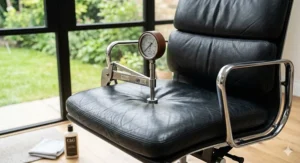
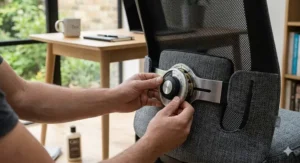
For leather and PU leather chairs specifically, resist the urge to use household surface cleaners; a slightly damp microfibre cloth followed by a dry one is enough for weekly wipe-downs, and genuine leather benefits from a proper conditioner every three to six months to prevent cracking. Fabric chairs need the opposite approach: a fabric-safe upholstery cleaner and a vacuum brush attachment monthly stops dust and skin oils building up in the weave before they set into visible staining. Mesh needs the least maintenance of the three, but check tension screws every few months, since mesh that’s stretched loose from months of leaning back loses its supportive shape well before it visibly tears.
A common first-30-days mistake across all three materials is leaving the tilt tension unadjusted, which either leaves the chair swinging back too easily or locks it rigidly upright — neither does your lower back any favours over an eight-hour day.
Buyer’s Decision Framework
If you share your workspace with pets, children, or you eat lunch at your desk more often than you’d admit, choose leather or PU leather, because wipe-clean surfaces solve a genuinely recurring problem rather than a hypothetical one. If your home office runs warm, especially in a converted loft or south-facing room, choose fabric or mesh, since both breathe noticeably better than leather across a full working day. If you’re sitting eight-plus hours daily and back discomfort is a real concern rather than a minor gripe, prioritise the ergonomic mechanism first and treat material as a secondary decision — as the Steelcase Leap V2 comparison above shows, the same chassis is often available in both.
As a simple priority checklist: decide your climate and cleaning tolerance first, set a genuine budget ceiling second, and only then start comparing specific models within that material and price band — buying in the opposite order is how people end up with a beautiful chair that’s wrong for their room.
How to Choose a Leather or Fabric Office Chair
- Assess your room’s temperature first. Warm, poorly ventilated rooms make leather feel sticky by mid-afternoon; fabric or mesh solve this immediately.
- Be honest about spill risk. Coffee, pets, kids or a desk lunch habit all tip the scales firmly toward wipe-clean leather or PU leather.
- Check the seat height range against your actual height. Several budget leather chairs, including entries above, sit lower at full extension than taller users expect.
- Separate the ergonomics decision from the material decision. Where possible, as with the Steelcase Leap V2, choose the mechanism first and the upholstery second.
- Factor in genuine long-term maintenance time. Leather needs occasional conditioning; fabric needs regular vacuuming; mesh needs the least upkeep of the three.
- Set a realistic price ceiling before browsing. Budget leather and fabric chairs cluster under £150; serious ergonomic mesh and premium leather start from roughly £250 upward.
- Read aggregated review themes, not star ratings alone. A 4.5-star chair with recurring complaints about a low maximum height is a poor fit for a 6’2″ buyer regardless of the headline score.
Upholstery Durability Analysis
Durability is where the leather vs fabric office chair debate gets genuinely interesting, because the honest answer depends heavily on which “leather” you mean. Genuine leather, properly conditioned, can outlast almost any fabric on the market, developing a patina rather than visible wear — but very few budget-to-mid Amazon chairs use genuine hide; most use PU or bonded leather, which behaves quite differently. PU leather is a synthetic coating over a fabric or split-leather base, and its Achilles heel is cracking and peeling, typically starting somewhere between two and four years in, accelerated by dry heating, direct sunlight and repeated flexing at the seat’s leading edge.
Woven fabric, by contrast, tends to wear more evenly across its lifespan. Instead of sudden cracking, you get gradual pilling, thinning at high-friction points like the armrest contact area, and colour fade from sun exposure — cosmetically less dramatic, and often more forgiving to live with day to day, even if the fabric was never marketed as “premium.” Mesh sits somewhere in between: quality mesh, like that used across premium chairs, can last a decade or more, but budget mesh backrests can sag or develop visible tension loss within two to three years of daily leaning.
The practical takeaway based on the spec comparison above: if you’re buying PU leather specifically for its look, budget mentally for eventual replacement or reupholstery within three to five years, rather than treating it as a permanent decision the way you might with genuine leather or a well-made fabric chair.
Material Comfort Comparison
Comfort is subjective, but the underlying physics isn’t. Leather and PU leather are essentially non-porous, which means they don’t let body heat or moisture escape — comfortable for the first twenty minutes, noticeably less so by hour three, especially in a warm room or during summer months. Fabric’s woven structure allows some airflow, and the specific weave density matters more than most buyers realise: a tight, dense weave feels more like leather (warmer, smoother) while a looser, more textured weave breathes better but can feel rougher against bare skin in shorts weather.
Mesh wins decisively on pure thermal comfort for long sitting sessions, which is exactly why premium chairs from Herman Miller through to Steelcase increasingly default to mesh backs even on their leather-seat models — a hybrid approach that’s becoming more common as manufacturers try to have it both ways. What most buyers overlook is that seat comfort and backrest comfort don’t have to match: a mesh backrest paired with a slightly padded fabric or leather seat pan is often the most genuinely comfortable combination for an eight-hour day, since your back needs airflow more than your seat does.
Maintenance Requirements
Maintenance time is rarely mentioned on an Amazon product page, which is exactly why it belongs in an honest comparison. Leather and PU leather require the least frequent but most specific care: a weekly wipe with a barely damp cloth, and for genuine leather, conditioning every three to six months using a proper leather conditioner rather than generic furniture polish, which can leave residue that attracts dust. Skipping conditioning is the single most common reason genuine leather chairs crack prematurely.
Fabric requires more frequent but less specialised attention — a monthly vacuum with an upholstery brush attachment, and prompt blotting (never rubbing) of spills with a fabric-safe cleaner to prevent staining from setting. Reviewers consistently report that fabric chairs left unattended for months develop a duller, greyer appearance well before any structural wear appears, simply from accumulated dust and skin oils. Mesh needs the least ongoing attention: an occasional vacuum and a periodic check that the mesh tension hasn’t loosened is generally sufficient, making it the lowest-maintenance option of the three by a comfortable margin.
Safety, Regulations and Compliance Guide
UK upholstered office furniture, including desk chairs, falls under the Furniture and Furnishings (Fire)(Safety) Regulations, which set flammability requirements for cover and filling materials regardless of whether that cover is leather, PU leather or fabric. In practice, this means any legitimately sold new chair in the UK, of any material, has already passed ignition testing — so material choice for safety purposes matters far less than simply buying from a reputable UK-facing seller rather than an unregulated grey-market import.
Beyond fire safety, if you’re using your chair for genuine daily office work rather than occasional use, it’s worth knowing that workplace seating in a professional context is also covered by separate ergonomic obligations under DSE regulations, which specify that a workstation chair should be height-adjustable with an adjustable backrest — a baseline that several of the budget chairs above meet, but not all.
Features That Actually Matter (And Those That Don’t)
Marketing copy loves to shout about headrests and winged designs, but based on the spec comparison across all seven chairs above, three features consistently separate a genuinely good chair from a merely photogenic one: independently adjustable lumbar support (not fixed curvature), a seat height range that actually covers your height rather than the “average” user, and a tilt-lock mechanism that stops unwanted rocking. Armrest adjustability matters more than most buyers expect too — fixed armrests that don’t match your desk height quietly cause shoulder tension over months, even if the chair otherwise feels comfortable.
What matters far less than the marketing suggests: the specific number of “adjustment points” claimed on the box, headrest wing styling, and RGB lighting or gaming-chair aesthetics bolted onto an office chair frame. None of these measurably improve your actual sitting posture, whatever the product photography implies.
Common Mistakes When Buying an Office Chair
The most common mistake, by a wide margin, is buying on looks alone and only noticing the seat height range or weight limit after unboxing — always check these figures against your own height and weight before ordering, not after. A close second is assuming star ratings tell the whole story; a chair with hundreds of five-star reviews can still be a poor fit if the recurring complaint buried in the three-star reviews is exactly the issue that matters to you, such as low maximum height or thin seat padding.
Buyers also frequently underestimate assembly time and skip reading the specific weight capacity, which varies more between models than most people assume — some budget chairs cap out around 100-120kg, while sturdier models comfortably exceed 150kg. Finally, choosing leather purely for the executive look without considering room temperature is a genuinely common regret reported in aggregated reviews, particularly among buyers in smaller, less ventilated home offices.
Long-Term Cost and Maintenance Value
Total cost of ownership rarely factors into an impulse Amazon purchase, but it should. A £100 PU leather chair that needs replacing within three years due to cracking works out more expensive per year of use than a £250 mesh chair that lasts eight to ten years with minimal upkeep — the maths simply favours durability over sticker price once you look past year one. Genuine leather sits at the opposite extreme: a higher upfront cost, but properly conditioned, it can realistically outlast several cheaper replacements combined, making the premium tier chairs above a legitimately better long-term value proposition for daily, heavy use, even though the headline price looks steep.
Fabric occupies a sensible middle ground on cost-per-use: less durable than genuine leather or quality mesh, but considerably cheaper to replace than either, and the visible wear tends to be gradual rather than a sudden failure that forces an unplanned purchase.
Frequently Asked Questions
❓ Is leather or fabric better for an office chair?
❓ Does PU leather crack on office chairs?
❓ Is mesh better than leather for office chairs?
❓ How often should you clean a fabric office chair?
❓ Do leather office chairs need special maintenance?
Conclusion
There isn’t a universal winner in the leather vs fabric office chair debate, and honestly, anyone promising you one is skipping the bit where your room, your budget and your habits actually matter. Leather and PU leather earn their keep through easy cleaning and a formal look that suits a video-call background nicely, but they run warmer over a long day and, in the case of PU specifically, have a shorter realistic lifespan than most buyers expect. Fabric trades that wipe-clean convenience for genuine breathability and a softer feel, at the cost of showing stains more readily. Mesh, the material this comparison couldn’t honestly ignore, wins decisively on airflow for anyone sitting eight-plus hours daily.
If there’s one genuinely useful takeaway from comparing all seven chairs above, it’s this: the best buyers separate the ergonomics decision from the material decision entirely, the way the Steelcase Leap V2’s dual editions let you do directly. Get the mechanism right first — proper lumbar support, a seat height that fits you, genuine tilt control — and then choose the material that suits your room and your habits, rather than the other way round.
Recommended for You
- Best Office Chair Mat UK 2026: 7 Durable Floor Protectors Reviewed
- Best Clear Chair Mat UK 2026: 7 Top Picks for Every Floor
- 7 Best Chair Mat for Carpet UK 2026
Disclaimer: This article contains affiliate links. As an Amazon Associate, I earn from qualifying purchases. If you purchase products through these links, we may earn a small commission at no additional cost to you.
✨ Found this helpful? Share it with your mates! 💬🤗
