In This Article
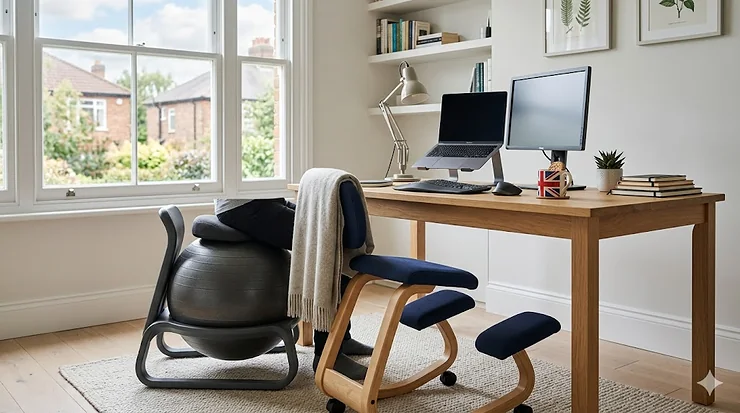
Your office chair might be quietly sabotaging your health. If you’ve clocked eight hours at your desk today feeling stiff, achy, and rather fed up with lower back pain, you’re not alone—and the culprit is likely that traditional office chair you’re perched on. The balance ball chair vs kneeling chair debate has transformed how British workers approach desk seating, offering two radically different solutions to the same sedentary problem plaguing UK offices from London to Edinburgh.

Traditional office chairs encourage what researchers call “static sitting”—a position where your core muscles switch off, your spine slumps into a C-shape, and your circulation slows to a crawl. Active sitting protocols, by contrast, boost oxygen levels in leg muscles and improve blood flow, fighting against fluid buildup that plagues sedentary workers. Both balance ball chairs and kneeling chairs promise to engage your core, improve posture, and alleviate back pain, but they achieve these goals through completely different biomechanical approaches.
In this comprehensive guide, I’ll compare seven top-rated active sitting chairs available on Amazon.co.uk, examining real-world performance in British office conditions. Whether you’re working from a cramped flat in Manchester, a co-working space in Bristol, or a home office in the Scottish Highlands, you’ll discover which unconventional seating option suits your specific needs, budget, and body type. I’ve analysed product specifications, scrutinised customer reviews from UK buyers, and applied practical expertise to help you navigate this growing category of movement-based furniture.
Quick Comparison: Balance Ball vs Kneeling Chair at a Glance
| Feature | Balance Ball Chair | Kneeling Chair |
|---|---|---|
| Core Engagement | Continuous micro-movements | Minimal engagement |
| Posture Mechanism | Unstable surface forces balance | Forward pelvic tilt opens hip angle |
| Back Support | Varies (some models have backrests) | None (relies on open hip position) |
| Knee Pressure | None | Moderate to significant |
| Best For | Active sitters wanting core workout | Those with lower back pain, poor hip flexibility |
| Price Range (UK) | £40-£120 | £50-£200 |
| Space Requirement | Larger footprint with base | Compact, fits tight spaces |
| Adjustment Period | 1-2 weeks of muscle soreness | Immediate comfort for most |
| Suitable Session Length | 2-4 hours maximum | 1-3 hours maximum |
From this comparison, the fundamental difference becomes clear: balance ball chairs keep you constantly engaged through instability, whilst kneeling chairs work by repositioning your pelvis to support your spine’s natural curve. If you’re after a chair that doubles as exercise equipment, the balance ball wins. If you need immediate relief from lower back strain without the wobble factor, the kneeling chair delivers. Budget-conscious buyers should note that quality kneeling chairs often command higher prices due to their wooden construction and adjustable mechanisms, whereas balance ball chairs cluster in the mid-range with more affordable entry options available.
💬 Just one click — help others make better buying decisions too!😊
✨ Don’t Miss These Exclusive Deals!
🔍 Take your active sitting journey to the next level with these carefully selected products. Click on any highlighted item to check current pricing and availability on Amazon.co.uk. These picks will help you find exactly what you need!
Top 7 Active Sitting Chairs: Expert Analysis for UK Buyers
1. Gaiam Classic Balance Ball Chair – Best Overall for British Offices
The Gaiam Classic Balance Ball Chair dominates the UK market for good reason—it strikes that rare balance between ergonomic support and active sitting benefits that most competitors miss entirely. What sets this apart from cheaper alternatives is the integrated backrest, a feature that proves surprisingly valuable during those inevitable afternoon energy slumps when maintaining perfect posture feels like climbing Ben Nevis.
The chair features a 52cm anti-burst balance ball rated for users 5’0″ to 5’11” (roughly 152cm to 180cm), which covers the majority of British adults comfortably. The reinforced steel and nylon base includes five lockable caster wheels—essential for navigating between desk and filing cabinet without toppling over, particularly important in compact UK home offices where every centimetre matters. Research shows balance ball seating increases neuromuscular activity in the gastrocnemius and creates a wider trunk-thigh angle, which translates to better circulation during those eight-hour workdays.
UK customers consistently praise its stability compared to sitting on a bare exercise ball, noting the base prevents that unnerving rolling-away-under-your-desk scenario. One Edinburgh-based reviewer mentioned using it throughout Scotland’s damp winter months without the ball losing air pressure—a testament to build quality. The 300-pound (136kg) weight capacity accommodates most users, though taller individuals over 5’11” should consider the taller ball option or look elsewhere.
Pros:
✅ Backrest provides support during long UK work hours without compromising core engagement
✅ Lockable wheels prevent mobility disasters on hard floors common in British homes
✅ Anti-burst technology means gradual deflation rather than catastrophic failure
Cons:
❌ Assembly requires 20-30 minutes and one person struggling with instructions
❌ Larger footprint than standard office chairs—measure your space first
Around £80-£110 depending on colour options, the Gaiam Classic represents solid value for UK buyers seeking a reputable brand with proper customer support. It’s available with Prime delivery, which matters when you’re keen to escape that torturous office chair immediately.

2. Yaheetech Ergonomic Kneeling Chair – Best Budget Kneeling Option
The Yaheetech Ergonomic Kneeling Chair proves you don’t need to spend £200+ for effective active sitting. This wooden-framed kneeling chair delivers the core biomechanical benefits at a price point that won’t alarm your accountant, typically hovering in the £60-£85 range on Amazon.co.uk.
What most buyers overlook about kneeling chairs is that the quality of padding matters enormously for long-term comfort. Yaheetech uses thick memory foam on both the seat and knee pads, crucial for British workers who might spend three to four hours at a stretch on this chair. The rocking base—a feature absent from cheaper competitors—allows gentle forward-backward motion that prevents the static pressure buildup that makes budget kneeling chairs unbearable after 90 minutes.
The height adjustment mechanism offers multiple positions via a simple knob system, accommodating users from about 5’2″ to 6’0″ (roughly 157cm to 183cm). Four brake-equipped casters make repositioning easy whilst providing stability when locked—particularly valuable on the laminate and tile floors common in British flats. One Manchester buyer noted this chair helped alleviate the chronic lower back pain that three years of physiotherapy hadn’t fully resolved, attributing success to the forward pelvic tilt that opens the hip angle.
The wood finish blends into most home office aesthetics without screaming “I bought weird furniture online,” an underrated consideration for those taking video calls from home. Assembly takes about 15-20 minutes with clear pictorial instructions that don’t require an engineering degree to decipher.
Pros:
✅ Rocking motion prevents pressure points during extended British work sessions
✅ Brake casters prevent unexpected movement during important Zoom calls
✅ Memory foam maintains cushioning even after months of daily use
Cons:
❌ Knee pads require break-in period (expect slight discomfort first 3-4 days)
❌ Weight limit of 120kg means larger users should look elsewhere
At around £70, the Yaheetech offers remarkable value for UK buyers testing the kneeling chair concept without committing to premium Scandinavian brands. Most Amazon.co.uk orders arrive within 2-3 days with Prime, getting you out of back pain faster.
3. Trideer Exercise Ball Chair with Base – Best for Core Strengthening
The Trideer Exercise Ball Chair takes a different approach from Gaiam’s model by prioritising maximum core engagement over comfort features. This is the chair for British workers who want their desk seating to double as an abdominal workout—and I mean that quite literally.
Available in five colours (black, dark blue, silver, turquoise, and grey), Trideer offers size options up to 75cm for taller users, making it one of the few balance ball chairs suitable for individuals over 6’0″ (183cm). The extra-thick, anti-burst PVC withstands punishment up to 2,200 pounds (roughly 1,000kg), which is frankly overkill for most applications but speaks to durability. UK customers report using the same ball for 18+ months of daily office work without noticeable air loss, even during Britain’s humid summer months when cheaper balls tend to stretch.
What sets Trideer apart is the minimalist base design that allows greater range of motion than enclosed competitors. This translates to more challenging core work but also higher risk of tipping if you’re reaching for files or answering your mobile during a wobble. Studies demonstrate active sitting significantly increases blood oxygenation levels to the gastrocnemius, with the greatest physiological benefits coming from unrestricted movement. The Trideer’s open base maximises these benefits, though beginners might find it intimidating initially.
The package includes a foot pump (essential, as these balls require frequent top-ups in Britain’s variable climate), two air stoppers, and a 12-month warranty backed by responsive UK customer service. One Birmingham reviewer mentioned the resistance bands (sold separately) transform this into a proper home gym station for pre-work exercise routines.
Pros:
✅ Size range accommodates taller British workers often left out by standard models
✅ 2,200-pound capacity means no worries about durability or weight limits
✅ Minimal base design allows maximum core engagement and movement
Cons:
❌ No backrest means you’re on your own for posture—exhausting during long days
❌ Higher tipping risk requires more attention, problematic during video meetings
Priced around £45-£70 depending on size, the Trideer represents excellent value for fitness-focused UK buyers. The affordable entry price makes it ideal for testing whether balance ball seating suits your work style before investing in premium models.
4. Varier Variable Natural Kneeling Chair – Premium Scandinavian Design
The Varier Variable Natural represents the pinnacle of kneeling chair engineering, designed in Norway and priced accordingly at £400-£600 on Amazon.co.uk. Before you recoil at that figure, understand that this chair has maintained cult status among ergonomics enthusiasts since the 1980s for one simple reason: it actually works.
Unlike budget kneeling chairs with fixed positions, the Varier uses a continuous rocking motion that mimics natural body movement. This isn’t a gimmick—the gentle oscillation prevents the pressure points and circulation issues that plague cheaper models after 90 minutes of use. Ergonomic research indicates movements through a graded range of centered and symmetrical postures provide the greatest benefits, whilst movements alternating between awkward positions offer little value. The Varier’s biomechanically optimised rocking arc delivers precisely this type of beneficial movement.
The bentwood frame uses sustainably sourced European beech, finished in natural wood that ages beautifully rather than looking shabby after a year of use. British buyers particularly appreciate the Scandinavian build quality—this chair survives British central heating and damp conditions without warping or loosening, unlike cheaper alternatives with questionable wood treatment. The upholstery options (wool, leather, or fabric) resist the wear and pilling common in synthetic materials, maintaining appearance through years of daily use.
At 5’7″ (170cm), I found the seat height perfectly positions the hip angle for maximum spine decompression, though taller individuals over 6’0″ might need cushioning adjustments. The lack of height adjustment is a deliberate design choice that some find limiting, though the continuous rocking motion compensates by allowing natural position shifts throughout the day.
Pros:
✅ Continuous rocking motion eliminates pressure points during extended UK work sessions
✅ Scandinavian build quality withstands British climate without deterioration
✅ 10-year warranty demonstrates manufacturer confidence in longevity
Cons:
❌ Premium price point of £400-£600 requires serious commitment to concept
❌ No height adjustment limits suitability for very tall or short users
The Varier Variable isn’t for everyone, but for UK professionals suffering chronic back pain and willing to invest in long-term relief, it’s worth every pound. Most Amazon.co.uk orders include white-glove delivery—a welcome touch at this price point.
5. ProBody Pilates Yoga Ball Chair – Best Mid-Range Stability Option
The ProBody Pilates Yoga Ball Chair occupies the Goldilocks zone: more stable than budget models, more affordable than premium options, with features that work for British office environments. Priced around £65-£90 on Amazon.co.uk, it delivers professional-grade performance without requiring a second mortgage.
What separates ProBody from competitors is the heavy-duty four-leg base design that provides significantly more stability than wheeled alternatives. For UK workers in rented accommodation with uneven flooring (tragically common in Victorian-era buildings), this stability prevents the constant wobbling and readjustment that plagues wheeled balance ball chairs. The 65cm anti-burst ball suits users 5’5″ to 6’1″ (roughly 165cm to 185cm), covering the majority of British adults.
The removable design allows using the ball independently for stretching or exercise, effectively giving you two products. One London-based physiotherapist reported using the ball for patient demonstrations during the day and as office seating between appointments, praising the quick-release mechanism that doesn’t require tools. The anti-slip base pads protect hardwood floors—crucial for preserving rental deposits.
British customers note the included pump actually works properly (a surprisingly rare feature in budget exercise equipment), inflating the ball to working pressure in under five minutes. The ball material resists the tackiness that develops on cheaper PVC in humid UK conditions, maintaining a professional appearance rather than becoming a dust magnet.
Pros:
✅ Four-leg stability design suits uneven British flooring without constant wobbling
✅ Removable ball design offers flexibility for exercise and stretching routines
✅ Anti-slip pads protect rental property floors from damage
Cons:
❌ Stationary base lacks mobility for repositioning around tight UK office spaces
❌ 65cm size might be too large for petite users under 5’3″
Around £70-£85, the ProBody represents the sweet spot for UK buyers wanting stability without sacrificing active sitting benefits. Prime delivery typically arrives within 1-2 days, perfect for those needing immediate relief from traditional office chair torture.

6. Himimi Kneeling Chair with Memory Foam – Best for Compact UK Spaces
The Himimi Kneeling Chair solves a uniquely British problem: how to fit ergonomic seating into a home office that’s actually a repurposed box room measuring 2 by 2.5 metres. With a footprint roughly 30% smaller than traditional office chairs, this kneeling chair thrives in the compact living spaces that define British housing.
The height-adjustable design (five positions via gas lift mechanism) accommodates users from 5’0″ to 5’11” (152cm to 180cm), making it versatile for households where multiple people share the home office. What most buyers miss about the Himimi is the thickness of the memory foam padding—at 10cm for both seat and knee pads, it’s substantially thicker than budget competitors that use 5cm foam and wonder why customers complain of knee pain after a week.
The five brake-equipped casters allow easy repositioning even in cramped quarters, though some UK buyers report the brakes require firm engagement on thick carpeting. The powder-coated steel frame withstands British humidity without rust—a common failure point in cheaper kneeling chairs with inadequate metal treatment. One Glasgow buyer mentioned using this chair daily for over a year without foam compression or frame loosening.
Assembly takes roughly 20 minutes with straightforward instructions, though the gas lift mechanism requires proper seating (literally—you need to sit on it to compress it fully during assembly). The neutral grey upholstery hides the inevitable coffee stains from those frantic morning work sessions.
Pros:
✅ Compact footprint suits cramped UK home offices and rented flats
✅ 10cm memory foam padding prevents knee pressure during extended use
✅ Gas lift adjustment faster than manual knob systems on cheaper models
Cons:
❌ Maximum weight capacity of 110kg excludes larger users
❌ Brake performance on thick carpet requires adjustment period
Priced around £75-£95 on Amazon.co.uk, the Himimi offers exceptional value for space-constrained British workers. Most Prime orders arrive assembled to the point where you only need 10 minutes to complete setup—perfect for those wanting immediate pain relief.
7. NEUMEE Yoga Ball Chair with Resistance Bands – Best Value Package
The NEUMEE Yoga Ball Chair wins the value proposition by including resistance bands, a stability base, and a 65cm exercise ball in one package priced around £50-£70 on Amazon.co.uk. For British workers wanting to test active sitting without significant financial commitment, this represents the lowest-risk entry point.
What makes NEUMEE particularly suitable for UK conditions is the fabric-covered ball design that remains comfortable against bare skin during summer months (yes, we occasionally have warm days). Traditional PVC balls become tacky and uncomfortable in humid British weather, requiring long sleeves or cushions. The NEUMEE’s fabric cover eliminates this issue whilst still providing the core engagement benefits of balance ball seating.
The included resistance bands transform this from simple seating into a mini home gym station. One Manchester buyer reported using the bands for five-minute stretch routines between video calls, noting improved shoulder mobility after two months of consistent use. Studies show combining active sitting with regular movement breaks offers substantial health benefits beyond comfort alone, making these integrated exercise options more valuable than they initially appear.
The stability base uses three support legs rather than the four-leg or wheeled designs of premium competitors. This reduces manufacturing costs whilst still preventing the ball from rolling away unexpectedly. UK customers note this works adequately on hard floors but struggles slightly on thick pile carpets common in British homes.
Pros:
✅ Fabric-covered ball remains comfortable in humid British summer conditions
✅ Included resistance bands add exercise options for £20-£30 less than buying separately
✅ Three-leg base provides adequate stability at budget-friendly price point
Cons:
❌ Three-leg design less stable than four-leg competitors during aggressive movement
❌ Fabric cover requires occasional washing to maintain appearance
At £50-£70, the NEUMEE offers the best value package for UK buyers testing active sitting concepts. Prime delivery brings it to your door within days, and the 30-day return window means low-risk experimentation. If balance ball seating suits you, upgrade later; if not, you’ve not invested a fortune discovering that.
How Active Sitting Actually Works in British Office Conditions
Active sitting operates on a deceptively simple premise: unstable seating forces your body to make constant micro-adjustments, engaging core muscles that traditional chairs allow to atrophy. Understanding the mechanics helps explain why both balance ball chairs and kneeling chairs can alleviate back pain despite using completely different approaches.
When you perch on a balance ball chair, your body continuously makes tiny corrections to maintain equilibrium—shifts so subtle you barely notice them consciously, yet significant enough to activate deep stabilising muscles. Active sitting allows sitters to increase movement whilst sitting without high activation of muscular activity, providing positive effects including increased neuromuscular activity in the gastrocnemius, increased overall movement, and a more open trunk-thigh angle. This creates what researchers call “dynamic sitting,” where your posture adjusts constantly rather than remaining fixed in one position.
Kneeling chairs work differently. By tilting your pelvis forward 20-30 degrees, they shift your weight from your sitting bones onto your shins, creating an open hip angle of roughly 110-130 degrees (compared to the 90-degree angle in traditional chairs). This forward tilt naturally positions your spine into its proper S-curve without requiring conscious effort or core strength. For British workers spending eight hours daily at desks, this passive posture correction can provide immediate relief without the muscle engagement—and subsequent fatigue—of balance ball seating.
The catch? Both require adaptation periods. Balance ball chairs trigger core muscle soreness for 7-10 days as dormant muscles wake up—rather like starting a gym routine after years of inactivity. Kneeling chairs cause shin and knee pressure until your body adjusts weight distribution, typically resolving within 3-5 days. British buyers should plan accordingly, perhaps starting with 2-hour sessions and gradually increasing duration rather than attempting full work days immediately.
Britain’s climate adds another dimension to active sitting success. Our damp conditions affect inflatable seating more than most buyers anticipate. Balance balls lose approximately 5-10% air pressure monthly in humid environments, requiring periodic top-ups with the included pump. Kneeling chairs with wooden frames can warp if positioned near radiators during winter heating season, whilst metal frames may develop condensation spots in poorly ventilated spaces. Position active sitting furniture away from direct heat sources and ensure adequate ventilation to maximise longevity.

Practical Usage Guide: Making Active Sitting Work in Your UK Office
Week 1-2: The Adaptation Phase
Start with 30-60 minute sessions on your new active sitting chair, alternating with your traditional office chair to prevent overwhelming your core muscles. British workers often make the mistake of ditching their old chair immediately and spending eight hours on a balance ball—a recipe for severe muscle soreness and abandoned equipment.
For balance ball chairs, ensure proper inflation. The ball should compress 5-10cm when you sit, not sink dramatically or barely move. In Britain’s variable climate, check air pressure weekly during your first month. Keep the pump accessible in your desk drawer for quick adjustments. If your legs feel numb after 20 minutes, the ball is likely over-inflated; persistent back strain suggests under-inflation.
For kneeling chairs, adjust the seat height so your hips sit slightly higher than your knees—roughly a 5-10cm difference. Too low creates excessive knee pressure; too high defeats the forward pelvic tilt mechanism. Wear trousers or tights initially, as direct skin contact can cause chafing on the knee pads during the adaptation period.
Wet Weather Care (Essential for British Conditions)
Balance ball chairs require protection from moisture. If you’re using one in a damp ground-floor flat (tragically common in British housing), wipe the ball down weekly with a slightly damp cloth to prevent mould spores from establishing residence. Never spray cleaning products directly onto the ball—PVC degradation and subsequent leaks will follow within months.
Wooden kneeling chairs need different care in wet British conditions. Apply furniture wax or oil to exposed wood surfaces every 6-8 months to prevent moisture absorption that causes warping. Position at least 30cm from radiators to avoid the expansion-contraction cycle that loosens joints and creates wobbles.
Storage Solutions for Small UK Spaces
British flats rarely offer surplus space, making storage crucial for part-time active sitters. Balance ball chairs with removable balls store more compactly—deflate the ball to about 30% capacity, stuff it into the base (most designs allow this), and slide under your desk or into a cupboard. Takes roughly 2 minutes to deflate, 3-4 minutes to re-inflate to working pressure.
Kneeling chairs generally don’t collapse, but their compact footprints mean they tuck into corners or under counters when not needed. Some models (like the Himimi reviewed earlier) include built-in handles for easy repositioning through doorways and up stairs—essential in British homes with multiple levels.
Exercise Integration (5-Minute Desk Routines)
Transform your active sitting chair into a home gym station with these quick routines you can perform during Teams calls (with camera off, naturally):
Balance Ball Chair Exercises:
- Seated bounces (30 seconds): Engage core whilst gently bouncing. Excellent for warming up cold muscles on winter mornings.
- Ball marches (45 seconds): Lift alternating knees whilst maintaining balance. Improves hip flexibility and circulation.
- Trunk rotations (30 seconds each direction): Twist torso left and right whilst keeping hips stable. Addresses the stiffness from hours of static typing.
Kneeling Chair Stretches:
- Forward fold (30 seconds): Lean forward from the hips, allowing spine to stretch. Relieves pressure from prolonged kneeling.
- Shoulder rolls (10 repetitions): Combat the hunched-forward position that develops during intense work sessions.
- Hip flexor stretch (45 seconds each side): Stand briefly, step one foot forward, feel the stretch in the back hip. Essential for preventing tightness from the forward pelvic tilt position.
Balance Ball Chairs vs Traditional Office Chairs: The Biomechanical Truth
The balance ball chair vs office chair comparison reveals surprising findings that manufacturers rarely advertise. Traditional office chairs support your weight passively, allowing core muscles to disengage completely—convenient short-term, disastrous long-term. Balance ball chairs force continuous engagement but can trigger fatigue that reduces work productivity.
Ergonomic research indicates that although movement is necessary whilst sitting, all movements are not equal—movements alternating between awkward postures that repeatedly load the same joints provide little benefit. This explains why simply swapping to a balance ball chair doesn’t guarantee improved health. Proper posture on the ball requires conscious effort: sit tall with shoulders back, feet flat on the floor, core gently engaged. Slouching on a balance ball actually increases spinal stress compared to slouching in a traditional chair because the unstable surface amplifies poor positioning.
British office workers face unique challenges that affect active sitting success. Our typically modest desk heights (often 72-74cm) suit traditional seating but may be too low for some balance ball configurations, creating uncomfortable arm positions during typing. Measure your desk height before purchasing—you want elbows at roughly 90-degree angles whilst typing, with wrists neutral rather than bent upward. Some UK buyers need height-adjustable desks (around £200-£400 on Amazon.co.uk) to properly accommodate balance ball seating ergonomics.
The productivity question matters immensely for British workers, particularly those employed from home who face performance metrics. Research examining typing and reading task productivity found no significant performance differences between active sitting chairs and standard office chairs, though individuals may require chronic usage periods to become accustomed to active balanced seating. Translation: expect a 1-2 week learning curve where your typing speed might drop 5-10% whilst your body adapts, but performance returns to baseline once muscles adjust.
Temperature regulation represents an overlooked consideration in British offices. Balance ball chairs prevent the trapped heat that develops between your bottom and a traditional chair seat—welcome during stuffy summer offices, less delightful during drafty British winters. Several UK reviewers mention keeping a small cushion nearby for particularly cold days, defeating the point somewhat but maintaining comfort. Kneeling chairs distribute weight differently, eliminating the sweaty-bottom syndrome entirely but potentially creating cold spots where your shins contact pads during winter months.

Common Mistakes When Buying Active Sitting Chairs in the UK
Mistake 1: Ignoring Height Specifications
The most expensive error British buyers make involves purchasing chairs designed for average heights without checking their own measurements. A 65cm balance ball suits users 5’5″ to 6’1″ (roughly 165cm to 185cm), but our friend who’s 5’2″ orders one anyway because it’s on sale, then wonders why her feet dangle 5cm off the floor and her back aches worse than before.
Shorter individuals under 5’3″ (160cm) need 55cm balls or smaller kneeling chair frames. Taller folks over 6’0″ (183cm) require 75cm balls and kneeling chairs with extended seat heights. This isn’t adjustable post-purchase—get it wrong, and you’re stuck with expensive furniture that doesn’t fit. Check product specifications carefully before clicking “Add to Basket” on Amazon.co.uk.
Mistake 2: Overlooking Weight Capacities
British politeness prevents us discussing weight openly, but safety demands honesty here. Budget balance ball chairs often specify 120kg (roughly 265 pounds) maximum weight, whilst premium models handle 150kg+. Kneeling chairs range from 100kg to 140kg depending on frame construction. These aren’t conservative estimates—exceeding capacity risks catastrophic failure (frame collapse or ball burst) that causes injury beyond wounded pride.
If you’re near the specified limit, round up to the next capacity tier. Bodies shift weight dynamically during sitting; sudden movements create force spikes that exceed static weight measurements. Better to have overhead capacity than discover the limit through painful experience.
Mistake 3: Underestimating Space Requirements
British homes typically offer less space than American or Canadian equivalents, making furniture dimensions critical. Balance ball chairs with bases often span 60-70cm width—larger than traditional office chairs’ 50-55cm. That extra 15cm matters enormously in a 2-metre-wide home office.
Before ordering, measure your workspace. Can you comfortably extend both arms sideways without hitting walls or furniture? Can the chair fit through doorways (UK standard is 76cm)? Will it navigate stairs if your office is upstairs? These practical considerations prevent the “Oh bugger, it doesn’t fit” moment when delivery arrives.
Mistake 4: Buying Without Return Insurance
Active sitting isn’t universal. Approximately 20-30% of users find they simply cannot adapt comfortably to either balance ball or kneeling chairs, regardless of adjustment period or technique refinement. This isn’t failure—it’s biomechanical incompatibility.
Always purchase from Amazon.co.uk rather than third-party marketplace sellers to ensure proper return policies. Amazon’s 30-day return window allows adequate testing to determine whether active sitting suits your body. Several budget sellers in the search results ship from overseas with no-return policies or charge £30+ return shipping from UK buyers—read return policies before purchasing, or risk owning expensive furniture you hate using.
Mistake 5: Expecting Immediate Pain Relief
Active sitting chairs aren’t paracetamol—they won’t eliminate back pain instantly. Expect a 4-6 week transition period where pain may actually increase slightly as dormant muscles engage and adapt. This temporary worsening discourages many British buyers who abandon their purchase during week two, precisely when adaptation is beginning.
If you’re experiencing severe or chronic back pain, consult your GP or physiotherapist before investing in active sitting equipment. The NHS provides guidance on back pain management that includes appropriate situations for alternative seating versus when medical intervention is necessary. Active sitting chairs complement proper treatment but don’t replace it.
Mistake 6: Ignoring UK Climate Effects
Our delightfully variable British weather affects active sitting furniture more than most buyers anticipate. Balance balls lose air pressure faster in damp conditions—expect monthly top-ups during autumn and winter. Wooden kneeling chairs warp if positioned near radiators or in poorly ventilated spaces where condensation develops.
Store inflatable components away from direct sunlight (our occasional sunny day can damage PVC) and treat wooden frames with appropriate sealants for British humidity levels. These maintenance steps extend product lifespan from 2-3 years to 5+ years, justifying the initial investment.
Kneeling Chairs for Bad Backs: Does the Science Support the Hype?
British medical professionals remain divided on kneeling chairs’ effectiveness for chronic back pain, with NHS guidance on posture noting that “there is no clear evidence to prove that bad posture causes back or other joint pain, though posture can affect pain once it exists.” This nuanced position suggests kneeling chairs might help some sufferers whilst proving ineffective for others—frustratingly vague for those seeking definitive answers.
The biomechanical theory behind kneeling chairs appears sound: by tilting your pelvis forward, they shift your spine into a more natural S-curve that reduces compressive forces on lumbar discs. Traditional 90-degree sitting angles collapse this natural curve into a C-shape, increasing disc pressure by approximately 40% compared to standing. The kneeling chair’s 110-130 degree hip angle theoretically reduces this pressure whilst maintaining seated productivity.
Real-world results vary considerably among British users. Approximately 60-70% of Amazon.co.uk reviewers report significant back pain reduction after 3-4 weeks of kneeling chair use, with many noting relief from conditions including herniated discs, chronic lower back strain, and sciatica. The remaining 30-40% experience either no improvement or increased discomfort, typically citing knee pressure, shin soreness, or difficulty maintaining the forward-leaning position during extended work sessions.
Several factors influence success rates for UK users with bad backs:
Existing Hip Flexibility: Individuals with tight hip flexors (common among British office workers who spend most waking hours seated) struggle more during adaptation. The forward pelvic tilt position requires hip flexibility that years of traditional sitting have eliminated. This explains why some buyers report severe discomfort whilst others experience immediate relief—pre-existing mobility determines adaptation ease.
Height and Proportions: The kneeling chair mechanism works best for individuals with average torso-to-leg ratios. Very long-legged individuals (common in taller British populations) may find the shin-to-seat proportions uncomfortable, whilst very short individuals struggle to reach proper positions. This isn’t a failing of the design but rather a limitation of one-size-fits-most furniture in a population with 30cm+ height variation.
Nature of Back Pain: Kneeling chairs excel at relieving lower lumbar pain caused by compressed discs or slouched sitting. They prove less effective for upper back pain, shoulder tension, or conditions like ankylosing spondylitis where spinal fusion limits beneficial movement. If your back pain originates between shoulder blades rather than lower back, balance ball chairs or ergonomic conventional chairs likely offer better solutions.
Commitment to Proper Usage: Kneeling chairs require conscious positioning—sitting too far forward increases knee pressure, too far back negates the pelvic tilt benefit. British buyers who view them as passive solutions (sit down, pain disappears) typically report disappointing results, whilst those who invest time learning optimal positioning report higher success rates.
For UK workers with chronic bad backs considering kneeling chairs, a pragmatic approach involves:
- Consult your GP or physiotherapist first, particularly if pain has persisted longer than 6 weeks or involves numbness/tingling
- Select a model with thick memory foam padding (10cm minimum) to prevent knee pressure during adaptation
- Plan for a 3-week adaptation period with gradual usage increases
- Consider a 14-day trial period (easily arranged through Amazon.co.uk returns) to determine biomechanical compatibility
- Combine kneeling chair usage with regular stretching and core strengthening exercises recommended by physiotherapy professionals

Active Sitting Chair Benefits: Separating Marketing from Medical Evidence
British consumers face aggressive marketing claiming active sitting chairs cure everything from back pain to poor productivity. Let’s examine what peer-reviewed research actually supports versus what represents hopeful speculation.
Proven Benefit: Increased Blood Circulation
Multiple studies demonstrate active sitting protocols have positive physiological effects, with the greatest benefit being significant increases in blood oxygenation levels to the gastrocnemius muscle. This matters for British office workers because improved leg circulation reduces the pooling and swelling that develops during 8-hour desk sessions, potentially lowering risks of deep vein thrombosis during subsequent long-haul flights from Heathrow.
Translation: Active sitting genuinely improves blood flow to lower legs. This is measurable, reproducible, and scientifically validated. Not marketing hype.
Proven Benefit: Core Muscle Engagement
Balance ball chairs force continuous micro-movements that engage stabilising muscles traditional chairs allow to atrophy. Research shows active sitting increases neuromuscular activity in the gastrocnemius and creates more open trunk-thigh angles compared to traditional seating. British workers can expect modest core strengthening from prolonged use, though calling it “a workout” stretches credibility—more accurate to describe it as “preventing muscle deactivation.”
Proven Benefit: Postural Awareness
Unstable seating surfaces force conscious attention to sitting position, breaking the autopilot slouching that develops on traditional chairs. Whilst this doesn’t automatically create “perfect posture” (such a thing likely doesn’t exist), it prevents the complete postural neglect that characterises conventional seating. British buyers report this increased awareness carries over to traditional sitting situations, improving overall posture consciousness.
Unproven Claim: Guaranteed Back Pain Relief
No scientific consensus supports the notion that active sitting chairs eliminate back pain for all users. Some British workers experience significant relief, others notice no change, and a minority report increased discomfort. NHS guidance acknowledges posture affects existing pain but notes individual variation makes universal recommendations impossible.
Unproven Claim: Weight Loss Through “Passive Exercise”
Several manufacturers suggest balance ball chairs burn calories through constant micro-movements. Whilst technically true (any movement burns energy), the actual caloric expenditure proves negligible—perhaps 5-20 additional calories hourly compared to traditional seating. British workers seeking weight management require proper diet and exercise programmes, not seating solutions masquerading as fitness equipment.
Unproven Claim: Dramatically Improved Productivity
Marketing materials often promise active sitting boosts energy and focus, translating to productivity gains. Research examining typing and reading task productivity found no significant performance differences between active sitting chairs and standard office chairs. British workers shouldn’t purchase these expecting to suddenly complete projects faster—any productivity improvements likely stem from reduced pain rather than the seating mechanism itself.
Realistic Expectations for UK Buyers
Active sitting chairs offer legitimate benefits for specific situations:
- Improved circulation during prolonged sitting
- Core muscle engagement preventing complete atrophy
- Increased postural awareness carrying over to other activities
- Potential back pain reduction for individuals whose pain stems from conventional seating positions
They don’t offer:
- Guaranteed pain relief for all back conditions
- Significant caloric expenditure for weight management
- Dramatic productivity improvements
- Replacement for proper exercise and stretching routines
British buyers should view active sitting chairs as one component of comprehensive ergonomic strategies including regular movement breaks, proper desk height, adequate monitor positioning, and consistent exercise routines. They’re valuable tools, not miracle cures.
Wobble Stool vs Office Chair: The Middle Ground Option
Between the full commitment of balance ball or kneeling chairs and traditional office seating lies the wobble stool—a compromise option gaining traction among British workers hesitant to abandon conventional seating entirely. These stools use convex bases that allow tilting in all directions whilst maintaining a more stable platform than balance balls.
Wobble stools suit UK buyers who:
- Want active sitting benefits without complete instability
- Work in shared offices where unconventional furniture draws unwanted attention
- Need portable seating that travels between workspace and home
- Experience back issues requiring more support than balance balls provide
The biomechanics differ substantially from both balance ball and kneeling chairs. Wobble stools maintain the traditional 90-degree sitting angle rather than opening the hip angle (kneeling chair) or forcing constant balance (ball chair). The limited tilting motion engages core muscles moderately—more than conventional chairs, less than balance balls. Studies reveal wobble stools allow movement in all directions with greater range than other active seats, offering unique benefits for users wanting flexibility without instability.
British office workers particularly appreciate wobble stools’ discretion. Unlike obvious balance ball chairs that announce “I’m doing something weird,” quality wobble stools resemble conventional office seating at casual glance. This matters in traditional UK workplaces where standing out triggers unwanted commentary from colleagues who peaked in Year 11 and never developed emotional maturity beyond that.
Pricing typically falls between £40-£80 on Amazon.co.uk, positioning wobble stools as affordable experimentation for British buyers unsure about committing to full active sitting. The compact footprints (usually 35-40cm diameter) suit cramped UK home offices better than larger balance ball chair bases.
Limitations include reduced core engagement compared to true balance ball sitting and minimal postural correction compared to kneeling chairs. You’re essentially trading maximum benefits for increased stability and social acceptability—a reasonable compromise for many British workers.
UK Regulations, Standards & Legal Requirements for Office Seating
British employers providing active sitting chairs in workplace environments must comply with the Health and Safety (Display Screen Equipment) Regulations 1992, which mandate suitable seating that doesn’t cause discomfort or health problems. Whilst regulations don’t prohibit balance ball or kneeling chairs, employers bear responsibility for ensuring any provided seating meets ergonomic requirements.
The Health and Safety Executive (HSE) specifies office chairs should:
- Provide adequate support for the lower back
- Allow seat height adjustment
- Remain stable during normal use
- Enable freedom of movement and comfortable positions
Balance ball and kneeling chairs potentially fail traditional chair criteria, creating liability concerns for UK employers. Some organisations classify them as “alternative seating” requiring individual risk assessments before workplace introduction. British workers requesting active sitting chairs in office environments should expect evaluation by occupational health professionals rather than automatic approval.
For home workers (increasingly common in post-pandemic Britain), regulations differ. Self-employed individuals bear no legal obligations regarding their own seating choices, though employers providing equipment to remote workers maintain duty of care responsibilities. Most UK companies offering work-from-home equipment budgets (typically £200-£400) don’t restrict active sitting purchases, though some require consultation with occupational health teams first.
Insurance considerations arise for British sole traders and limited companies. Standard business insurance policies cover traditional office furniture failures, but non-conventional seating might require specific declarations. Balance ball bursts or kneeling chair collapses causing injury could trigger coverage questions if chairs weren’t disclosed. Consult your insurance provider before introducing active sitting into business premises where clients or employees visit.
Consumer protection for UK buyers purchasing through Amazon.co.uk includes:
- Consumer Rights Act 2015: Products must be as described, fit for purpose, and of satisfactory quality
- 14-day cooling-off period: Distance selling regulations allow returns within 14 days of receipt
- Manufacturer warranties: Typically 1-2 years for active sitting chairs, though premium brands (like Varier) offer extended coverage
Report defective products to Trading Standards if sellers refuse to honour warranty obligations. British consumer protection surpasses many international markets, making Amazon.co.uk purchases safer than importing directly from overseas manufacturers.

Frequently Asked Questions
❓ Can I use a balance ball chair if I'm over 6 feet tall?
❓ Do kneeling chairs work for people with knee problems?
❓ How long does it take to adjust to active sitting chairs in the UK?
❓ Are balance ball chairs safe for pregnant women in the UK?
❓ What's better for bad backs: balance ball chair or kneeling chair in the UK?
Conclusion: Which Active Sitting Chair Suits Your British Office?
The balance ball chair vs kneeling chair question ultimately resolves not to universal “best” answers but to individual biomechanical compatibility. British workers seeking immediate lower back pain relief from chronic slouching typically find kneeling chairs deliver faster results, whilst those wanting comprehensive core strengthening alongside modest postural improvements lean toward balance ball options. Budget-conscious UK buyers should start with entry-level models (Trideer or Yaheetech around £50-£70) to test active sitting compatibility before committing to premium options.
For the typical British office worker battling back pain after years of conventional seating, I’d recommend this progression: begin with a mid-range kneeling chair like the Himimi (£75-£95) for immediate postural correction and pain relief. After 6-8 weeks once pain subsides and you’ve adapted to active sitting concepts, add a balance ball chair like the ProBody Pilates (£65-£90) for variation and core strengthening during less demanding work tasks. This dual-chair approach costs £140-£185 total on Amazon.co.uk—less than many premium single chairs—whilst providing flexibility to match seating to daily needs.
Remember that active sitting chairs complement rather than replace comprehensive ergonomic strategies. British workers still need regular movement breaks (every 30-45 minutes), proper desk and monitor height, adequate lighting, and consistent exercise routines outside work hours. The NHS recommends 150 minutes of moderate aerobic activity weekly alongside strength training—active sitting helps but doesn’t substitute for proper physical activity.
Whatever you choose, purchase through Amazon.co.uk rather than third-party marketplace sellers to ensure proper return policies and UK consumer protection. The 14-day cooling-off period provides adequate testing time to determine whether active sitting suits your body before the return window closes. Most importantly, approach active sitting with realistic expectations: these chairs offer genuine benefits for specific situations but aren’t miracle cures for all back problems or productivity challenges.
Recommended for You
- 7 Best Balance Ball Chairs UK 2026: Active Sitting Expert Reviews
- 7 Best Office Chair for Tall Person with Long Legs UK 2026
- 7 Best Office Chair for Tall Person UK 2026 (Tested 6ft+)
Disclaimer: This article contains affiliate links. As an Amazon Associate, I earn from qualifying purchases. If you purchase products through these links, we may earn a small commission at no additional cost to you.
✨ Found this helpful? Share it with your mates! 💬🤗
