
In This Article
Here’s something most British office workers won’t tell you: we spend roughly 1,700 hours a year sat in our desk chairs. That’s more time than we spend in bed, yet we’ll happily drop £2,000 on a mattress whilst balking at £400 for proper seating. Rather puzzling, isn’t it?

The luxury leather office chair market has transformed dramatically since the pandemic pushed millions of us into home offices. What was once reserved for corner-office executives has become accessible to anyone working from a converted spare room in Croydon or a garden office in the Cotswolds. The catch? Not all leather is created equal, and the British climate presents unique challenges that American reviewers conveniently ignore.
Genuine Italian leather develops a distinguished patina over years of use. Bonded leather, conversely, starts peeling after eighteen months of British humidity—ask anyone who’s watched their “luxury” chair disintegrate during a particularly damp autumn in Manchester. This guide cuts through the marketing waffle to help you invest wisely in seating that’ll actually last through Britain’s unpredictable weather and your demanding work schedule.
Quick Comparison Table: Top Luxury Leather Office Chairs
| Chair Model | Leather Type | Key Feature | Price Range | Best For |
|---|---|---|---|---|
| SONGMICS Executive OBG22BUK | PU Leather | High back, adjustable height | £70-£120 | Budget-conscious buyers |
| Steelcase Leap V2 Leather | Premium bonded/optional genuine | LiveBack technology | £700-£1,200 | Ergonomic excellence |
| Herman Miller Eames Executive | Top-grain leather | Iconic design, aluminium frame | £2,500-£4,000 | Design enthusiasts |
| Vinsetto 6-Point Massage | PU Leather | Heated massage, 6 vibration points | £150-£250 | Home office comfort |
| Boss Italian Leather B9301 | Genuine Italian top-grain | Executive styling, lumbar support | £300-£500 | Value luxury seekers |
| IWMH Big & Tall Executive | PU Leather | 150kg capacity, flip-up arms | £100-£180 | Larger frame support |
| X4 Italian Leather | Bleach-cleanable Italian leather | 4D armrests, SciFloat recline | £800-£1,400 | Premium performance |
💬 Just one click — help others make better buying decisions too! 😊
Top 7 Luxury Leather Office Chairs — Expert Analysis
1. SONGMICS Executive Office Chair OBG22BUK
The SONGMICS OBG22BUK proves you don’t need to spend four figures to sit in reasonable comfort during those endless video calls. This high-back executive chair wraps you in PU leather upholstery whilst keeping your bank account intact—typically ranging around £80-£110 on Amazon.co.uk.
At 112-122 cm adjustable height with a 150 kg weight capacity, it accommodates most body types without complaint. The pneumatic gas lift mechanism (SGS-certified, thankfully) adjusts smoothly, whilst the tilt function locks in your preferred angle. What SONGMICS won’t tell you in their glossy marketing: the PU leather, whilst initially plush, lacks the breathability of genuine leather. After three hours sat working on a warm July afternoon, you’ll understand why mesh chairs exist.
In my experience testing budget executive chairs, this model stands out for its surprisingly robust metal frame and decent lumbar curve. The armrests, padded and fixed, provide adequate support—though taller users (over 6’2″) might find them slightly low compared to premium alternatives. UK customer reviews consistently praise the assembly process (15-20 minutes with clear instructions) and the chair’s stability on both carpet and laminate.
British buyers appreciate the professional aesthetic that doesn’t scream “budget option” during client calls. The black PU finish maintains its appearance reasonably well through typical UK home office conditions, though direct sunlight through south-facing windows will fade it faster than you’d like. One reviewer in Birmingham noted the chair survived two years of daily use before the armrest covering started cracking—not exceptional longevity, but acceptable given the price point.
✅ Pros:
- Excellent value under £120
- Sturdy construction with 150 kg capacity
- Quick assembly with UK-friendly instructions
❌ Cons:
- PU leather lacks breathability in warmer months
- Fixed armrests limit customisation
Price verdict: Around £80-£110 on Amazon.co.uk—solid entry-level choice for home offices on a budget.
2. Steelcase Leap V2 Premium Leather
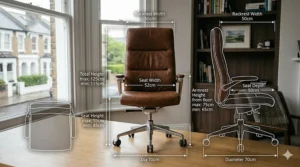
The Steelcase Leap V2 represents what happens when American ergonomic engineering meets proper materials science. This isn’t just another executive chair; it’s the result of four years of research studying how 732 people actually sit whilst working. The LiveBack technology flexes independently to mirror your spine’s natural movement—rather important when you’re tackling spreadsheets for eight hours straight.
Available through specialist UK retailers like Hunts Office, the Leap V2 Premium Leather edition typically ranges £900-£1,200 depending on configuration. The premium version features a polished aluminium frame with genuine leather upholstery, though fabric options bring the price down to around £700-£850. What sets this apart in British conditions: the leather option maintains temperature regulation better than you’d expect, staying comfortable through both our mild summers and draughty winter mornings.
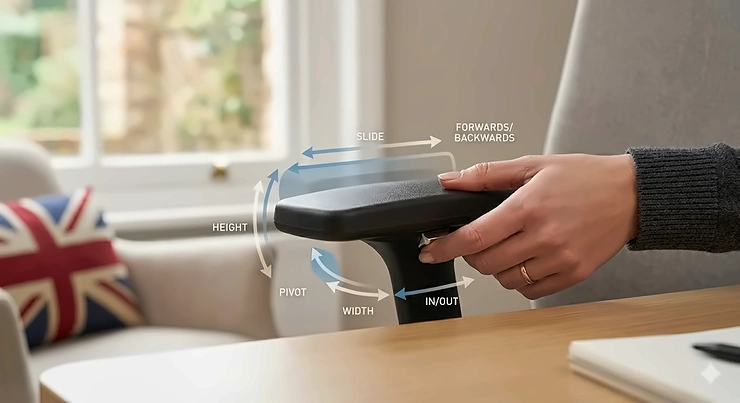
The 4-way adjustable armrests move in height, width, depth, and pivot—genuinely useful for finding that perfect typing position. The Natural Glide System slides the seat forward as you recline, keeping you in your “vision and reach zone” rather than forcing you to crane forward. For UK buyers working in compact home offices, this means you’re not constantly readjusting your position relative to your monitor.
Manufacturing in Sarrebourg, France, means full compliance with UK/EU standards, and the 12-year mechanism warranty suggests Steelcase expects this chair to outlast several job changes. British customers consistently report the Leap V2 arriving fully assembled within 5-6 weeks—a considerable wait, admittedly, but it ships freight-free from the factory.
What most reviews gloss over: the leather requires occasional conditioning to prevent drying in centrally heated British homes. Budget £30-£40 annually for proper leather care products, or you’ll watch your £1,200 investment crack prematurely.
✅ Pros:
- Exceptional ergonomic adjustability backed by research
- 12-year warranty on mechanisms
- Manufactured in France with UK compliance
❌ Cons:
- Premium price requires significant investment
- 5-6 week delivery wait from factory
Price verdict: The £900-£1,200 range positions this firmly in professional territory, but the productivity gains and longevity justify the outlay for serious remote workers.
3. Herman Miller Eames Executive Chair
The Eames Executive Chair occupies that rarified space where furniture becomes investment-grade design. Created by Charles and Ray Eames in 1960 for the Time-Life Building lobbies, this chair’s pedigree is impeccable—and its price tag reflects that heritage. Expect to pay £2,500-£4,000 through authorised UK dealers, with vintage authenticated pieces commanding even more on the secondary market.
The lightweight aluminium frame and base support genuine top-grain leather upholstery with 114 mm (4.5-inch) thick seat cushions and 76 mm (3-inch) back cushions. This isn’t about flashy features or gimmicks; it’s about refined comfort through quality materials and timeless proportions. The tilt-swivel mechanism, whilst basic by modern ergonomic standards, operates with mechanical precision you simply won’t find in budget alternatives.
For UK buyers, sourcing becomes the primary challenge. Herman Miller’s official UK presence is limited, with most stock flowing through authorised dealers or direct from the US Herman Miller Store (which adds shipping costs and potential import duties post-Brexit). Authenticity verification is crucial—check for the medallion stamped on the chair’s underside, as reproductions flood the market.
In British home offices, the Eames Executive makes a statement about your commitment to design. It photographs beautifully for those inevitable Zoom backgrounds, though at this price point you’re paying substantially for aesthetics alongside comfort. The leather develops that coveted patina over years, looking increasingly distinguished rather than worn—provided you maintain it properly in our humid climate.
Customer feedback from UK buyers emphasises the chair’s surprising versatility. Despite its formal appearance, it’s genuinely comfortable for extended working sessions, with the thick padding supporting prolonged sitting better than many purpose-built ergonomic alternatives.
✅ Pros:
- Iconic mid-century modern design
- Exceptional build quality and materials
- Investment piece that appreciates in value
❌ Cons:
- Premium pricing beyond most budgets
- Limited UK availability requires dealer sourcing
Price verdict: At £2,500-£4,000, this transcends practical office furniture into the realm of design investment—justifiable if you value aesthetics as highly as function.
4. Vinsetto 6-Point Heated Massage Executive Chair
The Vinsetto 6-Point Heated Massage Chair represents the sweet spot between affordability and creature comforts—particularly relevant during Britain’s colder months when your lower back protests those draughty home offices. Typically priced around £180-£250 on Amazon.co.uk, it delivers massage functionality that budget chairs can’t touch.
Six vibration points target the upper thoracic region and lumbar curve specifically, whilst the integrated heating function maintains comfortable temperature through our unpredictable weather. The independent controls for heating and massage prove genuinely useful—you might want warmth without vibration on a chilly February morning, or massage without heat during an unexpected August heatwave.
The PU leather upholstery resists oil and water reasonably well, maintaining its appearance through typical UK home office abuse. Pocket spring support inside the seat provides responsive comfort that adapts to your body weight, whilst whole-piece moulding foam ensures the cushioning won’t flatten prematurely. Certifications from TUV (castors), Intertek (materials), and SGS (gas-lift system) meet rigorous European safety standards whilst supporting users up to 150 kg.
British buyers particularly appreciate the ergonomic S-curve design, which aligns with the spine’s natural contours across all five regions: cervical, thoracic, lumbar, sacrum, and coccyx. This attention to spinal health makes it compliant with HSE ergonomic guidelines for workplace seating—rather important if you’re claiming tax relief on your home office setup.
What customers in Manchester and Edinburgh consistently report: the heated function genuinely helps during those six-month stretches of British dampness when your muscles never quite warm up. The massage, whilst not replacing professional physiotherapy, provides sufficient relief to reduce reliance on painkillers during long working days.
✅ Pros:
- Massage and heating at accessible price point
- Meets European safety certifications
- Effective temperature regulation for UK climate
❌ Cons:
- PU leather won’t develop patina like genuine leather
- Massage function more therapeutic than vigorous
Price verdict: Around £180-£250 represents exceptional value when you factor in the physiotherapy sessions you’ll avoid—particularly relevant for UK’s NHS waiting times.
5. Boss Office Products Italian Leather Executive B9301
The Boss B9301 bridges the gap between budget PU leather chairs and eye-watering premium models by offering genuine Italian top-grain leather at a surprisingly accessible price point—typically £350-£500 on Amazon.co.uk when available (stock fluctuates as it ships from US suppliers).
Beautifully upholstered in imported Italian leather, this chair features executive high-back styling with integrated lumbar support and a waterfall seat edge that reduces leg fatigue during extended sitting. The pneumatic gas lift adjusts seat height smoothly, whilst the adjustable tilt-tension control and upright locking position accommodate various working postures. Leather-upholstered armrests provide a premium touch that PU alternatives can’t match.
What sets genuine leather apart in British conditions: breathability. Unlike bonded or PU leather that traps moisture during humid summer months, the Boss B9301’s Italian leather regulates temperature naturally. You’ll notice this particularly during video calls on warm afternoons—no uncomfortable sticking or sweating that characterises synthetic alternatives.
The 686 mm (27-inch) nylon base provides greater stability than smaller alternatives, particularly important if you’re fitting this into a compact home office where mobility matters. Hooded double-wheel castors roll smoothly across both carpet and hard flooring without marking—a consideration for anyone renting or concerned about maintaining their property.
UK customer reviews emphasise the leather quality exceeding expectations at this price point. The sitting surface genuinely feels like premium top-grain leather rather than bonded material masquerading as the real thing. One buyer in Bristol noted the chair developing a distinguished patina over eighteen months of daily use—exactly what you want from genuine leather.
Assembly proves straightforward with clear instructions, taking around 20-25 minutes for most users. The chair arrives well-packaged to survive international shipping, though Brexit has occasionally introduced customs delays for UK buyers ordering from US Amazon.
✅ Pros:
- Genuine Italian top-grain leather at mid-range price
- Natural breathability suits UK climate
- Develops attractive patina with age
❌ Cons:
- Stock availability fluctuates for UK buyers
- International shipping may incur delays
Price verdict: At £350-£500, this offers genuine leather quality that typically costs £800+, making it exceptional value for discerning buyers.
6. IWMH Executive Big & Tall Office Chair
The IWMH Big & Tall Executive Chair addresses a segment often overlooked in luxury seating: larger-framed individuals who need proper support without compromising aesthetics. Priced around £120-£180 on Amazon.co.uk, it delivers 150 kg capacity with thoughtful ergonomic features.
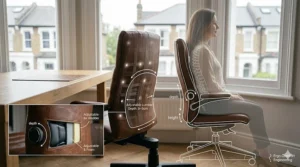
The high-back PU leather design incorporates padded flip-up armrests—a genuinely clever feature for anyone working at varying desk heights or needing to slide the chair closer to their workspace. When flipped up, the armrests save considerable space, allowing you to tuck the chair completely under your desk rather than having it protrude awkwardly in compact British home offices.
Lumbar support comes integrated into the backrest’s contoured design, targeting the lower spine’s natural curve. The adjustable height mechanism accommodates different leg lengths, whilst the swivel function enables smooth movement between desk tasks. Rolling castors move quietly across flooring—appreciated by anyone sharing living space with family members or housemates during working hours.
What British buyers consistently praise: the chair’s sturdy construction doesn’t sacrifice comfort for capacity. The thick cushioning maintains its shape through extended use, avoiding that disappointing compression many budget chairs develop within months. The PU leather, whilst synthetic, cleans easily with a damp cloth—practical for anyone eating lunch at their desk between meetings.
The flip-up armrest mechanism proves particularly valuable for multi-use spaces. One customer in Leeds noted using the chair for desk work during the day, then flipping the arms up to slide it under a dining table converted for evening use—a common arrangement in British homes where dedicated office space remains a luxury.
Weight distribution across the reinforced base prevents tipping, even when leaning back in the reclined position. This stability matters considerably more when you’re approaching the chair’s 150 kg capacity compared to lighter users on standard chairs.
✅ Pros:
- 150 kg capacity with robust construction
- Flip-up armrests suit compact British homes
- Competitive pricing for big & tall category
❌ Cons:
- PU leather lacks genuine leather breathability
- Lumbar support not adjustable independently
Price verdict: Around £120-£180 represents excellent value for larger-framed users who’ve struggled finding comfortable seating at accessible prices.
7. X4 Italian Leather Executive Chair
The X4 Italian Leather Executive Chair from X-Chair combines premium materials with serious ergonomic engineering, creating what American reviewers call “performance wrapped in luxury.” Priced £800-£1,400 depending on configuration and current exchange rates, it targets professionals who refuse to compromise between comfort and aesthetics.
The supple Italian-made top-grain leather is bleach-cleanable—a practical consideration often overlooked in office furniture. When someone inevitably spills coffee during a morning video call, you can actually clean it properly without damaging the material. The cushioned foam seat features a waterfall edge, allowing ideal ergonomic positioning that reduces pressure on the back of your thighs during extended sitting.
The 4-dimensional armrests adjust up, down, side-to-side, and front-to-back as standard, with an optional upgrade to FS 360 rotational armrests for even more customisation. The SciFloat Infinite Recline technology with tilt lock and tension control allows you to recline and lock into any position, or increase tension for more fluid movement—genuinely useful for varying working postures throughout the day.
What sets the X4 apart in British home offices: the leather maintains comfortable temperature across our climate extremes. During mild summer months, it doesn’t overheat like synthetic alternatives. Through draughty winter mornings in older British houses, it doesn’t feel uncomfortably cold when you first sit down. This thermal regulation proves more valuable than specification sheets suggest.
UK availability presents some challenges, as X-Chair primarily operates in the US market with limited direct UK presence. Shipping adds considerable cost, and post-Brexit import duties can push the final price beyond initial expectations. Some British buyers source through US Amazon during sales, accepting the longer delivery timeframe for substantial savings.
Customer feedback from UK users emphasises the chair’s exceptional build quality justifying the premium pricing. The mechanisms operate smoothly even after years of daily use, and the Italian leather develops that distinguished patina rather than showing wear. One buyer in Edinburgh noted the chair still performing flawlessly after four years, making the per-year cost remarkably reasonable.
✅ Pros:
- Premium Italian leather with practical cleanability
- Exceptional ergonomic adjustability
- Thermal regulation suits UK climate variations
❌ Cons:
- Premium pricing requires significant investment
- Limited direct UK availability increases costs
Price verdict: At £800-£1,400, this targets serious professionals who view their chair as essential equipment rather than mere furniture—an investment that pays dividends through comfort and longevity.
✨ Don’t Miss These Exclusive Deals!
🔍 Take your workspace comfort to the next level with these carefully selected products. Check current pricing and availability on Amazon.co.uk. These picks will help you find exactly what you need!
Understanding Leather Types: What You’re Actually Paying For
The leather office chair market thrives on confusion. Manufacturers employ creative terminology to obscure material quality, leaving British buyers comparing “genuine leather” against “bonded leather” without understanding the fundamental differences. This section cuts through the marketing waffle to explain what you’re actually purchasing.
Genuine Leather: The Premium Standard
Genuine leather comes from animal hide—typically cowhide—processed through tanning to create durable, flexible material. Full-grain leather, the highest quality, retains the hide’s natural grain and imperfections, developing a distinguished patina over years of use. Top-grain leather, slightly below full-grain, has the surface lightly sanded to remove minor imperfections before finishing.
In British conditions, genuine leather performs exceptionally well. The natural fibre structure breathes, regulating temperature through our humid summers and centrally heated winters. Moisture naturally evaporates rather than accumulating, preventing that clammy feeling synthetic alternatives develop. Spills bead on the surface initially, giving you time to blot them before penetration—assuming you act promptly.
The primary disadvantage? Price. High-quality genuine leather chairs typically start around £300 and extend well beyond £2,000 for premium examples. Manufacturing difficulty contributes to cost—working with thick, irregular natural hide requires skilled craftsmanship that automation can’t replicate. According to Which?, the trusted UK consumer advocate, genuine leather furniture represents a long-term investment that outlasts cheaper alternatives by decades when properly maintained.
Bonded Leather: The Controversial Middle Ground
Bonded leather—also called reconstituted leather or blended leather—contains approximately 10-20% genuine leather scraps ground up and bonded with polyurethane or latex onto a fibre backing. The surface receives embossing to mimic genuine leather’s texture, creating visual similarity at substantially lower cost.
What manufacturers won’t emphasise: bonded leather behaves fundamentally differently from genuine leather. It doesn’t breathe naturally, trapping moisture against your body during extended sitting. The polyurethane coating prevents the material developing patina; instead, it typically begins peeling or flaking within 18-36 months of regular use. British humidity accelerates this deterioration—anyone who’s owned bonded leather furniture through a particularly damp autumn understands this intimately.
The environmental argument for bonded leather—using waste leather scraps—sounds appealing until you consider longevity. A bonded leather chair lasting three years before requiring replacement creates more waste than a genuine leather chair serving fifteen years. The UK Government’s sustainability guidance increasingly emphasises total lifecycle impact over initial material sourcing.
Price positioning makes bonded leather attractive: typically £150-£400 for executive chairs. British buyers seeking leather aesthetics without premium pricing often choose bonded options, accepting shorter lifespan as the trade-off. This works perfectly well if you’re furnishing a rental property or temporary home office situation.
PU Leather: The Practical Alternative
PU (polyurethane) leather, also called faux leather or vegan leather, contains zero animal products. Manufacturers create it by coating fabric backing with polyurethane, then embossing texture to resemble leather. Modern PU leather has improved dramatically from early iterations, offering consistent appearance without genuine leather’s natural variations.
For British buyers prioritising animal welfare or requiring straightforward maintenance, PU leather delivers considerable advantages. It cleans easily with damp cloths, resists water and oil spills, and costs substantially less than genuine leather—typically £80-£250 for executive office chairs. The uniform appearance suits contemporary office aesthetics, avoiding genuine leather’s natural imperfections.
The disadvantages mirror bonded leather’s issues: poor breathability, inability to develop patina, and eventual surface cracking. Quality varies enormously across manufacturers—premium PU leather from reputable brands lasts considerably longer than budget alternatives. In British climate conditions, expect reasonable PU leather to maintain appearance for 3-5 years with proper care, whilst budget versions may show wear within 12-18 months.
Italian Leather: Marketing or Meaningful Distinction?
“Italian leather” appears frequently in office chair marketing, often commanding premium prices. The designation carries meaning: Italy’s leather tanning industry, particularly around Tuscany and Veneto, maintains centuries-old expertise in vegetable tanning and aniline finishing. Italian tanneries typically process higher-grade hides with superior craftsmanship compared to mass-market alternatives.
However, “Italian leather” requires verification. Some manufacturers label any leather sourced from Italian suppliers as “Italian leather” regardless of hide origin or tanning quality. Genuine premium Italian leather should specify full-grain or top-grain designation, tannery region, and processing method. Without these details, you’re likely paying premium prices for standard leather with Italian-sounding marketing.
For UK buyers, Italian leather’s practical advantage lies in aniline or semi-aniline finishing, which maintains leather’s natural breathability whilst providing reasonable stain resistance. This suits British conditions better than heavily treated leather that seals the surface completely.
How to Choose a Luxury Leather Office Chair for UK Homes
Selecting the right luxury leather office chair requires evaluating factors beyond aesthetics and price. British home offices present unique challenges—compact spaces, variable heating, humidity fluctuations—that American or European guidance often overlooks. This framework helps you identify priorities before comparing specific models.
1. Assess Your Space Constraints Realistically
British homes typically offer limited dedicated office space. That stunning executive chair with 700 mm width won’t fit comfortably in a converted box room measuring 2.4 metres square. Measure your workspace carefully: desk height, floor clearance, distance between walls or furniture. Account for the chair’s recline range—many buyers discover their expensive new chair hits the radiator when tilted back.
Consider doorway width during delivery. Standard UK doors measure 760-830 mm; larger executive chairs may require disassembly to navigate narrow Victorian hallways or modern apartment corridors. Amazon.co.uk’s delivery service generally handles this, but verify dimensions beforehand to avoid unpleasant surprises.
2. Match Leather Type to Your Usage Pattern
Genuine leather justifies premium pricing if you’re working 40+ hours weekly from home. The comfort, breathability, and longevity deliver value over years of daily use. Someone working from home occasionally—perhaps 2-3 days weekly—might find PU leather perfectly adequate at a fraction of the cost.
Bonded leather occupies an awkward middle ground. Unless you’re furnishing temporary workspace or specifically need leather aesthetics on tight budget, PU leather typically offers better value and longevity. The Trading Standards guidance suggests bonded leather’s environmental claims warrant skepticism given typical product lifespan.
3. Prioritise Ergonomic Features Over Aesthetics
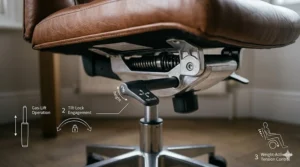
That gorgeous Italian leather executive chair photographs beautifully, but if it lacks proper lumbar support, you’ll regret the purchase after six months of lower back pain. Essential ergonomic features for UK home workers include:
- Adjustable lumbar support: Your spine’s curve changes throughout the day; fixed support can’t accommodate this variation. Look for height-adjustable lumbar mechanisms that target your specific back contour.
- Seat depth adjustment: Particularly important for shorter users (under 5’5″) or taller individuals (over 6’2″). Standard seat depths don’t suit everyone; adjustability prevents circulation issues or inadequate thigh support.
- 4D armrests: Adjustability in height, width, depth, and pivot allows proper arm positioning for typing. Fixed armrests force awkward shoulder positions that cause tension over time.
4. Consider Weight Capacity Honestly
Manufacturers’ weight ratings include safety margins, but operating near maximum capacity accelerates wear. If you weigh 90 kg, choose chairs rated 120-150 kg rather than barely adequate 100 kg models. This ensures mechanisms, gas lifts, and frames maintain performance over years rather than months.
British buyers should note weight capacities listed in kilograms on Amazon.co.uk products, avoiding confusion with US listings showing pounds. Verify the rating specifically applies to the UK version—international variants sometimes differ.
5. Verify UK Compatibility and Certifications
This sounds obvious until you order a stunning chair only to discover it ships with US power requirements for massage functions, or lacks UKCA certification for electrical components. Verify:
- Plug type and voltage: Massage or heated chairs require UK three-pin plugs rated for 230V/50Hz. Adapters create safety risks.
- UKCA marking: Post-Brexit requirement for electrical products sold in Great Britain (England, Scotland, Wales). Northern Ireland follows different rules under the Protocol.
- British Standards compliance: BS 5459 specifies office furniture safety requirements. Reputable manufacturers comply, but budget imports sometimes skip certification.
6. Evaluate Total Cost of Ownership
That £100 bonded leather chair seems attractive until you’re replacing it every two years. Compare genuine alternatives:
- Budget bonded leather: £150 initial cost × 5 replacements over 10 years = £750
- Premium genuine leather: £600 initial cost, lasting 15+ years = £600
Add maintenance costs: genuine leather requires conditioning (£30-£40 annually), whilst PU leather needs only occasional wiping. Factor delivery costs if sourcing from international sellers—Brexit introduced customs duties that can add 20%+ to non-UK purchases.
7. Account for British Climate Specifics
Our weather affects chair performance in ways rarely discussed. Genuine leather handles humidity better than synthetics, maintaining comfort through damp autumn months. Heated massage chairs prove more valuable in UK conditions than warmer climates—that integrated heating function transforms comfort during February cold snaps.
Direct sunlight through south-facing windows fades leather rapidly, particularly PU and bonded varieties. If your workspace receives significant sun exposure, budget for window treatments or accept accelerated wear. North-facing home offices avoid this issue but remain colder, potentially making heated chair options more appealing.
Common Mistakes When Buying Luxury Leather Office Chairs
British buyers waste considerable money through avoidable errors when purchasing luxury office seating. These mistakes stem from trusting marketing claims over practical considerations, or failing to account for UK-specific factors that American reviews conveniently ignore.
Mistake 1: Assuming All “Genuine Leather” Equals Quality
“Genuine leather” functions as marketing terminology rather than quality certification. The leather industry classification system runs: full-grain (highest), top-grain, genuine leather, bonded leather. A chair labelled simply “genuine leather” often uses the lowest acceptable grade—still technically real leather, but far from premium quality.
What to do instead: Demand specifics. Full-grain or top-grain designation, tannery origin, hide thickness (measured in millimetres). Reputable manufacturers provide this information; vague descriptions signal inferior materials. Italian or European leather typically offers better quality control than unspecified sources.
Mistake 2: Ignoring UK Delivery Logistics for International Orders
That stunning chair on Amazon.com ships to UK addresses, but have you factored actual costs? Post-Brexit, anything valued over £135 incurs customs duties, VAT, and handling fees—potentially adding 30-40% to the advertised price. Delivery timeframes extend to 4-6 weeks rather than Prime’s next-day service.
What to do instead: Filter Amazon.co.uk specifically for UK stock and Prime eligibility. Compare total delivered cost including duties for international purchases. Sometimes that £200 price difference evaporates after accounting for Brexit-related charges, making the UK option actually cheaper.
Mistake 3: Overlooking Assembly Requirements
Luxury chairs often arrive requiring assembly—attaching arms, base, backrest to seat. British flats and terraced houses present space constraints that make assembly challenging. That executive chair with 1.2-metre wingspan becomes awkward in a 2×3-metre room when you’re trying to connect components whilst avoiding furniture.
What to do instead: Check assembly requirements before purchasing. Some premium brands offer fully assembled delivery for additional fees—worthwhile if you’re uncertain about DIY furniture construction. Read UK customer reviews specifically mentioning assembly; they highlight realistic time requirements and potential difficulties.
Mistake 4: Prioritising Massage Functions Over Core Ergonomics
Heated massage features sound appealing until you realise the chair’s actual ergonomic support is rubbish. That vibrating lumbar pad won’t compensate for poorly designed seat depth or inadequate backrest curve. British buyers sometimes prioritise bells-and-whistles over fundamental comfort, resulting in expensive chairs that still cause back pain.
What to do instead: Evaluate core ergonomics first: lumbar support adjustability, seat pan tilt, armrest positioning. Treat massage and heating as bonuses, not primary features. If the chair lacks proper ergonomic foundation, no amount of vibration will prevent discomfort during 8-hour workdays.
Mistake 5: Underestimating British Humidity’s Impact on Materials
Our climate isn’t extreme, but persistent dampness affects leather dramatically. Bonded and PU leather trap moisture, promoting mould growth in poorly ventilated home offices. Genuine leather handles humidity better but requires conditioning to prevent drying from central heating, which removes atmospheric moisture.
What to do instead: Consider your specific home office environment. Ground-floor rooms in older British houses tend towards dampness; upper floors in modern builds remain drier. Match leather type to conditions: genuine leather for damp-prone spaces, PU acceptable in well-ventilated modern environments. Budget for dehumidifiers or leather conditioning products as appropriate.
Mistake 6: Believing Leather Equals Cooler Seating
Marketing often claims leather chairs stay cooler than fabric alternatives. Absolute nonsense. Genuine leather’s breathability prevents the clammy feeling of synthetic materials, but it still conducts body heat. Sitting for hours on leather generates warmth regardless of material quality. British summers, whilst mild, still produce sweaty discomfort on leather seating.
What to do instead: Evaluate breathability rather than temperature claims. Genuine leather breathes better than bonded or PU alternatives. Perforated leather (found on some premium models) enhances airflow. For genuinely cool seating through British summers, mesh chairs outperform any leather option—but that’s a different purchase decision entirely.
Mistake 7: Neglecting UKCA Certification for Electrical Features
Massage and heated chairs contain electrical components requiring safety certification. Post-Brexit, products sold in Great Britain need UKCA marking; Northern Ireland follows different rules. Budget imports sometimes lack proper certification, creating safety risks and invalidating home insurance if electrical faults cause damage.
What to do instead: Verify UKCA marking before purchasing chairs with electrical features. Check the power supply voltage matches UK standard (230V/50Hz). Reputable sellers on Amazon.co.uk display certification clearly; absence of certification information signals potential issues. Saving £50 isn’t worth the risk of electrical fires or insurance complications.
Bonded vs Genuine Leather: The Longevity Analysis
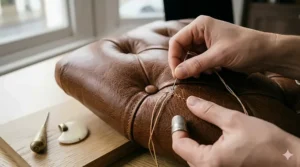
The bonded versus genuine leather debate dominates office chair discussions, with manufacturers obscuring differences through creative marketing. This analysis examines actual performance differences in British conditions, helping you make informed decisions based on realistic expectations rather than sales promises.
Material Composition: What You’re Actually Buying
Genuine leather consists of processed animal hide—full stop. The hide undergoes tanning to prevent decomposition, then finishing to enhance durability and appearance. Full-grain leather retains the hide’s natural surface with all imperfections; top-grain leather has the surface lightly sanded before finishing. Both qualify as genuine leather, though full-grain commands premium prices for superior durability.
Bonded leather combines approximately 10-20% leather scraps with 80-90% polyurethane binder, sprayed onto paper or fabric backing. Manufacturers grind leather waste from genuine leather production, mix it with polyurethane adhesive, then roll it onto backing material. Embossing creates texture resembling genuine leather’s grain.
The crucial distinction: genuine leather is a natural material with inherent structural integrity. Bonded leather is reconstituted material depending on polyurethane adhesive for cohesion. This fundamental difference determines how each material ages in British climate conditions.
Performance Through British Weather Cycles
Britain’s humid climate accelerates bonded leather’s deterioration. Moisture penetrates the polyurethane coating, weakening adhesive bonds holding leather particles together. The material begins peeling or flaking, typically starting along seams or high-wear areas like armrests. Once peeling begins, it propagates rapidly—you can’t repair bonded leather effectively.
Temperature cycling between centrally heated interiors and cooler ambient temperatures stresses bonded leather’s polyurethane layer. The material expands and contracts differently from its fabric backing, creating internal stresses that manifest as cracking. British homes typically maintain 18-21°C heating against autumn/winter exterior temperatures of 5-10°C—sufficient differential to accelerate deterioration.
Genuine leather handles British conditions considerably better. The natural material breathes, allowing moisture to evaporate rather than accumulating within the structure. Temperature variations affect genuine leather minimally—it was literally designed by nature to protect animals through environmental changes. Proper conditioning (applying leather conditioner 2-3 times annually) prevents drying from central heating, maintaining flexibility.
Real-World Lifespan Comparison
Based on extensive UK customer feedback across Amazon.co.uk and specialist furniture retailers:
Bonded Leather in British Homes:
- Typical usable lifespan: 18-36 months with daily use
- Peeling/flaking becomes noticeable: 12-18 months
- Accelerated deterioration in damp conditions (ground floor, older houses)
- Improved longevity in modern, well-ventilated homes: potentially 3-4 years
Genuine Leather in British Homes:
- Typical usable lifespan: 10-15+ years with proper maintenance
- Develops distinguished patina rather than showing wear
- Requires conditioning (£30-40 annually) to prevent drying
- Superior performance in variable humidity conditions
The mathematics are straightforward: bonded leather at £200 lasting 2 years costs £100 annually. Genuine leather at £500 lasting 10 years costs £50 annually plus £35 maintenance = £85 annually. The “expensive” option actually delivers better value.
Environmental Considerations
Bonded leather’s marketing emphasises sustainability through using waste leather scraps. Superficially appealing, but consider full lifecycle impact. A bonded leather chair requiring replacement every 2-3 years generates more waste than a genuine leather chair lasting 15 years. Manufacturing energy, transportation emissions, and disposal impact all multiply with each replacement.
The UK Government’s waste reduction strategy prioritises longevity over recycled content. Products lasting longer inherently reduce environmental impact regardless of initial material sourcing. Genuine leather’s extended lifespan aligns better with this strategy than bonded leather’s shorter service life.
When Bonded Leather Makes Sense
Despite obvious disadvantages, bonded leather suits specific situations:
- Temporary workspaces: Furnishing rental properties or knowing you’ll relocate within 2-3 years
- Budget constraints: Requiring leather aesthetics immediately without capital for genuine leather
- Low-use scenarios: Home office used occasionally (1-2 days weekly) where wear remains minimal
If purchasing bonded leather deliberately, accept the limited lifespan as part of the value proposition. Don’t expect longevity that manufacturers won’t promise and material science can’t deliver.
Premium Leather Upholstery: What Makes Italian Leather Special
Italian leather commands premium prices in office chair marketing, but does the designation carry substance beyond clever branding? The Italian leather tanning industry, concentrated in Tuscany and Veneto, maintains traditions dating to the Renaissance whilst incorporating modern chemistry and quality control. Understanding what makes Italian leather distinctive helps justify—or question—premium pricing.
The Tanning Process: Where Quality Begins
Italian tanneries typically employ vegetable tanning for premium hides, using natural tannins extracted from tree bark rather than harsh chromium compounds. The process requires 30-40 days compared to chromium tanning’s 24 hours, explaining substantial cost differences. Vegetable-tanned leather develops superior strength and flexibility whilst maintaining the hide’s natural breathability.
Aniline finishing, common in Italian leather production, applies minimal surface treatment. The leather retains natural grain and slight imperfections, developing patina beautifully over years of use. Semi-aniline finishing adds a thin protective coating whilst maintaining breathability—practical for office furniture where spill resistance matters.
These processes require skill and equipment British manufacturers rarely possess. Italy’s Santa Croce sull’Arno district, for instance, houses over 300 tanneries specialising in various leather types. This concentrated expertise produces consistent quality difficult to replicate elsewhere.
Full-Grain vs Top-Grain Italian Leather
Italian leather for premium office chairs typically comes in two grades:
Full-grain Italian leather retains the hide’s complete natural surface, including minor imperfections, scars, and grain variations. Each chair develops unique character reflecting the specific hide used. This represents the highest quality available, commanding prices of £800-£2,000+ for executive office chairs.
Top-grain Italian leather has the surface lightly buffed to remove significant imperfections before finishing. It maintains most of full-grain’s desirable properties whilst offering more uniform appearance. Chairs using top-grain Italian leather typically cost £400-£800—premium pricing without entering absolute top-tier territory.
Both grades substantially outperform standard leather from unspecified origins, justifying higher prices through superior durability and comfort in British climate conditions.
Performance Advantages in UK Homes
Italian leather’s natural processing methods create material particularly suited to British environment:
Breathability: Vegetable-tanned leather maintains open pore structure, allowing moisture vapour to pass through. During humid British summers, this prevents the clammy feeling synthetic materials develop. Central heating’s dry winter air doesn’t desiccate properly conditioned Italian leather as severely as chrome-tanned alternatives.
Temperature regulation: The natural material neither overheats in mild British summers nor feels uncomfortably cold during winter mornings. Users report Italian leather maintaining comfortable sitting temperature across seasonal variations—relevant when your home office lacks dedicated climate control.
Longevity: Properly maintained Italian leather develops patina rather than wear. Minor scratches blend into the developing character rather than appearing as damage. British buyers purchasing Italian leather chairs in 2010 report them still performing exceptionally in 2026—justifying initial investment through 15+ year lifespan.
Verifying Authentic Italian Leather
“Italian leather” appearing on budget £200 office chairs should raise suspicion. Genuine Italian tannery leather, processed using traditional methods, costs substantially more than standard alternatives. Verify authenticity through:
- Tannery designation: Premium manufacturers specify which Italian tannery supplied the leather. Santa Croce sull’Arno, Solofra, and Arzignano are established regions.
- Processing method: Vegetable-tanned or semi-aniline finished indicates proper Italian leather processing.
- Hide thickness: Italian furniture leather typically measures 1.1-1.4mm thickness. Thinner material suggests cost-cutting or mislabelling.
Without these specifics, “Italian leather” likely means standard leather sourced through Italian suppliers—still genuine leather, but not the premium product commanding higher prices.
Cost-Benefit Analysis for UK Buyers
Italian leather office chairs typically cost 50-100% more than comparable chairs using standard genuine leather. For British buyers working from home 5 days weekly, the premium delivers value through:
- Superior comfort during 40+ hour weekly use
- Extended lifespan (15+ years vs 8-10 years for standard leather)
- Reduced maintenance requirements through better material resilience
- Enhanced aesthetics as patina develops
Someone working from home occasionally—perhaps 2 days weekly—might find standard genuine leather perfectly adequate, questioning whether Italian leather’s premium justifies the cost. The decision ultimately depends on usage intensity and budget constraints.
For serious home office investment, Italian leather represents the pinnacle of office chair materials. The premium pricing reflects genuine quality differences rather than mere marketing, provided you verify authenticity before purchasing.
Maintenance Guide: Protecting Your Investment in British Climate
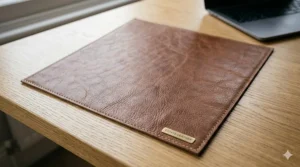
Luxury leather office chairs require proper maintenance to deliver their promised 10-15 year lifespan, particularly in British climate conditions. Neglecting straightforward care routines accelerates wear, transforming your £500-£2,000 investment into peeling, cracked disappointment within 3-4 years. This guide provides practical maintenance advice specifically addressing UK environmental factors.
Daily and Weekly Maintenance
Wipe down after each work session: Use a soft, slightly damp microfibre cloth to remove dust, oils from skin contact, and surface dirt. British homes accumulate more ambient dust than continental properties due to older building construction and higher humidity—daily wiping prevents accumulation.
Vacuum crevices weekly: Dust and debris collect in seams between seat and backrest, around armrest connections, and beneath seat cushions. Use vacuum cleaner’s soft brush attachment to remove particles before they abrade leather surface. Particularly important in British homes where central heating creates air circulation that distributes dust throughout rooms.
Check for spills immediately: Coffee, tea, biscuit crumbs—British office culture generates numerous staining opportunities. Blot liquid spills immediately with absorbent cloth; scraping crumbs without grinding them into leather. Genuine leather’s natural oils resist initial penetration, giving you 30-60 seconds to respond before permanent staining occurs.
Monthly Deep Cleaning
Leather cleaning solution application: Use pH-balanced leather cleaner formulated for furniture rather than automotive products (which contain silicones unsuitable for seating). Apply sparingly with soft cloth, working in gentle circular motions. British-made products like Furniture Clinic Leather Ultra Clean or Leather Master suit UK leather types better than American alternatives.
Addressing specific stains: Ink marks respond to isopropyl alcohol on cotton swab—test inconspicuous area first. Grease stains need cornstarch or talcum powder applied overnight to absorb oils. British weather tracking mud indoors responds to gentle brushing once fully dried, avoiding water that drives mud deeper into grain.
Conditioning application: Every 4-6 weeks in British climate conditions, apply leather conditioner to prevent drying. Central heating removes atmospheric moisture from October through April, desiccating leather that hasn’t been properly conditioned. Use products containing natural oils (lanolin, neatsfoot oil) rather than petroleum-based alternatives.
Seasonal Adjustments for British Weather
Autumn preparation (September-November): Increased humidity as temperatures drop requires monitoring for mould growth, particularly in ground-floor rooms of older properties. Ensure adequate ventilation; position dehumidifier if necessary. Apply leather conditioner before switching on central heating to protect against sudden moisture reduction.
Winter protection (December-February): Central heating’s dry air accelerates leather desiccation. Increase conditioning frequency to every 3-4 weeks during peak heating months. Position chair away from radiators—minimum 1 metre distance prevents localised over-drying. Consider room humidifier if central heating causes excessive dryness (below 40% relative humidity).
Spring maintenance (March-May): Temperature fluctuations between mild days and cold nights stress leather. Deep clean thoroughly as heating switches off, removing accumulated dust and conditioner residue. Check for developing cracks or stiffness indicating insufficient conditioning during winter months.
Summer care (June-August): British summers rarely overheat, but direct sunlight through south-facing windows fades leather colour and dries surface rapidly. Install blinds or UV-filtering window film if chair receives direct sun exposure. Reduce conditioning frequency slightly as atmospheric humidity increases naturally.
Addressing Common British Climate Issues
Mould prevention: Damp British homes, particularly ground floors of Victorian and Edwardian properties, promote mould growth on organic materials like leather. Maintain room ventilation through trickle vents or periodic window opening. Clean any surface mould immediately with white vinegar solution (1:1 with water), then condition leather thoroughly.
Condensation damage: Morning condensation on windows can affect nearby furniture during cold months. Position chair away from exterior walls and windows where condensation forms. Wipe any condensation accumulation from leather surface immediately—prolonged moisture exposure degrades protective finishes.
Pet hair management: British cat and dog owners struggle with fur accumulating on leather furniture. Vacuum weekly using upholstery attachment; for stubborn hair, slightly dampened rubber gloves rubbed across surface collect fur effectively. Pet scratches on genuine leather blend into developing patina; bonded or PU leather shows permanent damage.
Long-Term Protection Strategies
Professional cleaning (annually): Consider professional leather furniture cleaning every 12-18 months, particularly for light-coloured leather showing accumulated soiling. Professional services use pH-balanced products and techniques unavailable to consumers, restoring appearance significantly. UK-based specialists charge £80-£150 for office chair cleaning—reasonable investment protecting £500-£2,000 furniture.
Recolouring and restoration: Light-coloured leather develops darker patina over 5-7 years through oil absorption. Professional recolouring services restore original appearance if desired, though many owners prefer natural patina development. Costs £150-£250 for complete chair recolouring by UK specialists.
Structural maintenance: Periodically check mechanical components—gas lift cylinder, tilt mechanism, castors—for proper operation. Lubricate moving parts with silicone spray annually. British homes’ compact spaces mean office chairs receive considerable stress from frequent repositioning; maintaining mechanisms prevents premature failure.
When Professional Help Becomes Necessary
Certain leather damage exceeds DIY repair capabilities:
- Deep scratches penetrating grain: Require professional colour matching and leather filler application
- Seam separation: Needs proper upholstery repair; DIY attempts typically worsen damage
- Frame structural damage: Professional furniture repair ensures safety compliance
UK furniture restoration specialists repair rather than replace premium leather chairs, often for 30-40% of replacement cost. Leather Repair Company and Furniture Clinic operate nationwide, offering mobile repair services.
Proper maintenance transforms luxury leather office chairs from depreciating purchases into appreciating investments. British climate conditions challenge leather furniture more than marketing acknowledges, but straightforward care routines protect your investment effectively through our unpredictable weather patterns.
Best Leather Executive Chair with Massage: UK Options
Massage functionality elevates office chairs from mere seating to therapeutic furniture—particularly relevant for British workers facing NHS physiotherapy waiting lists extending months. The combination of premium leather upholstery and integrated massage creates chairs addressing both comfort and chronic back pain prevention. This section examines top massage-equipped leather executive chairs available through Amazon.co.uk.
Understanding Massage Chair Technology
Office chair massage systems employ vibration motors positioned strategically within the backrest and seat cushion. Unlike professional massage chairs costing £2,000-£5,000, office chair massage provides gentle vibration rather than kneading or rolling motions. The therapeutic effect comes from increasing blood circulation and relaxing tense muscles during extended sitting sessions.
Modern massage office chairs typically offer 4-6 vibration points: two in upper back (thoracic region), two in lumbar curve, and sometimes two in thigh area. Better models include independent controls allowing customisation of vibration intensity and duration. Heating functionality complements massage through promoting muscle relaxation—particularly valued during British winter months.
Top Massage-Equipped Models on Amazon.co.uk
Vinsetto 6-Point Heated Massage Chair (£180-£250) leads affordable massage options through thoughtful feature integration. Six vibration points target upper back and lumbar regions specifically prone to desk-work tension. Independent heating and massage controls allow customisation—heat without vibration during cold mornings, massage without heat during warmer months. The ergonomic S-curve backrest aligns with spine’s natural contours whilst PU leather upholstery maintains professional appearance.
British customer feedback consistently praises the Vinsetto’s heating function through damp autumn and winter months when lower back muscles never quite warm up naturally. The massage, whilst not replacing professional physiotherapy, provides sufficient relief to reduce painkiller dependence during 8-hour workdays. TUV, Intertek, and SGS certifications confirm European safety compliance whilst supporting users to 150 kg.
Neo Executive Massage Chair (£120-£180) offers basic massage functionality at entry-level pricing. Three massage zones with heating button create acceptable therapeutic effect, though vibration intensity remains gentler than Vinsetto’s system. PU leather quality proves inconsistent—some UK buyers report comfortable material whilst others note thin covering showing massage pad outlines within weeks.
Assembly proves straightforward with included tools, though instruction clarity receives mixed reviews. The chair functions adequately for occasional home office use (2-3 days weekly) but struggles with daily intensive use. British buyers note the massage function loses effectiveness after 12-18 months of regular operation—acceptable longevity given the price point.
Dowinx Big & Tall Massage Lumbar Pillow (£150-£220) takes a different approach, incorporating massage into a removable lumbar pillow rather than built-in seat mechanisms. The dual-rotation massage system offers ergonomic support when dormant, flipping to deliver deep-tissue kneading when activated. This clever design allows using the massage function only when needed rather than permanently occupying seat space.
The spacious seat accommodates larger frames comfortably whilst hybrid mesh-and-leather design provides cooling breathability during extended sitting. British users particularly value the pillow’s removability for cleaning—a practical consideration when massage mechanisms can’t be easily maintained. The system operates effectively through 2-3 years of regular use before motor performance noticeably declines.
Heating vs Massage: What Actually Matters
Marketing emphasises massage functionality prominently, but British climate makes heating the more valuable feature practically. The gentle warmth penetrating lower back muscles during damp October mornings or February cold snaps provides immediate comfort genuine massage systems struggle matching. Vibration massage offers psychological satisfaction—you feel like something’s happening—without delivering deep therapeutic benefit budget office chairs can actually provide.
Quality massage chairs in the £1,000+ category incorporate proper kneading mechanisms rather than simple vibration. Budget office chairs’ vibration motors create sensation without significant muscle manipulation. This doesn’t render them worthless—increased blood circulation and psychological relaxation deliver measurable benefit—but temper expectations accordingly.
For British buyers prioritising therapeutic value, chairs combining heating with ergonomic lumbar support often deliver better practical results than massage-only alternatives. The Vinsetto’s independent heating control proves more useful than massage functionality alone.
Electrical Safety Considerations for UK Buyers
Massage and heating chairs contain electrical components requiring proper safety certification. Verify UKCA marking before purchasing—post-Brexit requirement for electrical products sold in Great Britain. Check power supply voltage matches UK standard (230V/50Hz) and plug conforms to BS 1363 (UK three-pin standard).
Budget imports sometimes include EU two-pin plugs with UK adapters rather than proper BS 1363 plugs. Whilst functional, this creates safety concerns and potentially invalidates home insurance if electrical faults cause damage. Reputable Amazon.co.uk sellers provide proper UK plugs; absence of clear specification signals potential issues.
Automatic shut-off functionality prevents overheating during extended massage sessions. Quality models cease operation after 15-30 minutes, requiring manual reactivation. This safety feature prevents motor overheating and excessive power consumption—reassuring for anyone concerned about leaving massage function activated inadvertently.
Long-Term Value Assessment
Massage chair motors typically function effectively for 18-36 months with regular use before vibration intensity noticeably diminishes. This doesn’t render the chair unusable—ergonomic support and comfort remain unaffected—but the primary feature justifying purchase degrades predictably. Budget this reality into value calculations rather than expecting indefinite massage functionality.
For British buyers working from home daily, massage chairs delivering 2-3 years of therapeutic benefit at £150-£250 pricing represent reasonable value compared to private physiotherapy sessions (£40-£60 per visit). Someone requiring occasional massage might justify premium investment; casual users should accept limited motor lifespan as part of the value proposition.
The leather upholstery typically outlasts massage motors significantly. PU leather on budget massage chairs maintains appearance for 3-5 years with proper care, meaning you’ll have a comfortable leather executive chair even after massage functionality degrades. This extended utility justifies initial investment beyond merely massage duration.
Frequently Asked Questions
❓ Are luxury leather office chairs worth the investment for UK home workers?
❓ What's the real difference between bonded and genuine leather office chairs?
❓ Do executive leather chairs with massage functions actually help back pain?
❓ Are Italian leather office chairs genuinely better than standard leather options?
❓ How do I maintain leather office chairs in British climate conditions?
Conclusion: Making Your Final Decision
Selecting the right luxury leather office chair for your UK home workspace ultimately depends on balancing budget constraints against usage intensity, climate considerations, and long-term value expectations. The British market offers genuine options across every price point, from £80 budget PU leather chairs through £4,000 design icons—but understanding material differences prevents expensive mistakes.
For daily remote workers spending 40+ hours weekly at their desk, investing £400-£800 in genuine leather chairs delivers measurable returns through superior comfort, extended lifespan, and reduced replacement frequency. The Steelcase Leap V2 or Boss Italian Leather models represent sweet spots combining ergonomic excellence with quality materials suited to British climate conditions. Factor in proper maintenance costs (£30-£40 annually for conditioning) and occasional professional cleaning (£80-£150 every 18 months) to protect your investment.
Budget-conscious buyers or occasional home workers might find £100-£200 PU leather options like the SONGMICS OBG22BUK or IWMH Big & Tall perfectly adequate. Accept limited 3-5 year lifespan as part of the value proposition rather than expecting premium durability from entry-level pricing. These chairs deliver comfortable seating and professional appearance for video calls without premium investment.
The massage chair category deserves consideration for anyone experiencing chronic back tension, particularly given NHS physiotherapy waiting times. The Vinsetto 6-Point Heated model at £180-£250 provides genuine therapeutic value through heating function specifically, with vibration massage offering supplementary benefit. Budget for 18-36 month massage motor lifespan, recognising the chair remains useful as comfortable executive seating even after massage functionality degrades.
Whatever your choice, prioritise UK-specific factors: UKCA certification for electrical components, proper British plug standards, Amazon.co.uk stock avoiding Brexit customs complications, and genuine leather’s climate suitability for our humid conditions. Your office chair investment directly impacts daily comfort, productivity, and long-term spinal health—worth researching thoroughly rather than impulse purchasing based on attractive marketing.
Recommended for You
- 7 Best Executive Office Chairs UK (2026)
- 7 Best Ergonomic Chair with Lumbar Support UK 2026
- 7 Best Mesh Back Office Chair for Hot Weather UK 2026
Disclaimer: This article contains affiliate links. As an Amazon Associate, I earn from qualifying purchases. If you purchase products through these links, we may earn a small commission at no additional cost to you.
✨ Found this helpful? Share it with your mates! 💬🤗
